Budget 2026: What it means for business owners

Budget 2026: What it means for business owners

Budget 2026 didn’t deliver sweeping tax cuts or major economic reform. It focused on simplifying some tax rules, increasing Inland Revenue enforcement, and providing targeted support for specific groups.

So what does that actually mean for business owners, investors, farmers and working families?

In short, the biggest winners are people who value certainty and plan ahead.
The biggest losers may be those who continue to ignore compliance obligations and hope Inland Revenue doesn’t notice.

Budget 2026 at a glance:

• No changes to income tax rates
• No changes to company tax rates
• No changes to GST
• Simplified FBT rules are on the way
• The FIF threshold increases from $50,000 to $100,000
• Working for Families support increases for eligible families
• Inland Revenue receives additional funding for compliance activity
• More focus on enforcement and debt recovery

Who’s most affected?

Budget 2026 is likely to have the biggest impact on:
• Small and medium business owners
• Property and offshore investors
• Working families receiving Working for Families
• Employers providing company vehicles
• Businesses claiming R&D tax credits
• Organisations in the charity and not-for-profit sector
• Businesses with outstanding tax debt

If you fall into one of these groups, it’s worth reviewing how the changes may affect you over the next 12 months.

What are the changes for business owners?

One of the strongest themes running through Budget 2026 is simplification.

Changes to Fringe Benefit Tax (FBT), Foreign Investment Fund (FIF) rules, Non-Resident Contractors Tax (NRCT) and Research & Development tax credits are all aimed at reducing complexity and compliance costs.

This matters because complexity costs money. Every hour spent interpreting tax rules is an hour not spent serving customers, growing your business or supporting your team.

The proposed FBT reforms are a good example. The current vehicle rules are complex, often misunderstood and create inconsistent outcomes. While the new system will take some adjustment, the overall direction is towards simpler administration and less paperwork.

For business owners, less compliance is usually a good thing!

How are investors affected?

The most talked-about tax change is likely to be the increase in the Foreign Investment Fund (FIF) de minimis threshold from $50,000 to $100,000.

This change is likely to benefit:
• Individuals building wealth through offshore shares
• Business owners investing outside New Zealand
• Returning New Zealanders and migrants
• Younger investors entering the market

While it won’t affect everyone, it reflects the reality that more New Zealanders are investing globally than when the original threshold was introduced.

What it means for Working Families

One of the more visible measures in Budget 2026 is the temporary increase to the In-Work Tax Credit for eligible families. For households dealing with rising living costs, every dollar helps. However, the support is targeted.

If you’re a business owner without children, a retiree, a beneficiary, or a household outside the eligibility thresholds, Budget 2026 may not have much impact on your day-to-day finances.

Whether that’s good policy or not depends on your perspective, but it highlights the Government’s preference for targeted assistance rather than broad-based relief.

IRD isn’t taking its foot off the pedal

If there’s one message businesses should take away from Budget 2026, it’s this:

Don’t assume Inland Revenue is taking a softer approach.

The Government has allocated additional funding to tax compliance activity, expecting a significant return on that investment.

That tells us two things:

1. Inland Revenue believes there is still substantial unpaid tax to recover.
2. Enforcement activity is likely to increase.

For businesses carrying tax debt, struggling with GST obligations, or operating with outdated structures, waiting is becoming a riskier strategy.

The businesses that proactively review their position will almost always have more options available than those who wait for Inland Revenue to make contact.

What Budget 2026 Means for Farmers

While there weren’t many direct farming announcements, Budget 2026 still matters for the rural sector. Farm businesses will continue to feel pressure from fuel and energy costs, changing market conditions, and broader economic confidence.

The Government’s focus on infrastructure investment and planning reform may create opportunities over time, while Inland Revenue’s increased compliance activity will affect rural businesses just as much as urban ones.

For many farmers, these indirect impacts will have a bigger influence on profitability and investment decisions than any individual tax change announced in the Budget.

Our Take

Budget 2026 isn’t a transformational budget. There are no major tax cuts, no changes to income tax rates, company tax rates or GST. What it does signal is a continued shift towards clarity, compliance and targeted support.

For business owners, the opportunity isn’t in trying to predict every policy change. It’s in understanding where your business stands today.

It’s time to ask:

• Do you understand your cashflow position?
• Are your tax obligations under control?
• Is your structure still fit for purpose?
• Do you know what the next 12 months look like?

The businesses that perform best are usually the ones that have defined their numbers, know where they’re heading, and make decisions with confidence.

Budget 2026 provides some new opportunities, some new obligations and a few reminders. The real question is whether you have enough clarity around your own position to take advantage of them.

Ready to do the work? Book a 1:1 with a Sidekick Advisor

    Fill in your details to book an appointment with your future Sidekick today

    June 4th, 2026|

    The herd scheme: Latest values announced

    National herd scheme values released for 25/26 Season

    The latest National Average Market Values (NAMV) have been released by Inland Revenue, and there are some significant movements across sheep, beef and dairy values this year.

    If you’re in the Herd Scheme, now is a good time to review what those changes could mean for your business, your tax position, and your plans moving forward.

    What is the herd scheme?

    The Herd Scheme is a livestock valuation method designed for breeding livestock in New Zealand.

    Rather than taxing changes in livestock values each year, the Herd Scheme largely focuses on changes in livestock numbers instead. This helps reduce the impact of market fluctuations creating taxable income on paper.

    In simple terms, it can smooth out some of the volatility that comes with changing livestock prices and create more certainty when planning ahead.

    Each year around the end of May, the IRD releases updated National Average Market Values based on livestock market data collected across the country as at 30 April.

    You can view the full IRD values here

    Summary of this year’s biggest movements

    For the 2025–2026 period:

    • Values have increased in general by around 25-45%
    • Sheep have increased by around 30-40%
    • Beef cattle have increased by around 30-40%
    • Dairy cattle have increased by around 30%

    Why this matters

    For farmers using NAMV to value stock; If your stock numbers have increased then you’ll likely have significant taxable income if they continue to put all stock in Herd Scheme.

    For any clients who wish to transfer from NSC to Herd Scheme; There will be significant taxable income.

    Related party transactions; Will need careful handling, particularly successions that are occurring currently.

    Your action plan

    1. Ensure accurate livestock counts at balance date
    2. Review how you value stock
    3. Review your tax position

    Need an hand?

    If you want to work through what the updated Herd Scheme values could mean for your farming business, get in touch with the Sidekick Rural team.

    We can help with:

    • Livestock valuation sanity check
    • Review how you value stock
    • Tax planning
    • Long-term livestock strategy conversations

    Book a call with a Sidekick Rural here

    May 28th, 2026|

    IRD cracks down on non-compliant crypto investors

    Think your crypto is under the radar? It’s not.

    IRD now has access to international reporting tools that give them visibility over crypto activity and they’re actively reviewing it.

    Crypto-assets are treated as property for tax purposes. That means selling, trading or exchanging can create taxable income.

    Many people still assume their investments are invisible on blockchain, but that’s not the case anymore.

    Talk to Sidekick

    If you hold or have traded crypto, it’s important your accountant knows about it so they can make sure everything is declared correctly and you stay compliant.

    No one wants an expensive surprise down the line.

    Sound like you? Have a chat with your Sidekick advisor.

      Fill in your details to book an appointment with your future Sidekick today

      April 28th, 2026|

      IRD tax pooling pilot announced: Manage income tax debt

      A new way to manage income max debt

      The Government has introduced a new initiative that expands the use of tax pooling beyond its traditional role in provisional tax. This is a significant shift in how income tax debt can be managed — and it’s something every business owner should be aware of.

      Tax pooling can now be used to help settle existing income tax debt for eligible businesses.

      The pilot will run through to 30 September 2027 and is a meaningful change, particularly for businesses carrying tax liabilities from the 2023 and 2024 income years.

      What does this mean?

      Traditionally, tax pooling has been used to manage provisional tax by smoothing out payments and reducing penalties. Now, it can also be used as a tool to resolve existing income tax debt, offering a more flexible and cost-effective alternative to dealing directly with Inland Revenue.

      Who’s eligible?

      To take part in this initiative, your business must:

      • Have income tax debt in the 2023 and/or 2024 tax years
      • Have no overdue GST or PAYE
      • Have no outstanding tax returns (income tax, GST or PAYE)
      • Not be bankrupt or in liquidation
      • Not be under legal proceedings related to debt recovery

      If you already have an instalment arrangement with Inland Revenue, you may still be eligible to participate.

      Why this matters

      For many businesses, managing tax debt directly with Inland Revenue can be expensive and restrictive. This new approach opens up a better option.

      Compared to IRD debt, tax pooling can offer:

      • No late payment penalties
      • Lower interest costs
      • Faster response times
      • Greater flexibility around repayment

      But beyond the numbers, there’s a key difference in approach. At Sidekick, we work alongside tax pooling providers like TMNZ and Tax Traders to help resolve tax challenges, not just enforce them. That means more support, better outcomes, and a plan that works for your business.

      Is it worth exploring?

      If you’re carrying income tax debt from 2023 or 2024, this initiative could make a real difference to your cashflow and financial position.

      But like anything tax-related, it’s important to get the right advice before making a move.

      Talk to Sidekick

      If you’d like to understand whether you’re eligible, or how this could work for your business, get in touch with your local Sidekick advisor.

      We’ll walk you through your options and help you put a plan in place that works, now and into the future.

        Fill in your details to book an appointment with your future Sidekick today

        April 14th, 2026|

        How does your farm stack up? A new way to benchmark dairy performance

        Built with Figured. Designed for real farms.

        Sidekick Rural has worked alongside Figured to help bring a new dairy benchmarking report to life.

        Built from real farm data and shaped by real advisory conversations, it provides a clear financial picture of your 2025 season, and places it in the context of similar farms across your region, Island or Nationwide.

        What makes this different

        This report doesn’t just show averages. It breaks your performance into practical, decision-ready sections:

        • Profitability overview including EBIT and EBITDA
        • Income performance across milk and livestock
        • Top five expense groups like feed, fertiliser and staffing
        • Key financial ratios like Breakeven Milk Price/Production and Operating Costs/per kgms, and Interest Cover

        Everything is benchmarked against comparable farms so you can see:

        • Where you’re strong
        • Where margin is leaking
        • Where opportunity sits

        But the real value isn’t just the “what”. It’s understanding the “why”, and deciding what’s next.

        Designed with farmers in mind.

        We pushed for a report that actually adds value in advisory conversations.
        Not just data. Direction.

        “For too long, accountant’s financial reports have told farmers where they’ve been, but offered little direction on where they could go. We knew our clients needed a tool that moved beyond simple averages to deliver genuine insight. By working with Figured, we’ve developed a report that translates complex and high volume of data into a clear visual report, pinpointing specific opportunities and financial leaks. It’s designed to spark the strategic conversations that matter, empowering our clients to build more resilient and profitable farming businesses for the future.” – Brett Wooffindin, Director

        Why it matters

        Milk prices fluctuate, costs rise, and pressure builds. Knowing your numbers (and how they compare to others) is how you stay in control.

        “Few firms are evolving at the same pace as Sidekick. Brett, Richard, and the team came on as early beta participants for our new Benchmarking product and provided invaluable input based on their expertise as agri advisors—from the start, they understood the value that could be unlocked.

        Like us, Sidekick know the real power of Benchmarking isn’t just the data itself, but the quality of conversations it enables with their clients. Combining Figured Benchmarking with Sidekick’s calibre of advisory is a hard offering to match.” – John Gibson, Figured CRO

        Want to see it?

        Download the sample benchmarking report – No sign up required

        When you’re ready to discuss what this could mean for your farm, book a call

        March 11th, 2026|

        Sidekick Awards 2026

        Celebrating Excellence: Sidekick Awards 2026

        Each year at our Sidekick Conference we take time to recognise the people and businesses who make our network what it is.

        Celebrating leadership, teamwork, commitment and the impact our people have on clients and communities.

        This year’s awards were presented during our Sidekick Conference 2026 gala evening in Akaroa, where we celebrated the achievements of our team and the success of our clients.

        Celebrating Our People

        These awards recognise the dedication, talent and teamwork that drive the Sidekick network forward. Every winner represents the values that sit at the heart of our business.

        Congratulations to all of our winners and nominees.

        2026 Award Winners

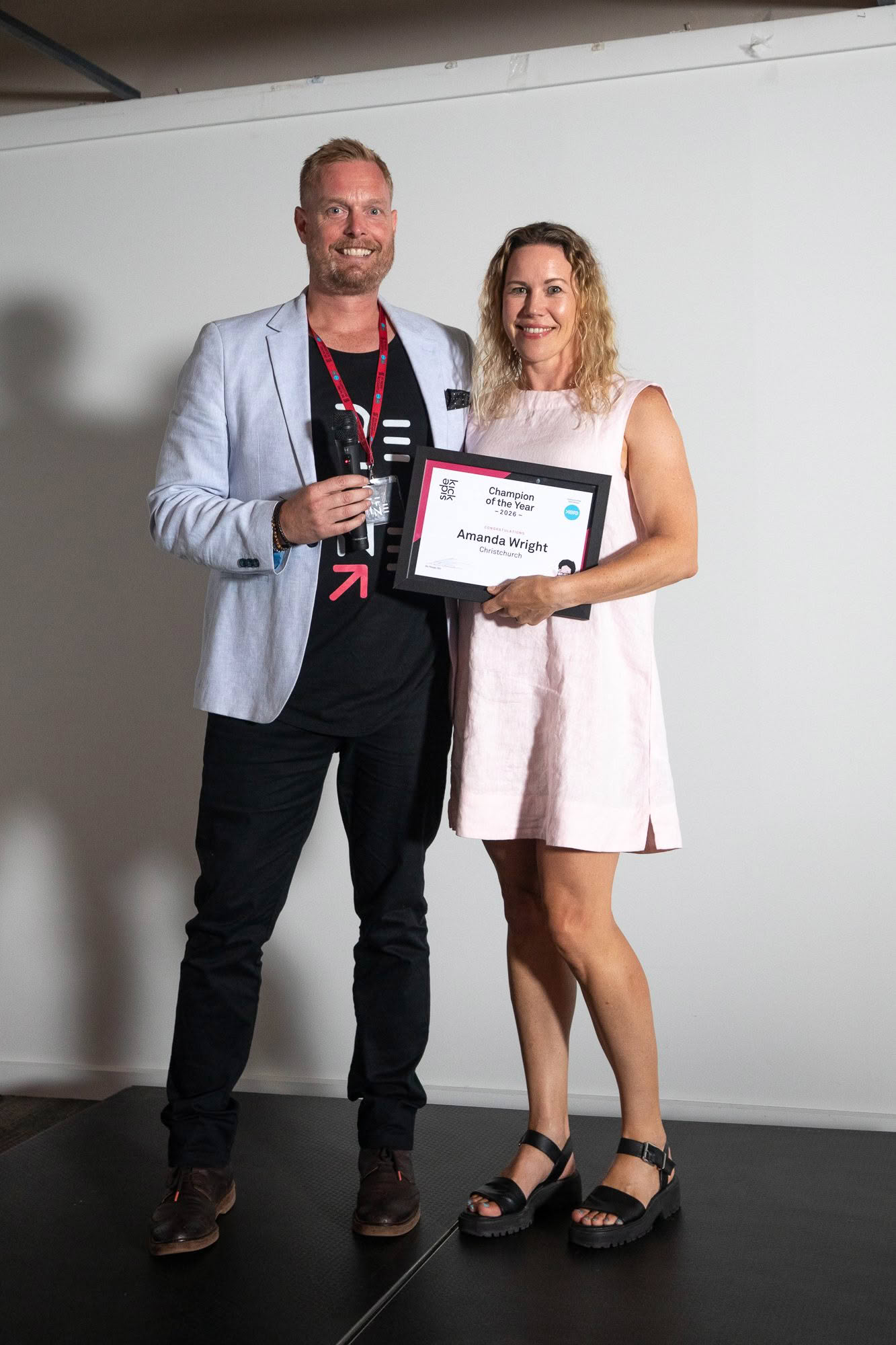
        Amanda Wright – Christchurch • Sidekick Champion

        Sidekick Timaru • Sidekick Team of the Year

        Katie Moratti – Rangiora • Sidekick Teammate of the Year

        Richard Wheeler – Timaru • Sidekick Rural Teammate of the Year

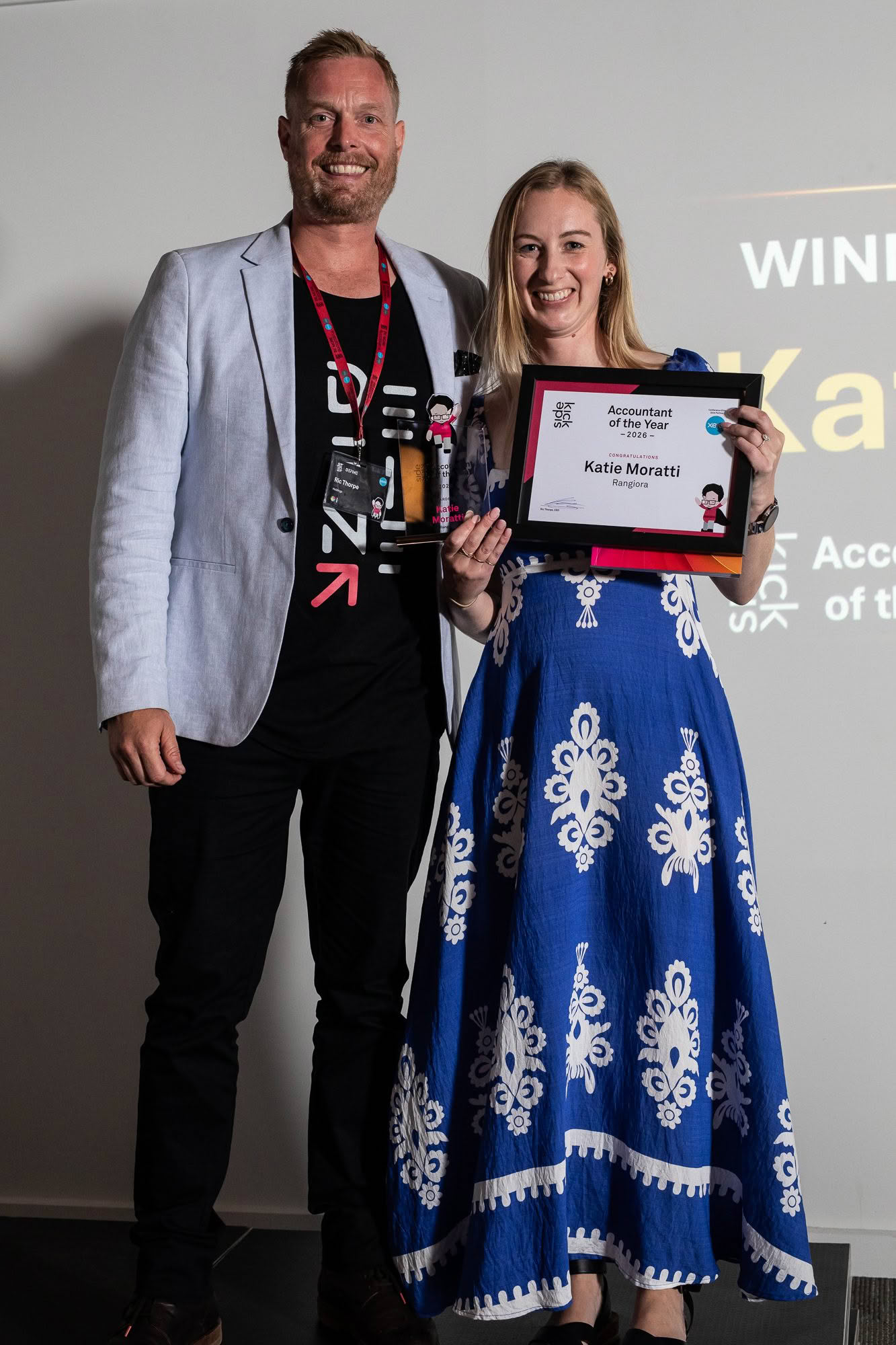
        Katie Moratti – Rangiora • Sidekick Accountant of the Year

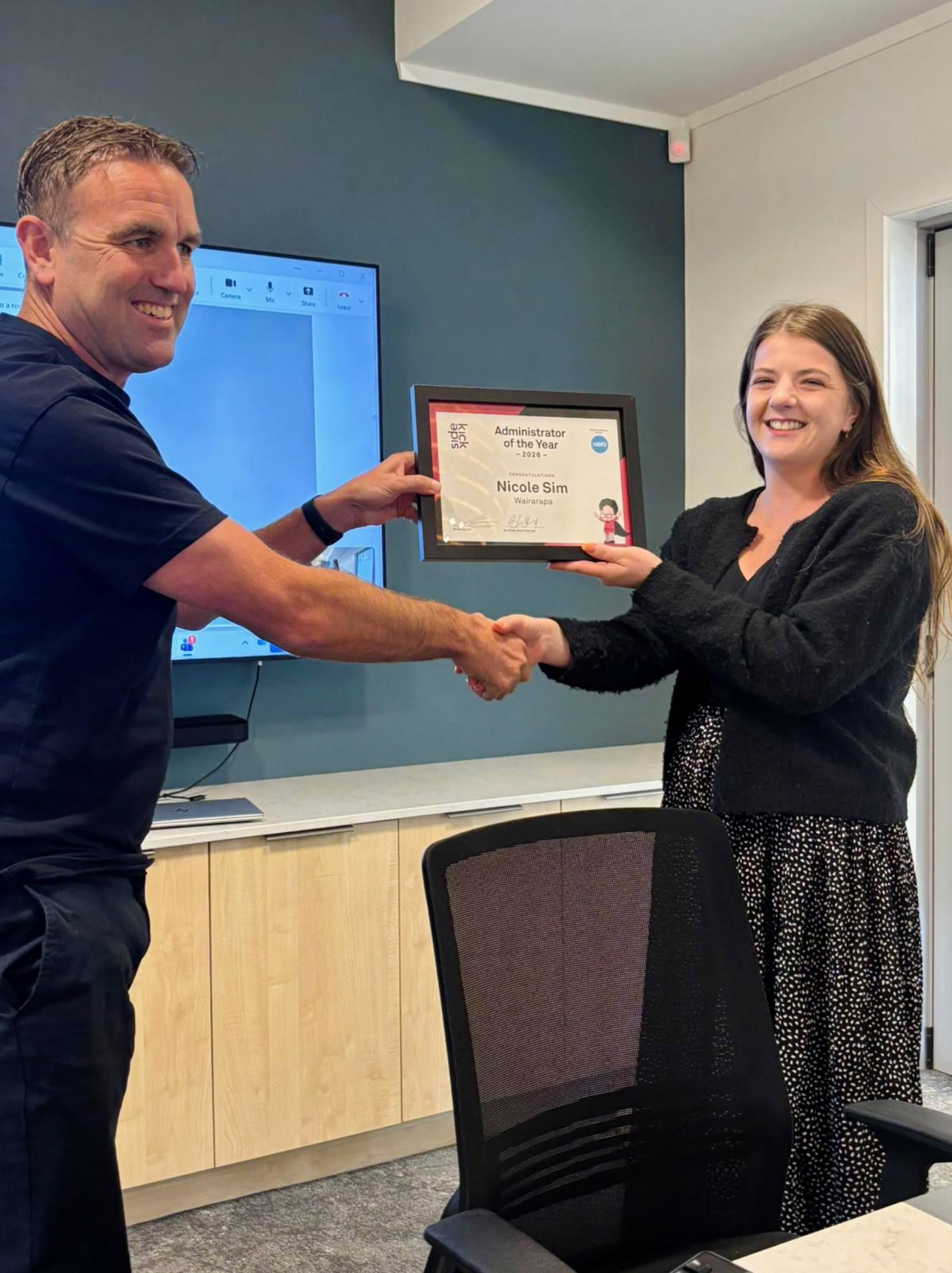
        Nicole Sim – Wairarapa • Sidekick Administrator of the Year

        Sidekick Business of the Year

        A special congratulations goes to The Good Drop in Rangiora, winner of the Sidekick Business of the Year Award.

        The Good Drop has achieved impressive growth in recent years while continuing to play an active role in the local community. Their commitment to both business success and community involvement makes them a very deserving winner.

        March 10th, 2026|

        Sidekick Conference 2026

        Sidekick Conference 2026

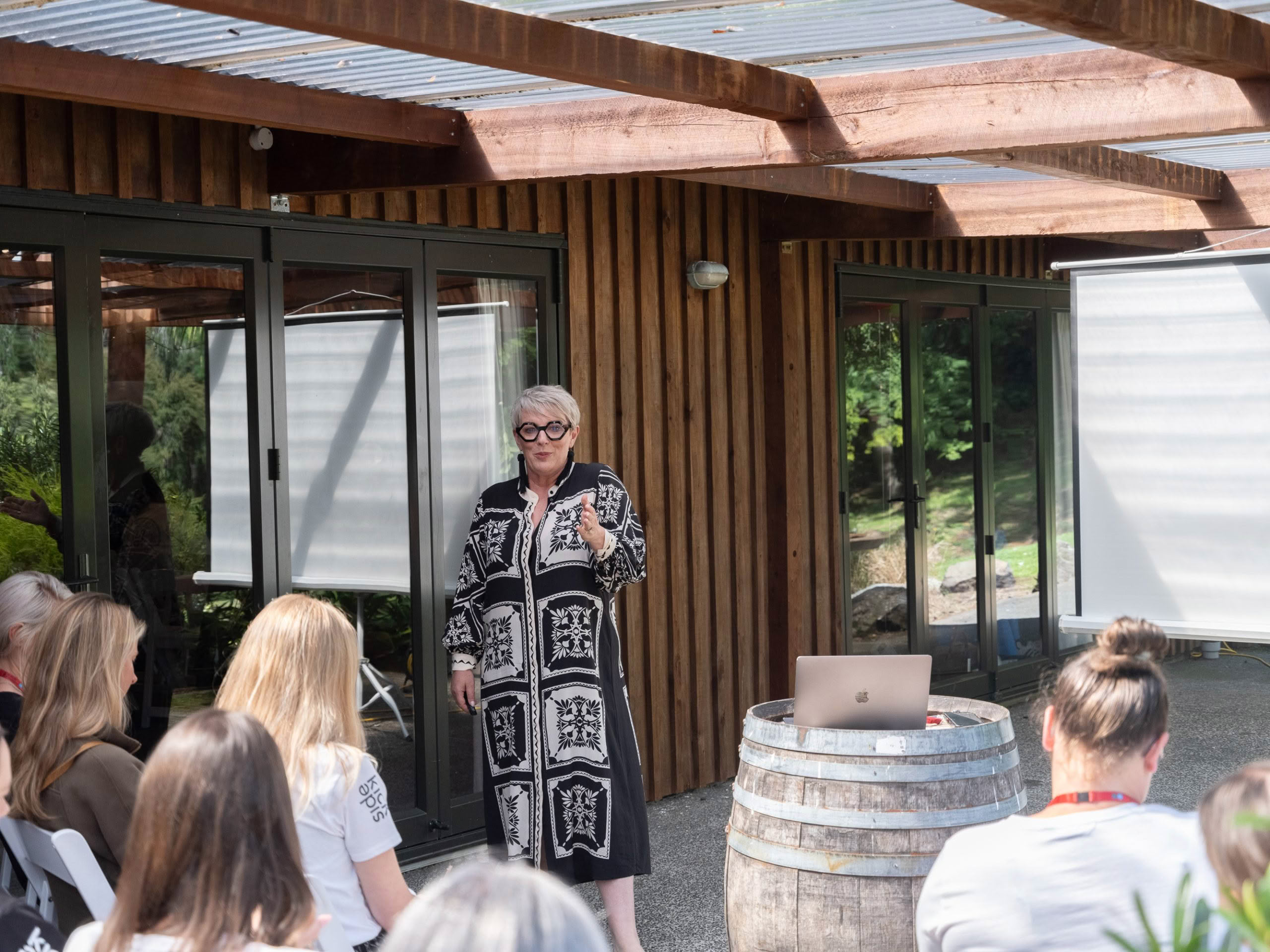
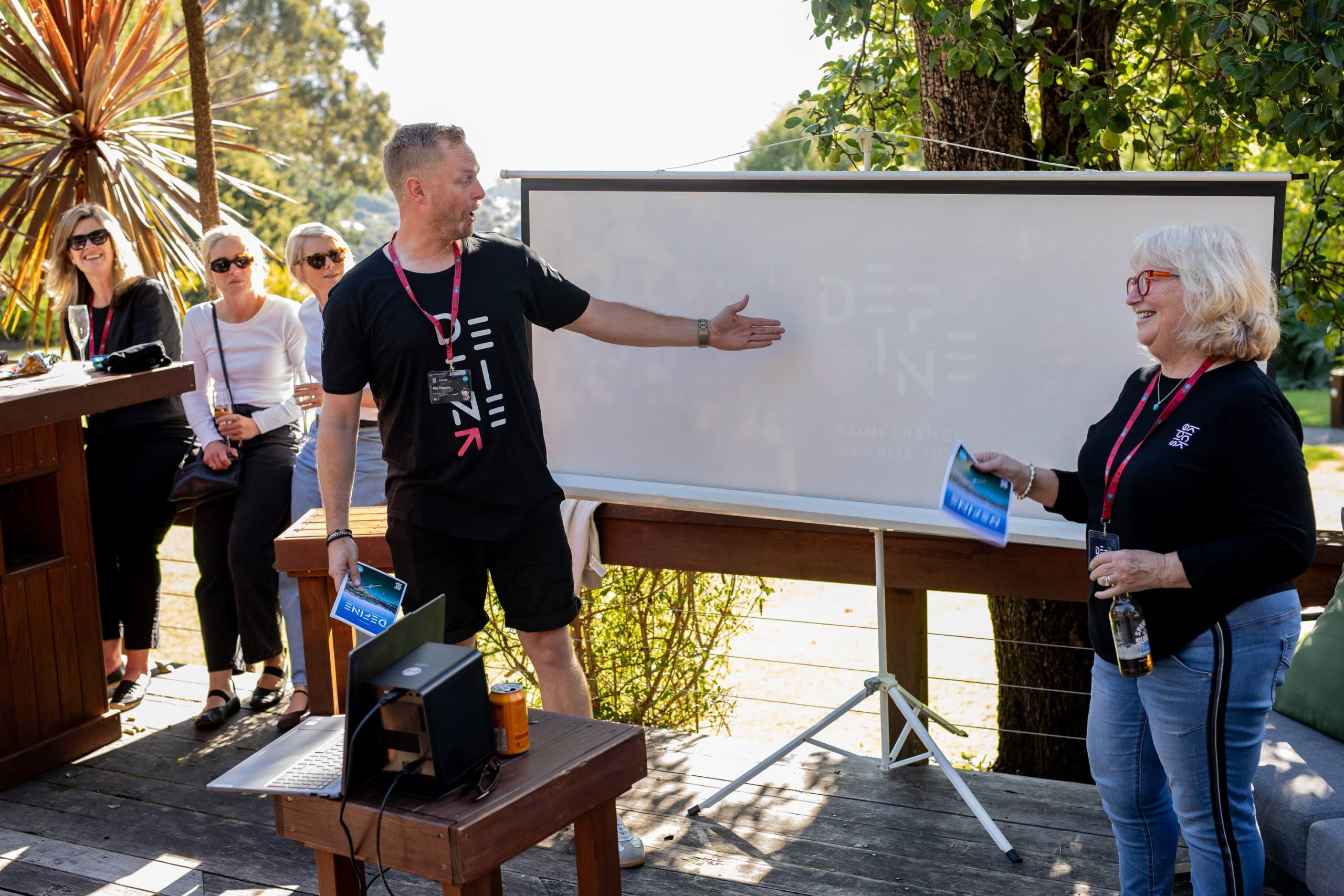
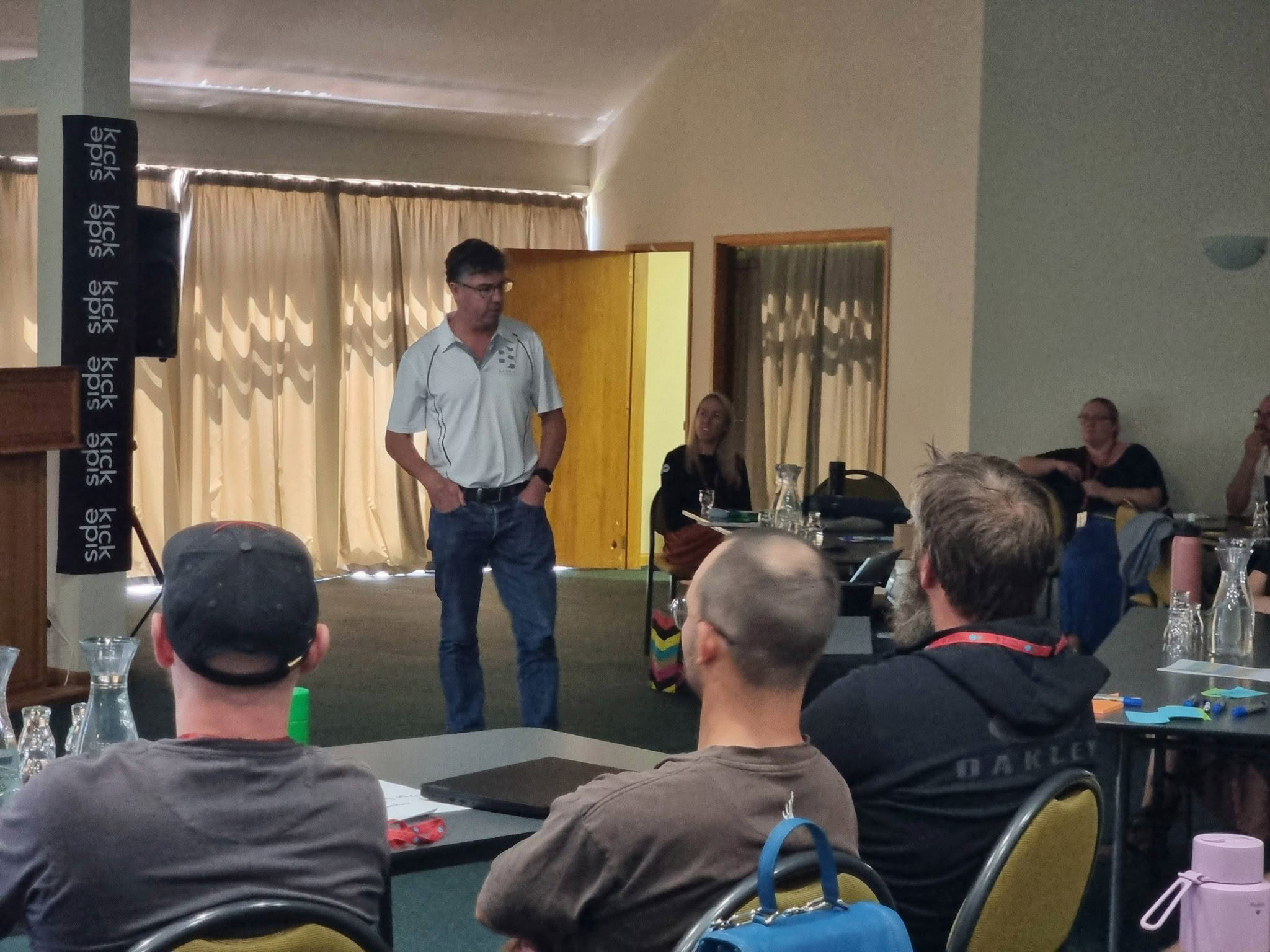
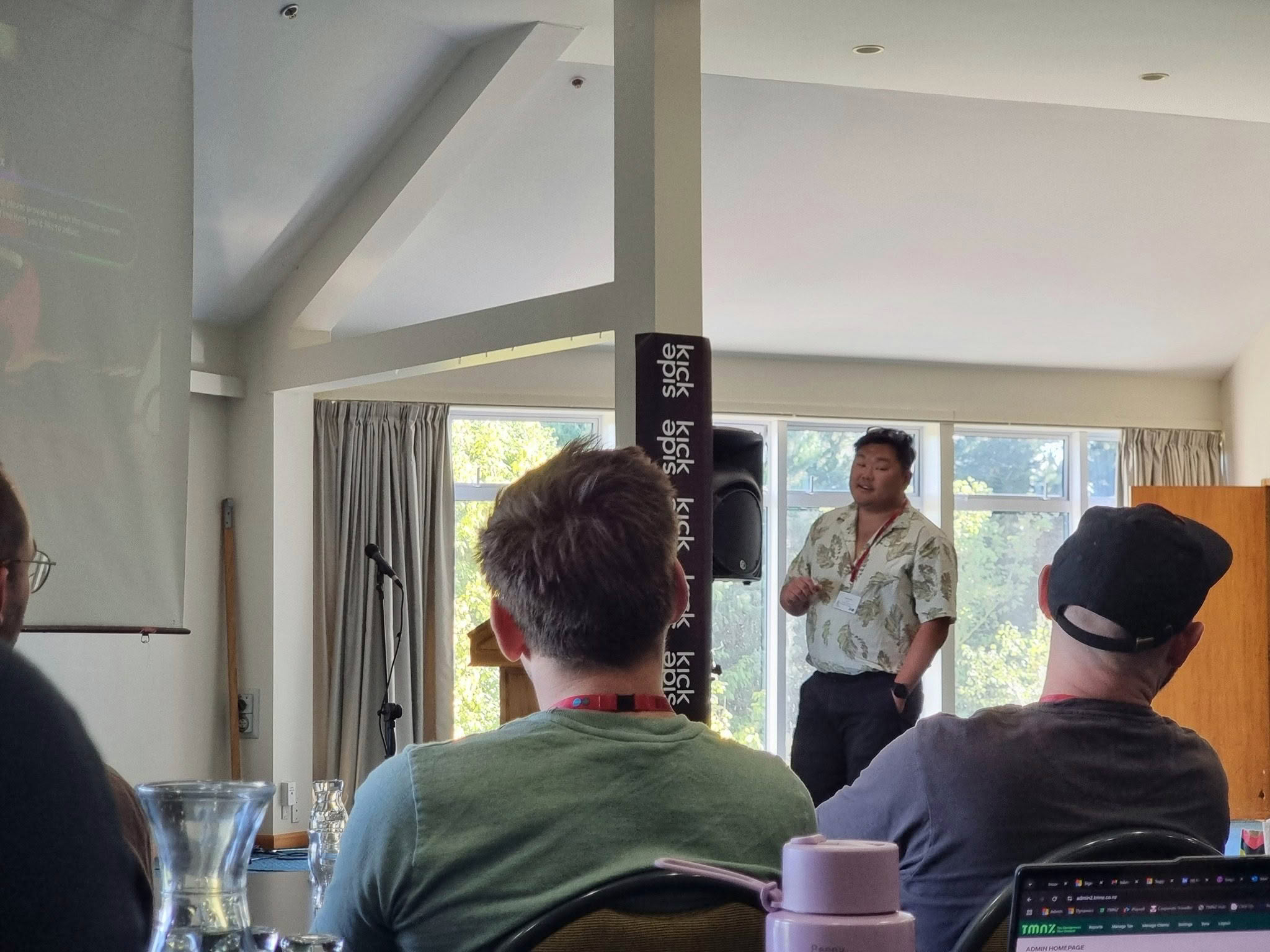
        Sidekick Conference 2026 brought our Sidekick family from eight offices together in Akaroa for three days of learning, connection, big ideas and plenty of laughter.

        The lead-up was a little tense with the weather. Driving through Little River and seeing the damage really put things into perspective. Thankfully the road to Akaroa reopened just in time and the conference went ahead as planned.

        Here’s a quick look at the highlights.

        Day One: Welcome to Akaroa

        We kicked things off at Mt Vernon Lodge with a warm welcome and merch pack collection.

        The evening was all about reconnecting. A gourmet BBQ dinner and drinks got everyone settled in before the hilarious entertainment from The Bitches Box had the room in stitches. After that, everyone headed off to their accommodation ready for the days ahead.

        Day Two: Learning and Connection

        A few keen runners started the day with a morning jog while the rest of the crew met back at Mt Vernon Lodge for a cooked breakfast.

        The morning session was led by Pip Simmons from Bona Fide Consulting, who walked us through our DiSC profiles. Understanding how different personalities work and communicate helps us strengthen relationships, challenge ourselves and work better as a team.

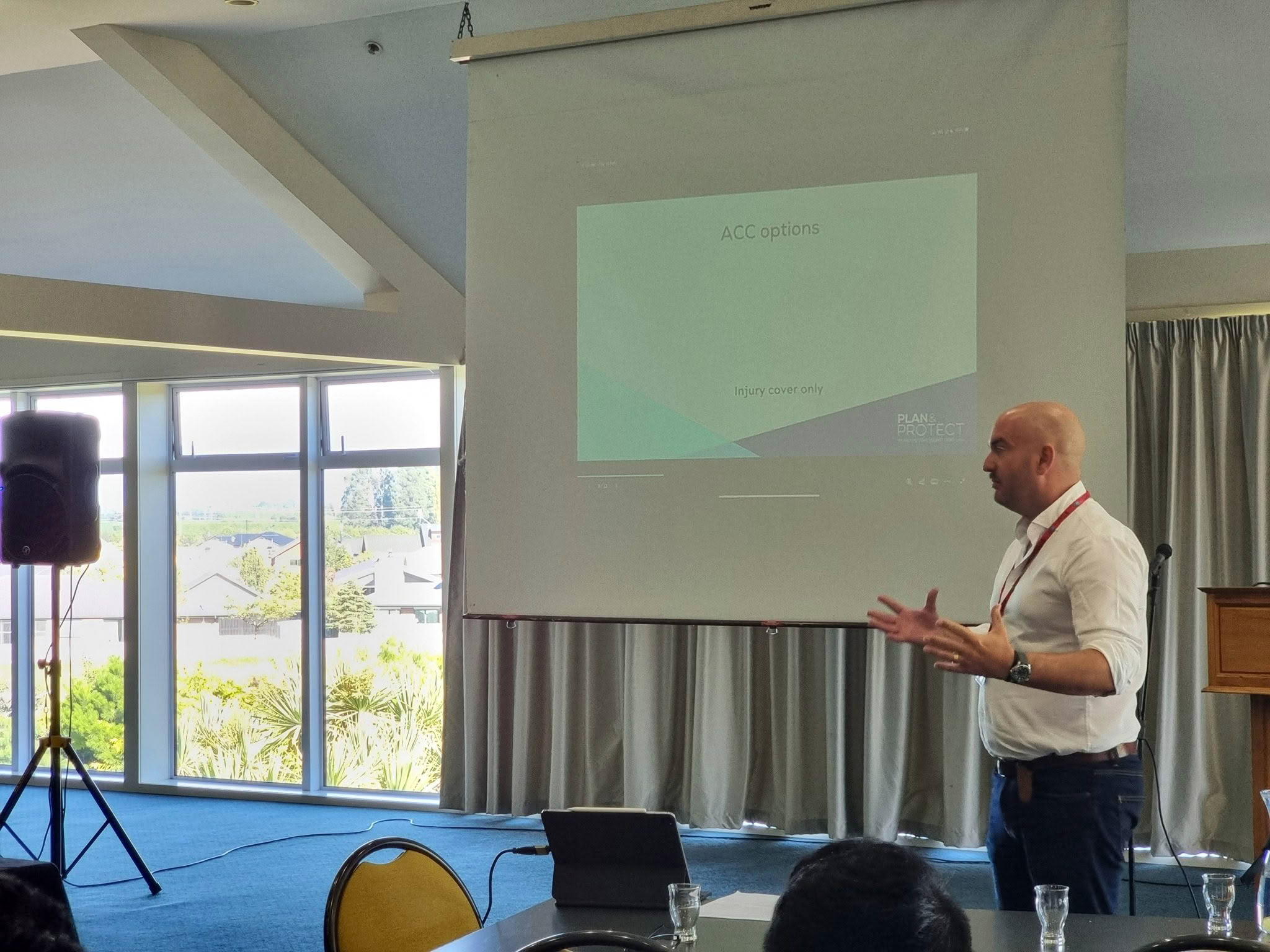
        After morning tea we moved into breakout sessions with our sponsors and industry partners including Xero, Smartly, Figured, Irvine Wenborn, Plan & Protect, TMNZ, The Back Room, Runacres, Emergence Cyber Insurance, and Lisa O’Neill

        In the afternoon, Phil Crothers from Xero delivered a keynote on Leading Yourself. His message was simple. Great leadership leading yourself first.

        By late afternoon it was time to relax. We headed out on the Black Cat dolphin cruise around Akaroa Harbour, with refreshments kindly sponsored by Scott Findlay from The Back Room.

        That evening we celebrated our people at the Sidekick Awards Gala, with the energetic Lisa O’Neill bringing plenty of laughs and inspiration.

        You can see all the award winners in our Sidekick Awards post.

        Day Three: Looking Ahead

        The final morning focused on creativity and the future.

        Teams kicked things off with a Reels Challenge, creating short videos for social media with the goal to encourage creativity and build confidence in front of the camera. The results had the whole room laughing.

        We also launched our new tagline: People Driven Accounting

        Technology continues to transform the industry, but trust, clarity and confidence still come from people. And while we love the numbers, we care even more about the people behind them.

        To wrap up the conference, our CEO Ric, and head of projects Helen reflected on the past year and shared what’s ahead for Sidekick.

        A Big Thank You

        A huge thank you to our sponsors Xero, Smartly, Figured, Plan & Protect, TMNZ, Runacres, Irvine Wenborn and The Back Room for helping make the event possible.

        And of course, to our incredible team across all eight offices. You are what makes Sidekick what it is.

        March 10th, 2026|

        Sidekick Rural joins expert panels at Figured global agri leaders summit 2026

        Sidekick Rural at the Figured global agri leaders summit 2026

        In February, members of the Sidekick Rural team travelled to Auckland to attend the Figured Global Agri Leaders Summit 2026.

        The summit brings together leaders from across the agricultural accounting, advisory and technology sectors. It provides an opportunity to connect with peers, share ideas and discuss the trends shaping the future of agriculture.

        This year’s programme focused on leadership, business growth, succession planning and the growing role of AI in agriculture.

        Sidekick Rural directors join expert panels

        A highlight for our team was seeing both of our directors invited to sit on expert panels during the event.

        Brett joined the panel “Growth at the front seat of strategy.” The discussion explored how advisory firms and farm businesses can approach growth with clear planning, strong financial insights and practical strategy.

        Richard’s panel “Talent to support growth strategy.” focused on building strong teams within advisory firms and ensuring the right expertise is in place to support growing farm businesses.

        Insights into Figured’s future direction

        The summit also gave attendees an early look at Figured’s future direction, with updates on upcoming developments designed to better support farmers and their advisors.

        Figured is widely recognised as a leading platform for agri-business financial management. The software brings budgeting, forecasting and reporting together in one system. As a result, farmers and advisors gain clearer visibility over farm performance.

        The platform also allows users to model long-term goals, explore succession planning scenarios and produce accurate monthly cashflow forecasts. These reports help farm owners and lenders make confident decisions.

        A long-standing partnership

        Sidekick Rural has worked closely with Figured for many years. In fact, we were the first firm in New Zealand to achieve Elite Partner status.

        Our partnership continues to grow as the platform evolves. Figured is increasingly focused on scalable, data-driven advisory services across the agri sector. We are also excited to support the development of Figured’s upcoming benchmarking reporting tools.

        Connecting with global agri leaders

        This year’s summit attracted firms from across New Zealand, Australia, and the United States. Because of this, it provided a great opportunity to exchange ideas with international leaders in agri advisory.

        One highlight for our team was connecting with Jonathan Haralson from Empire Ag in Texas. He shared valuable insights on building strong rural communities online and using social media to better connect with farmers.

        Bringing global insights back to farmers

        Events like the Figured Global Agri Leaders Summit remind us that while farming is local, innovation in agriculture is global.

        At Sidekick Rural, we value opportunities like this. They allow us to stay connected to new ideas and bring those insights back to the farming businesses we work with every day.

        March 10th, 2026|

        Doing your own GST returns? IRD audit activity is increasing

        If you’re doing your own GST returns, are you certain they’re correct?

        IRD audit and risk review activity is increasing, particularly around GST.

        Most audits aren’t fraud related, they’re actually triggered by:

        • Unusual patterns compared to your industry

        • Coding errors

        • Missed filings

        • Random selection

        Small mistakes can become big problems fast.

        When we do your GST for you, we:

        ☑️ Collate and code transactions correctly

        ☑️ Prepare and file your GST returns

        ☑️ Review your returns before they become an issue

        ☑️ Help you avoid unnecessary IRD attention

        You might be fine doing your GST…. But ‘fine’ isn’t always compliant.

        If you’d rather have GST confidence rather than crossed fingers, let’s talk.

        Book a call with your local Sidekick advisor

        March 6th, 2026|

        Managing financial risk with Sidekick Rural

        Milk price volatility is one of the biggest uncontrollable risks in dairy.

        For our clients, Neer Enterprises in the Wairarapa, a lower-than-expected payout caused cashflow stress, and highlighted just how exposed they were to something they couldn’t control.

        Neer is a true family business. With Sandie Shivas, Rob Steele and Olivia Clark leading day-to-day operations, and the wider Reid family, Noel and Elaine, along with many grandkids involved, the focus has always been long-term sustainability.

        Instead of riding the payout wave and hoping it improved, they chose to actively manage the risk.

        Working alongside Brett from Sidekick Rural, Neer implemented Figured’s Milk Price Protection, delivered in partnership with StoneX. This tool allows dairy farmers to lock in a portion or all of their milk price for the season ahead.

        The result:

        • Greater income certainty
        • More reliable budgeting
        • Reduced financial stress
        • Clearer long-term planning

        Milk Price Protection didn’t remove volatility from the industry. It reduced its impact on the business, and created a stronger financial environment by putting the right people, tools and structure in place.

        If milk price swings are making it hard to plan with confidence, it may be time to rethink how you manage risk.

        Talk to our Sidekick Rural team about whether Milk Price Protection is right for your farm.

        [Watch the full case study here] https://youtu.be/dZaNZGfVHpU

        February 20th, 2026|

        Tax Pooling 101

        What Is Tax Pooling and Who Can Benefit?

        Tax pooling is a tax management tool that helps NZ businesses manage provisional tax more flexibly and reduce exposure to Inland Revenue (IRD) interest.

        For many businesses, provisional tax can be difficult to get right. Income can change during the year, timing of cashflow doesn’t always line up with tax dates, and estimates made early on can quickly become outdated. Tax pooling provides a way to manage these challenges more effectively, while staying compliant.

        What is tax pooling?

        Tax pooling allows businesses to pay provisional tax into a tax pool rather than directly to IRD. These pools are operated by IRD-approved intermediaries, such as Tax Management NZ (TMNZ) and Tax Traders.

        The main advantage is flexibility.

        If a business underpays provisional tax, it may be able to purchase tax from the pool later and transfer it to IRD, often at a lower interest cost than IRD’s use of money interest.

        If a business overpays, it may be able to sell excess tax back into the pool or draw the cash out (like a savings account). Something you’re not able to do until your tax return is filed when the funds are stuck with IRD.

        In practice, tax pooling can help to:

        • Reduce interest costs on underpaid provisional tax
        • Provide flexibility when income fluctuates
        • Improve cashflow timing
        • Reduce risk when tax estimates are uncertain

        Who can benefit from tax pooling?

        Tax pooling can be used by a wide range of New Zealand businesses, including:

        • Commercial businesses and companies
        • Agricultural and rural businesses
        • Contractors and sole traders
        • Partnerships and trusts
        • Businesses with seasonal or irregular income

        It’s particularly useful for businesses where profits fluctuate or where cashflow timing makes provisional tax payments challenging.

        Why businesses use tax pooling

        Tax pooling isn’t about avoiding tax. It is about managing timing and reducing unnecessary interest and penalties when things don’t go exactly to plan.

        Many businesses use tax pooling as a safety net, giving them options if provisional tax payments end up being too high or too low once the year is complete.

        Learn more in our video

        Tax pooling can seem complex at first, but it’s easier to understand when you see how it works in real situations. We explain tax pooling in plain English, including when it can help and when it may not be appropriate, in our YouTube video.

        👉 Watch our tax pooling video here:
        https://youtu.be/_nkKYKnZr-U

        If you’d like to know whether tax pooling could work for your business, talk to your Sidekick advisor. We can help you understand your options and decide what approach makes sense for your situation.

        January 14th, 2026|

        Healthy Homes Standards: What Landlords Need to Know in 2025

        In July, the Sidekick Christchurch office welcomed a guest speaker to discuss the latest updates to the Healthy Homes Standards and what they mean for landlords across New Zealand. These standards, part of the Residential Tenancies Act 1986, are designed to ensure rental properties are warm, dry, and healthy for tenants. With the final compliance deadline of 1 July 2025, it’s crucial for landlords to understand their responsibilities and avoid costly penalties.

        Key Requirements Under the Healthy Homes Standards

        All private rental properties must meet the following minimum standards:

        • Heating: A fixed heater capable of heating the main living room to a minimum standard.
        • Insulation: Ceiling and underfloor insulation must meet updated requirements, even if previously installed.
        • Ventilation: Windows or doors that open to the outside in all living spaces, plus extractor fans in kitchens and bathrooms.
        • Moisture Ingress & Drainage: Efficient drainage systems and ground moisture barriers for enclosed subfloors.
        • Draught Stopping: Blocking unreasonable gaps and holes that cause noticeable draughts

        Compliance Deadlines and Statements

        • From 1 July 2025, all private rentals must comply with the standards.
        • For tenancies started or renewed between 28 August 2022 and 2 March 2025, landlords have 120 days to comply.
        • Every new, renewed, or varied tenancy agreement must include a compliance statement detailing the property’s current level of compliance. Failing to include this statement can result in a $500 fine per tenancy

        Consequences of Non-Compliance

        Landlords who do not meet their obligations may be in breach of the Residential Tenancies Act and face financial penalties of up to $7,200 per tenancy

        Additionally, tenants can request documentation showing compliance, which landlords must provide within 21 days.

        For more detailed information, visit the official Tenancy Services Healthy Homes page or watch their Compliance Statement video.

        Need Help Navigating the Changes?

        If you’re unsure how these updates affect your property or what steps to take next, book an appointment with Sidekick. Our team can provide tailored advice to ensure you’re fully compliant and avoid penalties.

        July 29th, 2025|

        Upcoming Changes to Xero Subscription Pricing

        Xero has announced updates to the pricing of several business subscription plans in New Zealand, effective 1 September 2025. These changes reflect Xero’s ongoing investment in delivering a secure, reliable, and innovative platform that supports businesses now and into the future.

        What’s Changing?

        From 1 September, the following monthly subscription prices will apply:

        • Xero Ignite: Remains at $35
        • Xero Grow: Increases to $83
        • Xero Comprehensive: Increases to $110
        • Xero Ultimate: Increases to $125

        There are no changes to the pricing of Xero Ledger or Cashbook plans.

        Why the Change?

        Xero periodically reviews its pricing to ensure it can continue to deliver value through platform enhancements, security improvements, and new features. This year, Xero has rolled out a range of updates designed to streamline workflows, improve reporting, and enhance user experience. View more details of the price changes on Xero’s website.

        Additional Information

        • All pricing is in NZDexcludes GST, and is subject to change with notice as per Xero’s terms of use.
        • If you’re currently using a promo code, it will continue to apply to the new pricing until it expires.

        If you have any questions or need assistance understanding how these changes might affect your business, please don’t hesitate to reach out to the team at Sidekick.

        July 29th, 2025|

        2025 Mileage Rates: What You Need to Know

        Inland Revenue has released the updated kilometre rates for the 2024–2025 income year. These rates are used to calculate business-related vehicle expenses and apply to both self-employed individuals and employers reimbursing staff for work travel.

        The kilometre rates are split into two tiers:

        • Tier 1 applies to the first 14,000 kilometres of business travel. It includes both fixed costs (such as depreciation and registration) and running costs (like fuel and maintenance).
        • Tier 2 applies to any business travel beyond 14,000 kilometres and covers running costs only.

        For the 2024–2025 income year, Inland Revenue has introduced separate Tier 1 rates for different vehicle types, reflecting the varying costs of operating each type. This change ensures the rates more accurately represent actual vehicle expenses.

        Here are the current rates:

        Vehicle Type Tier 1 rate per km Tier 2 rate per km
        Petrol $1.17 $0.37
        Diesel $1.26 $0.35
        Petrol Hybrid $0.86 $0.21
        Electric $1.08 $0.19

        These rates can be used by businesses to claim deductions for vehicle use or to reimburse employees for work-related travel in their personal vehicles. It’s important to note that while these rates are accepted by the Commissioner as a reasonable estimate of expenditure, businesses may also use other methods—such as actual costs or third-party data—if they provide a more accurate reflection of expenses.

        Employers who do not track the specific vehicle types used by employees may use a blended average of the Tier 1 rates to simplify calculations, provided it remains a reasonable estimate.

        Why does it matter? Using the correct kilometre rate method helps ensure compliance with tax obligations and provides a fair and consistent approach to claiming or reimbursing vehicle expenses. It also simplifies record-keeping and helps avoid any issues during tax time.

        For full details, visit the IRD’s official update: Kilometre Rates 2025 – IRD

        Want to know more about how these changes apply to your business? Get in touch with the team at Sidekick for personalised advice.

        June 30th, 2025|

        When did you last take time out to work on your business?

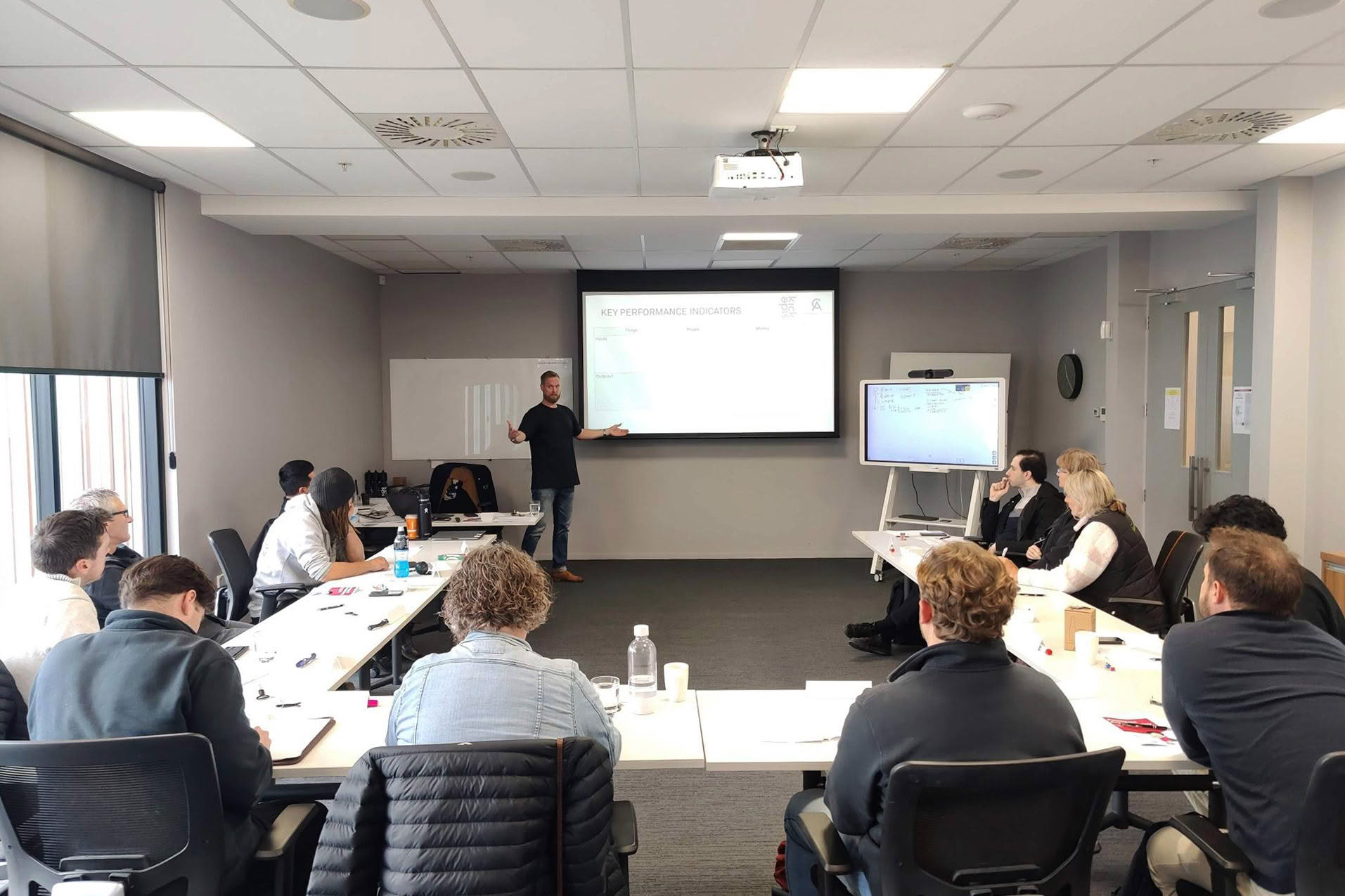
        This month, Sidekick hosted a ‘Planning and Financial Mastery’ workshop in collaboration with Business Canterbury and Enterprise North Canterbury. The session was led by Ric Thorpe, CEO at Sidekick, and Helen Pauley, Project Coordinator at Sidekick, and brought together a group of business owners and provided them with take-away tools for them to move forward with confidence.

        Ewan shared his thoughts on the workshop:

        Yesterday’s session from Sidekick was really informative. Having done past business degrees a long time ago, it felt like a year of that in a refresher course condensed down to a day. Ric and Helen presented well and were very engaging.

        Ewan MacArthur, Highland Fern Limited

        A big thank you to everyone who joined us, and to our partners for making the event possible.

        Keep an eye out for upcoming Sidekick events near you — and get in touch to find out how we can support your business success.

        Pictured: Louis & Ewan from Highland Fern Limited, and Anne from All About Cheese

        June 30th, 2025|

        Unlocking the Three Freedoms: Mind, Time & Financial

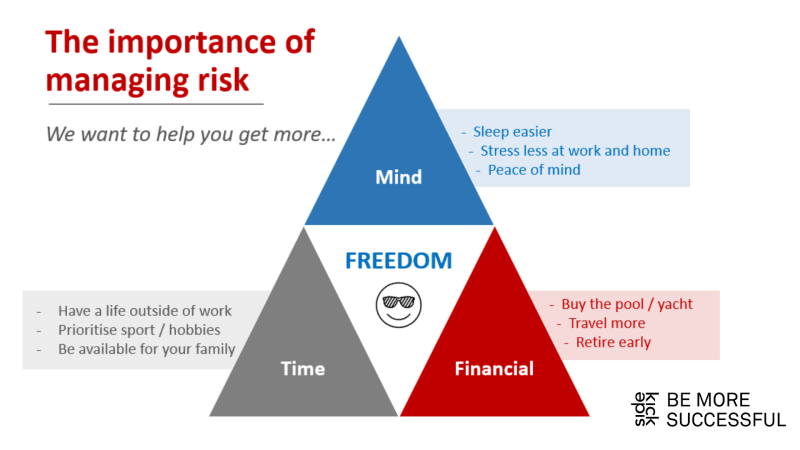
        At Sidekick, we believe that true business success isn’t just about profit margins—it’s about freedom. That’s why we focus on helping our clients achieve what we call the Three FreedomsMind FreedomTime Freedom, and Financial Freedom.

        But here’s the secret: you can’t achieve any of these freedoms without managing risk. Risk is the hidden force that can quietly erode your time, stress your mind, and drain your finances. That’s why we work closely with our clients to identify and proactively address the risks in their business—before they become costly problems.

        Let’s explore what each freedom really means:

        1. Mind Freedom

        Running a business can be mentally exhausting. Worrying about cash flow, compliance, or unexpected disruptions can take a toll. Mind freedom means reducing that stress. When you proactively manage risk, you gain peace of mind. You’re not constantly firefighting—you’re leading with clarity and confidence.
        Imagine sleeping easier, stressing less at work and home, and enjoying a calmer, more focused mindset.

        2. Time Freedom

        Time is your most valuable resource. Yet many business owners find themselves stuck in the day-to-day, unable to step away. By identifying and addressing risks early, you reduce interruptions and free up time.
        That means more space to have a life outside of work—whether it’s prioritising your morning run, picking up the kids from school, or finally joining that weekend sailing club.

        3. Financial Freedom

        This is the one most people chase first—more profit, better cash flow, and a higher business valuation. But here’s the catch: without mind and time freedom, financial freedom is fragile. A single disruption can undo months of progress.
        With a resilient business, you can dream bigger—buy the pool, travel the world, or even retire early.

        When you take a proactive approach to risk, you’re not just protecting your business—you’re creating space to thrive. You’ll feel more in control, spend less time reacting, and unlock more of the freedom you went into business for in the first place.

        Ready to find your freedom?
        Book an appointment with Sidekick today. Let’s sit down together and explore how you can optimise your business around the Three Freedoms.

        June 30th, 2025|

        You Don’t Have to Love Financials—But You’ll Love the Confidence That Comes From Understanding Them

        Let’s be honest—most of us didn’t choose farming because we adore balance sheets or taxation tables. But here’s the thing: getting a handle on your financials doesn’t have to be scary or painful—and it can totally change the game for your business.

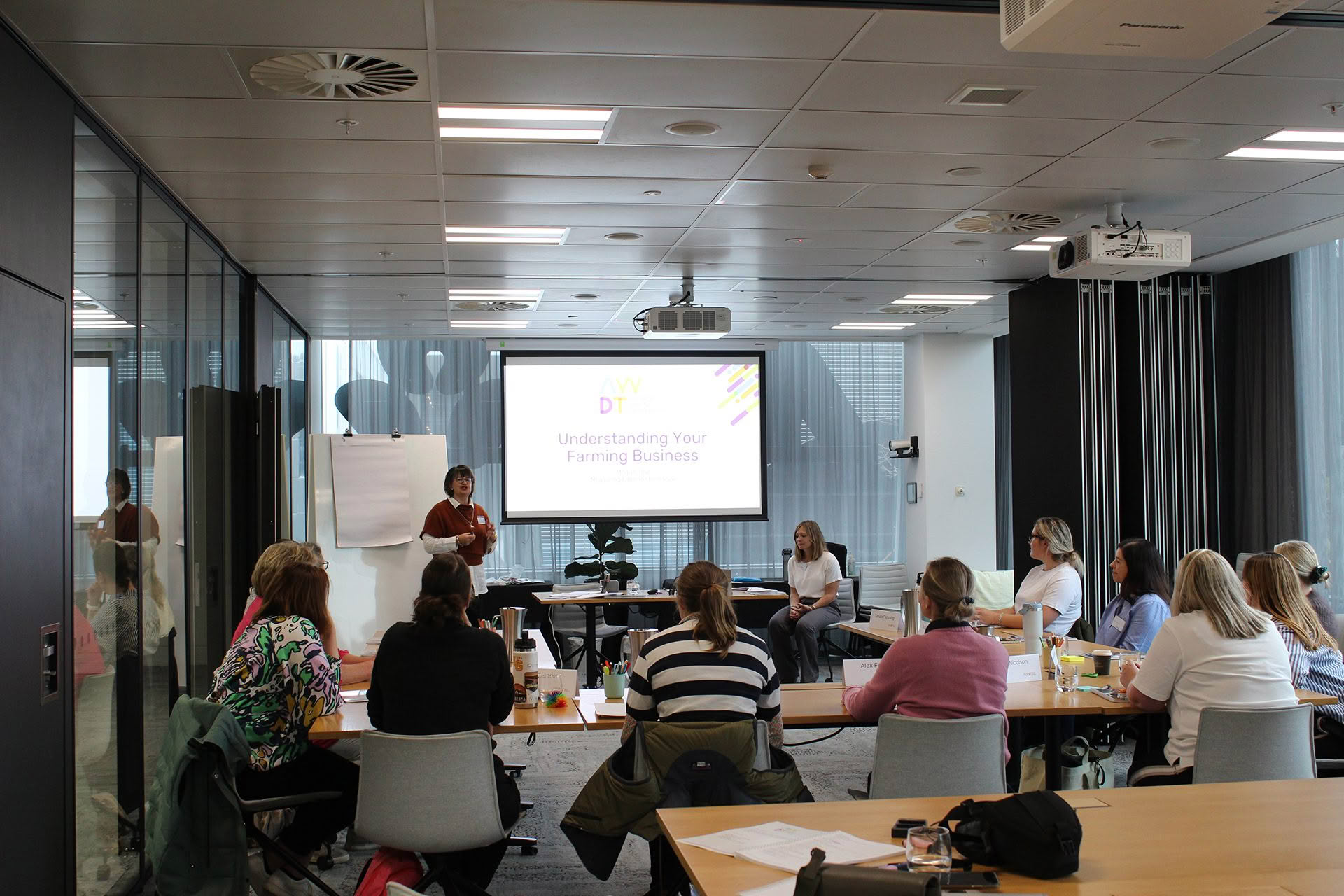
        That’s why AWDT’s Understanding Your Farming Business programme takes a practical, confidence-building approach to the money side of things. We’re not here to turn you into an accountant—we’re here to help you ask smarter questions, make better decisions, and sleep a little easier at night.

        Because when you don’t understand your financials, it’s harder (at times impossible) to navigate uncertainty and change. But when you do? You’re in the driver’s seat—ready to adapt, plan, and grow with confidence.

        In our financial module, we cover:

        • What financial statements actually tell you
        • How stock profit and livestock tax really work
        • The story behind your income statement and balance sheet
        • Taxation basics that actually matter
        • Business structures (hint: the wrong one could cost you)
        • And how to build trusted teams and coach your way through tricky conversations

        You don’t have to love financials. But understanding them? That’s where your real power starts. And yes—there’ll be tea, laughs, and plenty of lightbulb moments along the way.

        At Sidekick, we’re proud to be an accounting partner for AWDT. Get in touch with us today to see how we can help you to be more successful.

        June 30th, 2025|

        NZ’s New Tax Incentive: A 20% Head Start on Business Investment

        The New Zealand Government has introduced a new Investment Boost, a year-long, front-loaded tax incentive designed to encourage Kiwi businesses to invest in productive assets and bolster the nation’s economic recovery. Unveiled in the 2025 Budget and effective from 22 May 2025, companies can immediately deduct 20 percent of the cost of eligible new assets—on top of standard depreciation—boosting cash flow and promoting capital expansion.

        What does it cover?
        The boost can be applied to new machinery, tools, vehicles, imported second-hand assets, software, websites, new commercial buildings, and primary-sector land improvements. Residential properties, land itself, and already-used domestic assets are ineligible.

        Why introduce it?
        Finance Minister Nicola Willis states that by improving cash flow earlier in the investment lifecycle, small and large businesses will find more opportunities financially viable. Treasury projects the boost will lift GDP by 1% and wages by around 1.5% over the next 20 years—with half of those gains occurring within five years.

        Basic example
        Consider a manufacturing firm buying an environmental test chamber for NZ$200,000. Normally, they’d depreciate 10.5% per year (a deduction of $21,000 in year one). With the boost, they can deduct an extra 20% ($40,000) immediately—bringing total year-one deductions to $56,800. At the 28% company tax rate, this equates to over NZ$10,000 less tax payable that year.

        Bottom line
        The Investment Boost offers a meaningful cash-flow advantage to businesses investing in growth, making NZ assets—whether machinery, vehicles, or tech—an attractive proposition. As firms reinvest immediate savings, the government expects productivity gains, higher wages, and stronger economic momentum.

        Learn more about these changes here. Still have more questions? Get in touch with Sidekick today!

        June 30th, 2025|

        Team Bonding and a Warm Welcome at Sidekick Timaru

        On 23 May, the Sidekick Timaru team enjoyed an afternoon break away from the office and headed to Christchurch to support the Crusaders in their match against the Highlanders (or vice versa depending on your allegiance!). In the lead up we challenged each other in Escape Rooms to see which team completed the challenge in the least time! Having time together as a team is something we value at Sidekick. 

        Adding to the excitement, we’re delighted to welcome a new face to the team at Sidekick Timaru. Katie Westwood is a talented accountant and joined us in mid-May. Clients can expect to see and hear from Katie in the coming weeks. Welcome to the team Katie!

        Keep an eye on our website to see more updates from the team. Or, get in touch with us today to book your next appointment!

        June 30th, 2025|

        Sidekick Rural Becomes the World’s First Elite Partner of Figured

        Sidekick was the world’s first Xero Platinum Partner back in the early 2010s and pioneered the modern cloud-based accounting firm on a single ledger with their clients. We’re at it again, and we’re thrilled to announce our new Elite Partnership with Figured, bringing a suite of powerful financial tools and insights to New Zealand farmers. This collaboration is designed to provide wrap-around functionality, enhance your farming operations, and secure your financial future.

        Everyone knows Figured’s market-leading cashflow and production management software, which integrates the farmer, the bank, suppliers, and your accountant. Now, check out this suite of services that Sidekick Rural helped develop with Figured:

        • Milk Price Protection: Say goodbye to the stress of fluctuating milk prices. Our partnership with Figured offers robust milk price protection strategies, ensuring you get the best possible return for your hard work.
        • Regional Benchmarking Insights: Gain a competitive edge with regional benchmarking insights. Compare your farm’s performance against others in your area and identify opportunities for improvement. Stay ahead of the curve with data-driven decisions.
        • Cashflow and Livestock Funding: Managing cashflow and livestock funding has never been easier. Figured’s advanced tools help you plan and monitor your finances, ensuring you have the resources you need, when you need them.
        • Halter Funding: Embrace innovation with Halter funding. Access the latest in livestock management technology, improving efficiency and productivity on your farm. Stay at the forefront of agricultural advancements.
        • Asset Finance: Expand and upgrade your farm with ease. Our asset finance solutions provide the support you need to invest in new equipment and infrastructure, driving growth and sustainability.

        Maximise your return on Figured software and your accountant. Ready to take your farming business to the next level and stay ahead of the pack?

        Enquire here if you are interested in any of these services. Let’s work together to build a prosperous future for New Zealand agriculture!

        June 30th, 2025|

        The Herd Scheme: A Strategic Tax Tool for New Zealand Farmers

        The Herd Scheme is a unique livestock valuation method in New Zealand that treats livestock as a capital asset, thereby exempting changes in livestock values from being considered taxable income. This approach is designed to prevent large tax liabilities from arising due to market fluctuations in livestock values. Instead, only changes in the number of livestock are assessable for tax purposes. This method allows farmers to value their livestock at the same rate at both the opening and closing of the financial year, resulting in a tax-free adjustment to the opening livestock values. This effectively neutralises any taxable income from changes in livestock values.

        Each year, around the end of May, the Inland Revenue Department announces the National Average Market Values (NAMV) for each class of livestock. These values are determined based on a survey of livestock values across the country as of 30 April each year. The NAMV is used for valuing livestock under the Herd Scheme and is calculated using a weighted average based on livestock numbers in each region compared to national herd numbers. This ensures that the values reflect the average market conditions for good-quality on-farm animals.

        The Herd Scheme is largely irrevocable once elected, with limited circumstances allowing for an exit. For instance, a farmer can exit the scheme if they stop using all female livestock for breeding and instead use them in a fattening operation, or if there is an increase in the number of animals in a class, allowing for an alternative valuation method. This restriction is intended to ensure that farmers choose a valuation method that aligns with their long-term business needs rather than for short-term tax advantages.


        Current Year Values

        For the 2024–2025 period:

        • Sheep values have experienced a significant increase of approximately 33% on average (following a 37% average decrease in 2024).
        • Beef values have increased by approximately 35% (following a 2% average increase in 2024).
        • Dairy values have increased approximately 45% (following a 2% average increase in 2024).

        Summary

        The Herd Scheme offers a strategic approach to livestock valuation by treating livestock as a capital asset, thereby exempting changes in livestock values from tax. This method provides stability in tax planning for farmers, especially in volatile market conditions.

        However, the decision to enter the Herd Scheme should be made with careful consideration of long-term business goals, as exiting the scheme is not straightforward. The recent economic challenges have highlighted the importance of strategic planning in livestock valuation, making the Herd Scheme a valuable tool for New Zealand farmers navigating uncertain times.

        Farmers should communicate their livestock ownership plans with their accountants, as the herd livestock adjustment affects the opening livestock values for the following year. This is crucial for planning and ensuring that the chosen valuation method remains appropriate for the farmer’s business strategy.

        See more on the IRD website, or get Sidekick’s free download below! Alternatively, get in touch with us today to review your livestock strategic plan.

          Fill in your details for access to our 'National Average Market Values of Specified Livestock Determination 2025'

          By clicking the 'Get Guide' button I am agreeing to Sidekick's Privacy Policy and to receiving other communications from Sidekick.

          June 30th, 2025|

          Sidekick Rural is Growing!

          Sidekick is excited to announce the expansion of our rural services with the addition of Sidekick Lawson Avery in Masterton and the arrival of Brett Wooffindin to the team. Brett, who grew up on a sheep farm in South Canterbury, brings a wealth of global finance experience and a deep understanding of rural business needs. A Chartered Accountant with a degree in Commerce and Management from Lincoln University, Brett began his career at a Big Four firm in Wellington before holding senior roles in investment banking in London and NZX-listed companies. Since 2015, he has been a key part of Sidekick Lawson Avery, where he now leads our cloud-based solutions team, specialising in Xero, Figured, and strategic business performance improvement.

          In Timaru, Richard continues to be a cornerstone of our rural offering. With over 20 years in rural finance and deep agricultural roots, he’s dedicated to helping farming businesses succeed.

          With Brett joining Richard and strong partnerships like Figured, Sidekick is proud to support rural clients across Wairarapa and South Canterbury.

          Get in touch today — reach out to Brett in the North Island or Richard in the South Island to see how we can help your rural business grow!

          Brett Wooffindin

          Richard Wheeler

          June 30th, 2025|

          Budget 2025: A Bold Boost for Business – What It Means for You

          We’re still buzzing from the new Budget announcement, and here at Sidekick, we’re all about breaking down what it means for you – our incredible clients, who are out there building and growing New Zealand’s future.

          The Government’s message is clear: they want to fuel productivity and economic growth. And frankly, we’re here for it! While the big corporate tax rate cut wasn’t on the cards (let’s be real, that’s a massive undertaking), they’ve served up some seriously business-friendly initiatives designed to get capital flowing and innovation thriving.

          The headline act? The Investment Boost tax incentive. We’ve been advocating for something like this, and we’re genuinely stoked to see the Government introducing an upfront 20% deduction for new business assets. This isn’t just a tweak; it’s a significant commitment to helping you invest in the tools, tech, and infrastructure that will drive your business forward.

          Imagine this: you buy a new piece of equipment, and in the year of purchase, you can deduct 20% of its cost immediately, on top of your normal depreciation on the remaining 80%. That’s a powerful incentive to make those strategic investments now. And the best part? It applies to a broad range of assets, from machinery and vehicles to industrial buildings (yes, even those!). It’s designed to get you investing in your future, today.

          But wait, there’s more! Here’s a quick rundown of other key tax changes we’re excited about:

          • Targeted thin capitalisation modifications for infrastructure investments: This is about making it easier for large-scale infrastructure projects to secure funding, which ultimately benefits us all through better roads, broadband, and more.
          • Deferral of taxation of employee share schemes for startups and unlisted companies: This is fantastic news for our innovative startups! It means employees can defer paying tax on their share options until a “liquidity event” – when they actually have the funds to pay. This removes a major hurdle for attracting top talent.
          • Simplified FIF rules to retain/attract foreign migrants to New Zealand: New Zealand’s unique foreign investment fund (FIF) rules have been a bit of a headache for attracting skilled migrants. These changes aim to make it smoother, allowing more flexibility for individuals with unlisted foreign shares.
          • Relaxation of PIE rules to increase investment in private assets: This could unlock more domestic capital for investing in New Zealand businesses and infrastructure through KiwiSaver funds. Win-win!
          • Simplification of FBT: While we didn’t get the full FBT overhaul we might have dreamed of, there are some sensible changes on the way for motor vehicle benefits and other “unclassified” benefits. This should make compliance a little less of a headache for everyone.

          What does this all mean for you, our Sidekick?

          We see this Budget as a clear signal of support for businesses investing in growth. The Investment Boost, in particular, presents a real opportunity to bring forward those capital expenditure plans you might have been holding off on.

          Of course, the devil is always in the details, and we’ll be keeping a close eye on the legislation as it unfolds. But for now, we’re optimistic. This Budget aims to create an environment where you can truly thrive.

          Ready to explore how these changes can benefit your business? Don’t hesitate to get in touch with your Sidekick team. We’re here to help you navigate these updates and make the most of every opportunity. Let’s grow together!

          May 26th, 2025|

          Te Wero Gymnastics is Growing – And We’re Proud to Be Part of the Journey!

          At Sidekick, we’re passionate about supporting local initiatives that empower young people and strengthen our communities. That’s why we’re thrilled to be a proud sponsor of Te Wero Gymnastics, a club that’s not only growing rapidly but also making waves on the international stage!

          Jun McDonald at the 2025 Doha World Cup Event

          A huge congratulations to Jun McDonald from Te Wero Gymnastics, who recently competed at the World Cup event in Doha and placed 7th! Her performance is a testament to the talent, dedication, and world-class coaching the Te Wero fosters right here in Christchurch. Check out her performance here.

          A New Gym, A Bigger Vision

          Te Wero Gymnastics is expanding! With a growing membership and the arrival of new international coaches, the club is on the hunt for a larger facility to better serve the East and South East Christchurch communities. Their vision includes:

          • More programs: Artistic Gymnastics (WAG & MAG), Ballet, Acro, Circus, and Parkour.
          • Community reach: Serving families in Wainoni, Linwood, Bromley, Woolston, and beyond.
          • Hosting competitions: A new space will allow Te Wero to host regional and national events, boosting local businesses and giving gymnasts a home-stage advantage.
          • Health services: Plans to offer on-site physiotherapy to support athlete well-being.

          How You Can Help

          Join us in supporting this exciting future. Te Wero Gymnastics is currently seeking corporate sponsors to help bring this vision to life. This is a fantastic opportunity for a business to:

          • Support youth development and well-being.
          • Gain visibility in a vibrant, engaged community.
          • Align with values of excellence, perseverance, and community impact.

          If you or someone you know might be interested in becoming a sponsor, we encourage you to reach out to Cameron or visit Te Wero Gymnastics’ website to learn more.

          May 20th, 2025|

          A Baby Boom at Sidekick Christchurch!

          It’s been a season of celebration at Sidekick Christchurch, with not one, not two, but four of our team members welcoming their first babies! In a delightful twist of timing, each pregnancy was announced just a month apart—like clockwork. Naturally, each announcement was marked with a cake at morning tea, and by the time the fourth one rolled around, the team had the routine down pat. We’re starting to think there might be something in the water!

          To honour this special chapter, we recently hosted a group baby shower at Midnight Shanghai, complete with laughter, well-wishes, and of course—more cake.

          We’re thrilled for Katie Ashton, Ayumi Ogata, Ashleigh Falgar, and Emily Roach, who are now all on maternity leave. While they enjoy this exciting new adventure, we’re pleased to welcome Mark Gayford, Danielle Burr, and Amy Middlemiss to the team to help keep things running smoothly in their absence.

          Congratulations to our new mums—we can’t wait to meet the newest members of the Sidekick whānau!

          If you haven’t already, check out the ‘Meet the Team‘ page on our website to learn more about Mark, Dani, Amy, and the rest of our Christchurch crew.

          May 20th, 2025|

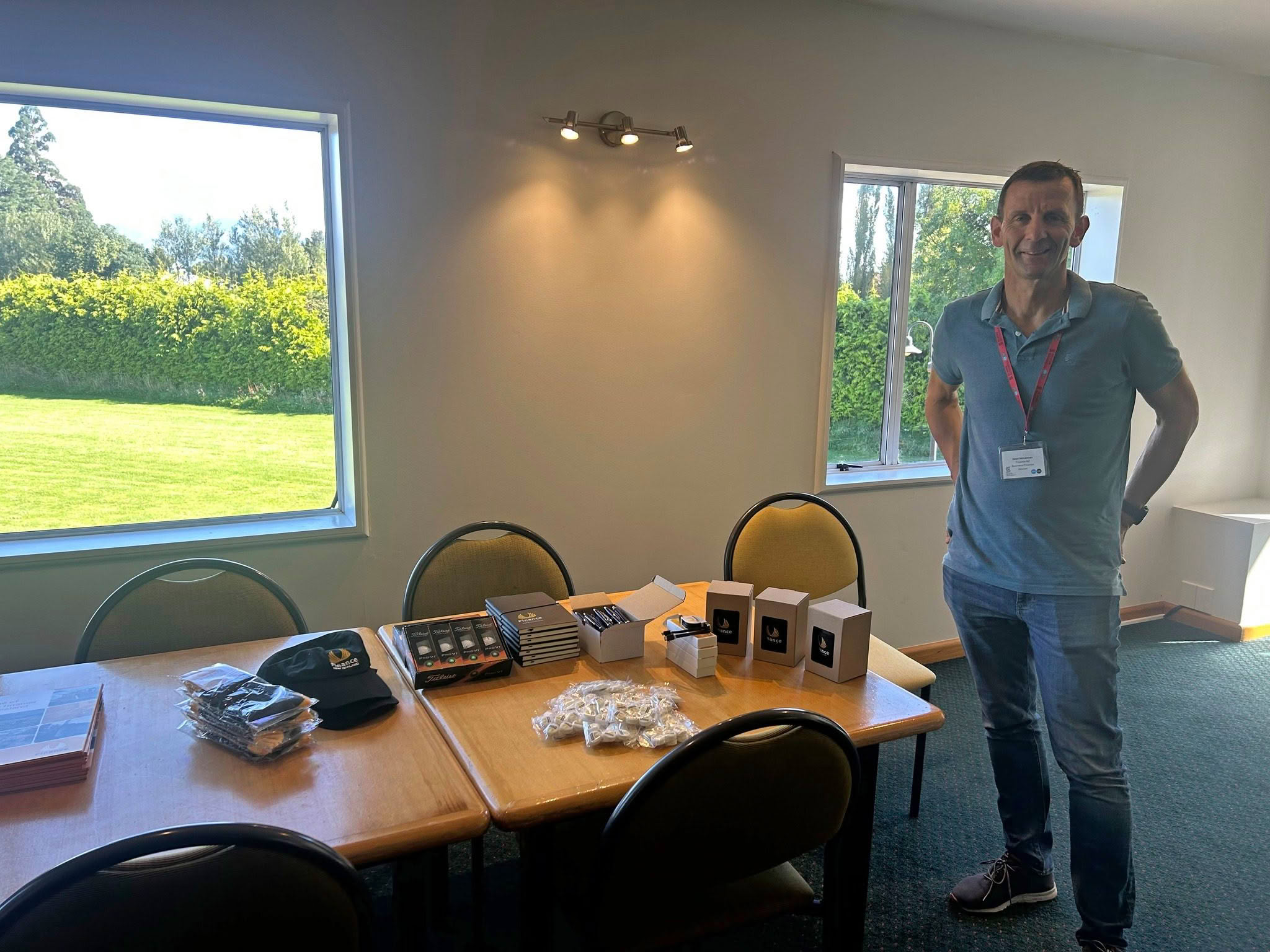
          Interview with Dean from Finance New Zealand

          We recently sat down with Dean from Finance New Zealand, whose mission is to find the best finance solutions for businesses, whether it’s finance, property development loans, commercial building finance, cash flow support, or trade finance.

          Ric: Hi Dean, welcome. You’re with Finance New Zealand, correct? Could you tell us a bit about your business and what you do for your clients?

          Dean: Absolutely. I’m a business finance advisor with Finance New Zealand—a nationwide group with more than 40 experienced advisors working alongside 40+ lending partners across New Zealand. Our role is to find the best finance solutions for businesses. Whether it’s asset finance, property development loans, commercial building finance, cash flow support, or trade finance, we advocate on behalf of our clients and match them with the right lender.

          Ric: That’s great to hear. At Sidekick Chartered Accountants, we serve thousands of businesses, and many have some form of debt. Earlier, you mentioned the property developer client you recently helped—a great example of turning a tough situation into a success story. Could you tell us what challenge he was facing?

          Dean: Sure. This client was an active property developer who built his own properties at a time when interest rates were at record lows. His financing strategy worked well initially, but over the last two to three years, his interest rates doubled. Suddenly, his cash flow couldn’t keep up with servicing the debt. In response, he identified a complementary business opportunity that could provide additional cash flow to support his developments. However, even after leveraging his property assets, there remained a shortfall in cash needed to secure the business.

          Ric: And that’s where you came in?

          Dean: Exactly. We analysed his balance sheet and identified opportunities to unlock additional equity. We found several unencumbered assets—such as vehicles, machinery, and equipment—that could be leveraged. Working with specialist lenders, we were able to have these assets independently valued and release the necessary cash. This solution not only helped him meet his immediate needs but also enabled him to continue his property development and sustain his cash flow during a challenging economic period.

          Ric: That’s an impressive turnaround. It really demonstrates that even when the situation seems difficult, the right financial solution is available. Is it common for you to help clients overcome similar challenges?

          Dean: Yes, it is. Many clients start by working with one lender, but that may not always be the best fit for their unique situation. With access to over 40 different lenders, we can find tailored solutions that meet our clients’ specific needs—all at no cost to them in most cases. Our advice is practical, clear, and designed to help clients navigate tough economic conditions while staying on their growth path.

          Ric: So for small businesses feeling the squeeze—perhaps where mortgage pressures or operational costs are becoming unmanageable—what would you recommend as a first step?

          Dean: I would advise them to address the issue early before it escalates. Just as you engage an independent accountant for third-party insights, it’s wise to consult with an independent finance advisor. I recommend getting advice from an experienced professional. There’s no obligation, but this independent perspective can provide clarity on what options are available and how to build a strong, strategic roadmap for your business.

          Ric: That’s solid advice. It’s all about getting ahead of the problem, understanding your options, and then making strategic decisions. Thanks so much, Dean, for sharing your insights and for explaining how Finance New Zealand can help businesses navigate financial challenges successfully.

          Dean: My pleasure, Ric. I’m glad to help, and I hope more business owners take advantage of these opportunities to secure a brighter financial future.

          To learn more or get in touch with Finance New Zealand, visit their website.

          May 6th, 2025|

          Exciting Changes at Sidekick Christchurch: New Roles & Faces!

          We are thrilled to share some exciting updates from Sidekick Christchurch!

          Firstly, Amanda has stepped into the role of Practice Manager. She will be leading our efforts to improve workflow efficiency and managing the accountancy team. Amanda is the perfect fit for this role, and we can’t wait to see the positive impact she’ll bring to our team and clients.

          But that’s not all! We are also excited to welcome two new members to our Sidekick Christchurch family.

          Join us in congratulating Amanda and welcoming Danielle and Mark to the Sidekick Christchurch team! We are excited about the future and the positive contributions they will bring to our clients and team.

          Get in touch with our friendly Christchurch team to see how we can help.

          Amanda, our new Practice Manager, excels at helping businesses uncover insights and build strong customer relationships. An Associate Chartered Accountant with a Bachelor of Commerce in Accounting and Marketing, she has extensive experience in business advisory and compliance for SMEs.

          Meet Danielle, our talented Accountant! With a Bachelor’s in Business (Accounting) and currently working towards her CPA Australia certification, Danielle brings 12 years of experience in various industries, including Tax, Entertainment, and Construction, both here in Christchurch and in the UK. Outside of work, she enjoys family time, exploring the outdoors, brunching with friends, and reformer pilates.

          Meet Mark, our resident accountant with a BCom from the University of Canterbury. Mark has thrived in both small and mid-tier CA firms in Christchurch and took a break to be a stay-at-home dad, applying his skills to charities. He enjoys pickleball, swimming, oldies rugby, and is a passionate sports fan, known for his lively sports banter.

          April 16th, 2025|

          Interview with Plan & Protect: Making Insurance Simple & Personal

          We recently sat down with Dan from Plan and Protect to discuss their unique approach to insurance and how they are making a difference in the industry.

          Ric: Insurance can feel overwhelming for many people. How does Plan and Protect approach this differently?

          Dan: That’s exactly why we do what we do. We know that insurance can seem complex, and for a lot of people, it’s something they put off because it feels too difficult to navigate. Our focus isn’t on selling policies—it’s on providing expert advice. We take the time to explain things clearly and ensure that our clients feel confident in their decisions.

          Ric: What areas of insurance do you specialise in?

          Dan: We focus on life and health insurance, ACC advice, and business cover. Each of these areas plays a crucial role in protecting individuals, families, and businesses. Whether someone wants to ensure their family’s well-being, safeguard their business from unforeseen risks, or navigate the complexities of ACC levies, we tailor our services to meet their unique needs.

          Ric: Given the current economic climate, people are more cost-conscious than ever. How do you help clients manage their insurance costs?

          Dan: That’s a really important point. With rising costs affecting households and businesses, we know that affordability is a big concern. That’s why we offer a free, no-obligation insurance review. A lot of people assume that getting expert advice means paying upfront fees, but that’s not the case with us. We’ll sit down, assess your current cover, and help identify opportunities to optimise your policies—whether that means adjusting levels of cover, finding better value products, or structuring things more effectively.

          We also specialise in risk assessments and premium mitigation strategies. That means we don’t just look at what cover you have; we look at how it fits into your overall financial picture. Sometimes small changes can lead to significant savings while still ensuring the right level of protection.

          Ric: What sets you apart from larger insurance firms?

          Dan: Personalised service. Many larger firms can feel transactional—you’re just another policyholder in their system. We’re different because we take the time to understand each client’s individual circumstances. We get to know their family, their business, and their future goals. Insurance isn’t just about policies; it’s about peace of mind, and we provide that by offering expert, tailored advice.

          Ric: You mentioned navigating the complexities of insurance. How do you simplify the process for your clients?

          Dan: We make sure insurance is easy to understand. That means no jargon, no pressure—just clear, straightforward guidance. Whether it’s a quick phone call, a face-to-face meeting, or an email conversation, we’re here to help when and how our clients need us. Our goal is for them to feel comfortable and informed, not confused or overwhelmed.

          Ric: What do you think is the most valuable role you play for your clients?

          Dan: Our role is to help people make informed decisions. Insurance is about planning for the future and protecting what matters most, whether that’s family, income, or a business. We don’t push products; we provide clear, objective advice so our clients can choose what’s right for them. That’s what makes a real difference.

          Ric: If someone is considering insurance but isn’t sure where to start, what would you recommend?

          Dan: Just reach out and have a conversation with us. There’s no cost, no obligation—just a chance to explore options and get expert advice. At Plan and Protect, we’re a friendly, experienced team that genuinely cares about helping people secure their future. A simple conversation can be the first step toward peace of mind.

          To learn more about how Plan and Protect can help you, visit their website or get in touch with Dan directly.

          April 15th, 2025|

          Small Business Cashflow Loan Terms Expiring in 2025: What You Need to Know

          Attention small business owners! If you took out a Small Business Cashflow (SBC) loan, it’s time to start thinking about your repayment plan. For most borrowers, the 5-year loan term ends in 2025, so watch out for default interest charges. Here’s a quick guide to help you stay on top of your loan and avoid any unnecessary headaches.

          Check Your Loan Status

          First things first, log in to myIR to check how much you owe and when your final repayment date is. It’s important to know where you stand so you can plan accordingly.

          Make Extra Payments

          If you can, make extra payments through myIR. This will help you avoid the default interest charges of 13.88%. Just make sure you select your SBC loan as the debt you want to pay.

          Set Up a Repayment Plan

          Can’t repay the outstanding balance in full? No worries! You can set up a repayment plan by getting in touch with myIR. Having a repayment plan in place means your interest rate will be a much more manageable 3%.

          Already Have a Repayment Plan?

          If you already have a repayment plan but haven’t kept up with it, now’s the time to get back on track. Setting up regular monthly payments can help lower your balance as quickly as possible and keep you from falling behind.

          Multiple Repayment Plans?

          If you have more than one repayment plan, make sure to use your unique SBC loan identifier, called the ‘Media Number,’ when making repayments. You can find this number at the top of any letters you’ve received from the IRD.

          What Happens If You Do Nothing?

          If your SBC loan is unpaid 20 working days after the final repayment date, the loan will default. This means the IRD may demand full payment, add default interest of 13.88% to the outstanding balance, and even take legal action. Yikes!

          For more detailed information, visit the IRD website. And if you have any questions or need further assistance, don’t hesitate to get in touch with the team at Sidekick!

          April 15th, 2025|

          Some great news to share – Sidekick is growing again!

          We’re excited to welcome the team at Lawson Avery Limited in Masterton into the Sidekick family. Now known as Sidekick Lawson Avery, they bring 14 talented people and decades of trusted client relationships into the fold. With nearly 115 years serving the Wairarapa business community, they stand for sound advice, solid relationships, and helping their clients succeed — just like we do!
          This move means a few big things for us:
          • Sidekick now has 7 offices
          • We’re officially in the North Island
          • Our rural expertise just got even stronger
          And most importantly, we’ve added a group of values-aligned people who care deeply about helping their clients succeed. At Sidekick, we’re really proud of this step — and even more excited about what we’ll do together. Welcome aboard, Sidekick Lawson Avery!
          To learn more about our new additions to the team, check out the Wairarapa page on our website. 
          April 15th, 2025|

          Sidekick Selwyn welcomes Alison to the team

          We are thrilled to welcome a fantastic new member to the Sidekick Selwyn team: Alison Hogg!

          Alison is a Senior Accountant, and is passionate about helping businesses unlock their full potential through systems and technology. With a knack for discovering “A-Ha” moments, she loves guiding clients to innovative solutions that streamline their operations and drive success.

          Before entering accountancy, Alison worked in the construction, transport, and design industries before picking up the calculator and becoming a fully qualified Chartered Accountant. She gained a Bachelor of Applied Management, majoring in Accounting, from Manukau Institute of Technology and then Ara Canterbury. Alison relocated from South Auckland to Canterbury in 2016 and has recently gained a Graduate Certificate in Professional Coaching, specialising in working with Small Enterprises. She has worked for accountancy firms both large and small before joining Sidekick in 2025.

          When she’s not optimising workflows, you’ll find Alison testing new technology, indulging in craft beer, or building her next dream home in The Sims.

          We invite you to book an appointment or pop in to say hello. Discover how our growing team at Sidekick Selwyn can support your financial goals with expertise and a friendly touch!

          March 25th, 2025|

          How to stay competitive in your industry in 2025

          Staying competitive puts your business ahead of the pack. We’ve shared some top advice on how to remain competitive and maintain your leading edge over the competition.

          It’s difficult to make your business stand out from the crowd, especially in the 21st century digital environment where businesses large and small are competing for the same customers.

          Remaining competitive is vital for any business. If you stay ahead of your competitors and hang onto your customer base, your sales stay stable and your revenues remain predictable.

          But how can you do that in today’s increasingly challenging business environment?

          Key ways to remain competitive in your market

          No market sits still. And the competitiveness of your company’s brand will also fluctuate and evolve over time. But this doesn’t mean that you can just sit back and let your competitive edge fade away. The more proactive you are about your position in the market, the more you can do to preserve your advantage and keep your business ahead of your competitors.

          Here are some helpful ways to boost your competitive edge:

          1. Provide a personalised experience for your customers – customer experience (CX) is everything in the digital age. A happy customer will buy more, so you need your CX to deliver every time, no matter what. Try analysing your customer data and feedback, and then using that information to tailor the customer’s experience with your company.
          2. Carry out competitor intelligence activity on your main competitors – competitor intelligence is an important activity for any company. It involves gathering data about your competitors, including their strengths and weaknesses. You’ll need to identify the competition, find out what they’re doing, and analyse the data you’ve collected.
          3. Offer high-quality products or services at reasonable prices – you won’t sell high volumes if you don’t have a quality product or service. And you also need to offer a price point that your customers see as good value. If you’re not sure if your prices are competitive, take a look at what your competitors are charging. This will give you an idea of what people are willing to pay for the same products or services that you offer.
          4. Develop new technologies that are not yet on the market – investing in new technologies is risky but can also be profitable. To help mitigate the risks of developing a new technology, it is important to research the market and make sure that there is a genuine customer need for your product. It’s also important to ensure that your product will be affordable and has potential for growth in the future.
          5. Invest in emerging technologies – innovation continues to be a key driver. Emerging technologies like generative AI, quantum computing, and sustainable tech are reshaping industries. Investing in these areas can provide a significant competitive edge.

          Talk to us about reviewing your business strategy

          Keeping your business at the competitive edge of the market can be a challenge. But by analysing your customer and competitor information, you can do your best to remain competitive and keep your dominant position in your market or industry sector.

          We’ll help you identify the risks, spot the opportunities and amend your business strategy to remain competitive, stable and profitable in the future.

          March 24th, 2025|

          Planning for growth: A guide for small businesses

          Running a small business in New Zealand can be incredibly rewarding, but it also comes with its fair share of challenges. One of the most exciting yet daunting tasks is planning for growth. Whether you’re looking to expand your market reach, develop new products, or simply increase your revenue, having a solid growth plan is essential. Here are some practical steps to help you get started.

          1. Set Clear Goals
            The first step in planning for growth is to set clear, achievable goals. These goals should be specific, measurable, attainable, relevant, and time-bound (SMART). For example, instead of saying “I want to increase sales,” you might set a goal to “increase sales by 20% over the next 12 months.”
          2. Know Your Ideal Customer
            Understanding your market is crucial for growth. Conduct thorough market research to identify your target audience, understand their needs, and analyse your competitors. This information will help you tailor your products or services to meet market demands and identify opportunities for expansion.
          3. Develop a Strong Value Proposition
            Your value proposition is what sets you apart from your competitors. It’s the unique benefit that your product or service offers to your customers. Make sure your value proposition is clear and compelling and communicate it effectively through your marketing efforts.
          4. Optimise Your Operations
            Efficiency is key to growth. Look for ways to streamline your operations and reduce costs. This might involve investing in new technology, improving your supply chain, or training your staff. The goal is to create a scalable business model that can handle increased demand without compromising on quality.
          5. Invest in Marketing
            Effective marketing is essential for attracting new customers and retaining existing ones. Develop a comprehensive marketing strategy that includes digital marketing, social media, content marketing, and traditional advertising. Make sure to track your marketing efforts and adjust your strategy based on what works best.
          6. Focus on Customer Retention
            While attracting new customers is important, retaining existing ones is equally crucial. Implement customer retention strategies such as loyalty programmes, personalised communication, and excellent customer service. Happy customers are more likely to become repeat buyers and refer your business to others.
          7. Explore New Markets
            Expanding into new markets can be a great way to grow your business. This might involve targeting a new geographic area, offering your products online, or catering to a different customer segment. Conduct market research to identify potential opportunities and develop a strategy for entering these new markets.
          8. Build Strategic Partnerships
            Forming strategic partnerships with other businesses can help you reach new customers and expand your offerings. Look for businesses that complement yours and explore opportunities for collaboration, such as joint marketing campaigns or co-branded products.
          9. Monitor Your Finances
            Growth often requires investment, so it’s important to keep a close eye on your finances. Create a detailed budget and forecast to ensure you have the necessary funds to support your growth plans. Consider exploring financing options such as business loans, grants, or equity investment if needed.
          10. Stay Agile
            The business environment is constantly changing, so it’s important to stay agile and be prepared to adapt your plans as needed. Regularly review your growth strategy and make adjustments based on market conditions, customer feedback, and your business performance.

          By following these steps, small businesses in New Zealand can effectively plan for growth and set themselves up for long-term success. Remember, growth is a journey, not a destination. Stay focused, be patient, and keep pushing forward.

          Looking for more support tailored to your business? Reach out to Sidekick today!

          March 18th, 2025|

          Sidekick Conference 2025 – Methven

          The Sidekick Conference 2025 was a blast, bringing together our entire Sidekick family from six offices, along with our amazing sponsors and guests, in the beautiful Methven. Here’s a recap of what we got up to over the three days:

          Day 1 Highlights:

          We kicked off the conference with a warm welcome at Methven Resort, setting the tone for the days ahead. The evening was spent enjoying dinner and drinks at the Bluepub Methven, generously sponsored by TBR, a relaxed setting for reconnecting and networking.

          Day 2 Highlights:

          The second day began with a welcoming introduction from Ric, followed by a series of engaging sessions. Xero led a fascinating discussion on AI in accounting, Smartly New Zealand shared best practices for payroll, and Plan and Protect delivered an insightful insurance masterclass.

          Cam Bagrie, a renowned economist, delivered a keynote address that provided valuable insights into economic trends and their impact on our industry. In the afternoon it was time for a mental break as we ramped things up with the choice of jet boating at Rakaia Gorge with Discovery Jet, or unwinding at Ōpuke Thermal Pools & Spa.

          To wrap up the day, we celebrated our achievements at the Sidekick Awards, featuring a Tropical Beach Party theme sponsored by Smartly. The band Nick and Dan, with Nick on vocals and Simon on drums, created an awesome atmosphere, getting everyone on their feet for a night of dancing and fun.

          Day 3 Highlights:

          The final day featured insightful talks on wealth management by Cam Irvine, and purpose-driven companies by Simon Brown from Banqer. Matt Fenn led a session on performance and wellbeing, providing valuable tips for maintaining a healthy work-life balance. The conference concluded with a closing address and lunch sponsored by Irvine-Wenborn Investment Partners.

          A Heartfelt Thank You

          A huge shout out to all our amazing sponsors who made this event possible: Smartly, Plan & Protect, Finance NZ, TMNZ, TBR, Irvine-Wenborn, The Backroom, and Xero. We couldn’t have done it without you!

          Celebrating Excellence: Sidekick Awards 2025

          We are thrilled to announce the winners of our annual Sidekick Awards:

          • Sidekick Champion – Ihi McIntyre
          • Sidekick Team of the Year – Queenstown
          • Sidekick Teammate of the Year – Monique Gilbert
          • Sidekick Accountant of the Year – Angelique Van Wyk
          • Sidekick Administrator of the Year – Letitia Pottle
          • Sidekick Director of the Year – Ben Wright

          A special shoutout to the Fairlie Bakehouse, the much-deserving winners of the Sidekick Business of the Year award, a new category introduced this year. They have seen massive growth in recent years and are always a delight to deal with.

          Thank you to all our speakers, sponsors, and attendees for making this conference a success. Here’s to another fantastic year at Sidekick!

          March 17th, 2025|

          Is a new payroll advisor on your EOFY checklist?

          As the end of the financial year approaches, many businesses are evaluating their tools and processes. For those using Xero, the choice of payroll solutions can make a significant difference. While Xero Payroll is a popular option, Smartly is emerging as a compelling alternative. But what makes Smartly stand out? Let’s break it down:

          Unmatched customer support

          Smartly’s customer support is truly second to none. With a dedicated Kiwi-based team available Monday to Friday, from 8 am to 6 pm, they offer you the help you need when dealing with payroll complexities. Phone wait times are typically just 3 to 5 minutes, and their convenient call-back feature means you won’t be stuck on hold.

          They offered automated payroll payments

          They don’t just do automated payday filing for you, they do automated payments, too. That means once you process payroll, all the payments – whether to employees, the IRD, or KiwiSaver – are automatically taken care of.

          Experience effortless onboarding

          Switching payroll providers can seem like a headache, but Smartly makes it easy with their dedicated onboarding team. From the start, Smartly processes are designed to help identify any non-compliance issues and make sure your payroll is in tip-top shape. Compliance is a key area of their expertise, seamlessly integrated into their software and every aspect of their service.

          They integrate with Xero accounting software!

          Our favourite part? Smartly integrates effortlessly with Xero accounting, a definite bonus for any accountant thinking of making the switch. What could be better than specialised payroll software and specialised accounting software working in harmony? (…apart from fish n chips on a Friday night?!)

          Outsource your payroll administration

          For those who prefer to avoid the hassle of payroll admin, Smartly also offers a Managed Payroll Service. With a dedicated account manager, businesses benefit from a tailored payroll process and stay informed of legislative changes, such as tax and minimum wage updates, staying compliant without the stress.

          With over 22,000 Kiwi businesses trusting Smartly to handle their payroll needs, it might be time to consider making the switch today.

          March 17th, 2025|

          Clothes, rent, meals – what is tax deductible?

          As a business owner, which expenses are tax deductible and which are not? We help answer some of your questions.

          Is the cost of my work clothes tax deductible?

          Only if it’s a uniform or safety clothing. Anything you buy that could potentially be worn for other purposes is not tax deductible.

          What about my car?

          Vehicle expenses when you travel for work are tax deductible. If the vehicle is purely used for work, you can deduct all the costs, otherwise you can only claim a portion. Remember that travelling to and from work everyday is not a business expense.

          Can meals be tax deductible if I’m on a trip or shouting clients?

          There are three types of entertainment expenses – some are 100% deductible, some are only 50% deductible. This can be a bit confusing, so IRD has a guide to help you work out how much you can claim.

          If I work from home, what can I claim for?

          When you have a home office, you can claim a portion of all your household expenses, including:

          • Rates
          • Electricity
          • Home and contents insurance
          • Rent, or the interest portion of your mortgage repayments.

          The amount you can claim varies depending on how much of the house you use for your business. We can help with this.

          What about subscriptions?

          Payments for work-related magazines, journals, or professional association memberships are all tax deductible.

          Can I claim my mobile phone?

          If you have a dedicated business phone, it’s 100% deductible. If you’re using it for both work and non-work activities, it will be partially deductible.

          Need tax advice that’s tailored to you?

          You’re an expert at your small business, and we’re the experts when it comes to helping you with tax compliance. We’ll help you sort out your tax questions so you can get on with growing your business. Get in touch, we’d love to hear from you!

          February 18th, 2025|

          The Impact of Proposed American Tariffs on Small Businesses in New Zealand

          The recent proposal by the United States to impose new tariffs on imports from various countries has sparked significant discussion about its potential impact on global trade. For small businesses in New Zealand, these tariffs could bring both opportunities and challenges.

          Positive Impacts

          1. Increased Export Opportunities: With the US imposing tariffs on imports from countries like China and Mexico, US consumers and businesses may seek alternative suppliers. This shift could open up new markets for New Zealand exporters, particularly in sectors like agriculture and manufacturing. For instance, New Zealand’s meat and machinery exports could see a boost as they become more competitive in the US market.
          2. Diversification of Trade Partnerships: The tariffs might encourage New Zealand businesses to diversify their trade relationships. By exploring new markets and reducing reliance on a few key partners, small businesses can enhance their resilience against future trade disruptions.

          Negative Impacts

          1. Higher Costs for Imports: The tariffs could lead to increased prices for goods imported from the US. This would affect small businesses that rely on US products, raising their operating costs and potentially leading to higher prices for consumers.
          2. Reduced Demand from Key Markets: As the US imposes tariffs on countries like China, these nations may experience economic slowdowns, reducing their demand for New Zealand exports. This could particularly impact sectors like dairy, where China is a significant market.
          3. Retaliatory Tariffs: There is also the risk of retaliatory tariffs from affected countries. If China or other nations impose their own tariffs on New Zealand goods, it could further complicate trade dynamics and hurt small businesses that rely on these markets.

          Conclusion

          The proposed US tariffs present a mixed bag for small businesses in New Zealand. While there are opportunities to expand into the US market and diversify trade relationships, the potential for higher import costs and reduced demand from key markets poses significant challenges. Small businesses will need to stay agile and adapt to the evolving trade landscape to navigate these changes successfully.

          To learn how Sidekick can help you navigate these changes and seize new opportunities, book an appointment with us today!

          February 18th, 2025|

          Top 10 time wasters to avoid

          With 2025 presenting some potentially challenging business conditions, increasing efficiency is becoming increasingly important.

          The top 10 time wasters:

          1. Lack of clear goals. Start by setting clear 12-month goals, then break these down into 90-day goals. Your actions each day should be steps towards achieving those 90-day goals, which will ultimately lead to the achievement of your 12-month goals.
          2. A messy desk. Desk clutter results in mind clutter. Tidy your workspace each day before you leave so you don’t arrive to a mess. Also consider how paperless you are; paper becomes clutter.
          3. Procrastination and shifting priorities. Spend a few minutes planning tomorrow’s tasks before you leave for the day or planning today’s tasks as soon as you arrive. Avoid unnecessary pick up and put down. Multitasking is a productivity myth.
          4. Interruptions (from humans and technology). Set clear parameters to reduce distractions, e.g., turn off your email and phone notifications, only check emails between tasks, etc. If it’s urgent, they’ll call or tap your shoulder.
          5. Ineffective delegation (and abdication). Ensure you give clear instructions when delegating tasks and empower others to do more for you. Responsibility still falls on you… without a clear process you are setting someone up to fail which will ultimately reflect badly on you.
          6. Ineffective systems. Mistakes are often attributable to ineffective systems. Involve your team and LEAN up processes where possible. Eliminate systems that don’t add value; implement new systems that aid efficiency.
          7. Inability to say ‘no’. We are defined not just by what we say yes to, but what we say no to. Planning helps us to say no to things that don’t align with our purpose and goals. “No” is a complete sentence.
          8. Ineffective meetings. Ensure every meeting has a purpose, an agenda, and clear objectives. Don’t stray from the agenda; refer back to the purpose if you’re going off track. Record clear outcomes and next steps in Meeting Minutes.
          9. Ineffective email use. Think twice before playing email tennis. Ask yourself if a phone call would be more efficient so you don’t find yourself constantly checking for a reply.
          10. Poor planning. Effective planning has three key components: a one-page plan (with goals, KPIs, and required actions), regular reporting to ensure continuous improvement, and accountability.

          What are your biggest time wasters? Identify your top three and take ownership and responsibility to minimise them today!

          “Regretting wasted time is wasting more time.” – Anon

          Get in touch to find out how we can help you plan more effectively!

          February 18th, 2025|

          Year-End Made Easy: Your Financial Prep Guide

          As we approach the end of the financial year on 31 March, it’s time to get your ducks in a row. Here at Sidekick, we know that this period can be a bit overwhelming, but with a little preparation, you can sail through it smoothly. Here are a few tips to help you get ready:

          1. Reconcile Your Accounts: Make sure your bank accounts, credit cards, and loans are all reconciled. This means checking that the transactions in your accounting software match your bank statements. Reconciling your accounts helps you spot any discrepancies, such as missing or duplicate transactions, and correct them before the year ends.
          2. Check Your Invoices and Receivables: Follow up on any outstanding invoices and ensure you’ve received all payments due. It’s also a good time to write off any bad debts that are unlikely to be paid. Keeping your receivables in check ensures a healthy cash flow and reduces the risk of financial surprises.
          3. Review Your Financial Statements: Take a close look at your profit & loss report and balance sheet. Ensure everything is accurate and up-to-date. This will give you a clear picture of your financial health and help you identify any areas that need attention before the year ends.
          4. Organise Your Expenses: Gather all your receipts and expense records. Categorise them properly to make your tax filing easier. This includes separating business expenses from personal ones and ensuring you have documentation for all deductible expenses. Properly organised expenses can save you time and stress when it comes to filing your taxes.
          5. Plan for Taxes: Estimate your tax liability and set aside funds to cover it. Consider any tax-saving opportunities that might be available to you, such as deductions, credits, or deferrals (we can help with this!). Planning ahead for taxes can help you avoid last-minute scrambles and ensure you have the funds available to meet your obligations.
          6. Seek Professional Advice: If you’re unsure about anything, don’t hesitate to reach out to us. We’re here to help you navigate the complexities of the financial year end. Whether you need assistance with tax planning, financial statements, or any other aspect of your finances, we’re just a phone call or email away.

          Remember, a little preparation now can save you a lot of stress later. Happy year-end planning!

          January 21st, 2025|

          Big news from Sidekick!

          We are excited to announce that Ric Thorpe has been elected as the new CEO of Sidekick Group! Ric’s new role will focus on expanding our group, opening new offices, adopting cutting-edge technologies, and continuing to foster the incredible culture that makes Sidekick so special.

          2025 is set to be an exciting year for us. Ric will be traveling across New Zealand, connecting with talented accountants who are eager to:

          • Join our growing group.
          • Integrate their practice into Sidekick.
          • Start their own Sidekick firm with our support.

          Having been a part of Sidekick since 2010 (with a fantastic gap year at Plato), Ric is beyond excited about the future. He sees immense opportunities ahead during this time of significant change in the accountancy world.

          We invite you to join us in celebrating Ric as he leads Sidekick into this new chapter. Here’s to a bright and successful future!

          Stay tuned for more updates and exciting news from Sidekick!

          If you’re an accountant and are interested in this opportunity, please reach out to Ric to find out more.

          January 20th, 2025|

          Scrapping and Writing Off Assets

          Asset Schedule Review Process

          As part of preparing a client’s financial statements, we review the asset schedule to ensure accuracy and look for extra deductions. We check for assets that no longer exist, which may have been sold, given away, or are past their useful life. We ask for details on anything sold, scrapped, stolen, or no longer used.

          Accounting Treatment for Assets:

          • Sold Assets: The asset is removed from the schedule, potentially resulting in a loss on sale, capital gain, or depreciation recovery.
          • Insurance Proceeds: Treated as a notional sale to the insurance company.
          • Scrapped Assets: Written off (sold for $0.00) and any remaining tax value claimed as a loss on disposal. The asset must be genuinely scrapped (e.g., buried, donated, dumped, recycled, burned, or disposed of in the farm rubbish tip). Simply storing the asset is not considered scrapping.

          Section EE 39 of the Income Tax Act 2007:

          Allows claiming the asset’s written down book value as a depreciation loss if:

          • The asset is no longer used.
          • It is not a building.
          • It has not been depreciated using the pool method.

          Conditions for Claiming Depreciation Loss:

          • The asset is no longer used to derive assessable income.
          • Neither the taxpayer nor any associated party intends to use the asset to derive assessable income.
          • Disposal costs exceed any consideration derived from disposing of the asset.

          Definitions:

          • No Longer Used: The asset must have ceased being used with no intention of future use.
          • Costs of Disposal: Includes freight, sales commission, rubbish tip fees, or recycling charges.

          Examples:

          1. Old Tractor: An old Massey Fergusson tractor parked in a shed is not deductible unless disposal costs exceed proceeds. It may still be saleable to collectors or hobbyists.
          2. Obsolete Computers: Computers stored due to disposal costs can be claimed under Section EE 39.

          Important Notes:

          • Assets with low tax values still in use must continue to be depreciated and remain in the asset register, even with a zero residual tax value, to accurately calculate any future depreciation recovery on sale.
          • The asset schedule provides a breakdown of assets owned by the business, with written down book values often lower than actual market values.

          Need further assistance or have questions on the above? Reach out to Sidekick today – we’re always happy to help!

          January 15th, 2025|

          Start your year off in the performance zone

          Are you comfy hanging out in your Comfort Zone? Want to remain competitive and not be outperformed? Stretch out of your Comfort Zone and into your Performance Zone. Just don’t stretch so far you end up in the Danger Zone! ✈

          Getting back into work after a break can be hard.

          You might be struggling to get back into your routine and engage your brain in work. Or, perhaps you spent time setting your goals and planning your year and you’re full speed raring to go. There is, however, an optimum approach somewhere between these two scenarios – we call this hitting ‘The Performance Zone’.

          The ‘Performance Zone’ sits between the ‘Comfort Zone’ and the ‘Danger Zone’.

          It’s easy to hang out in your Comfort Zone. We just keep doing what we’ve always done because so far it’s worked… and there’s no motivation to change. However, sitting comfortable in times of such rapid change can leave you exposed. Your competitors, those working in the Performance Zone, setting goals and making incremental changes and improvements, could squeeze you out.

          Working in the Performance Zone enables you to break bad habits and form good ones, achieve your goals, and improve the value of your business. When working in your Performance Zone, you’ll be engaged in your work and adopt new learnings, processes and technology to streamline your business and make it more efficient.

          Be wary of putting the full throttle down though. If you stretch too far out of your Comfort Zone, past the Performance Zone, you may find yourself in the Danger Zone. Committing to a massive amount of change all at once can lead to volatility, burnout, mistakes resulting re-work, the loss of a key team member, and cause you to work even longer hours for no gain (apart from stress gain).

          The aim is to set goals and implement changes to move beyond your Comfort Zone into your Performance Zone. If you do find yourself hitting the Danger Zone, it’s ok. Retreat back into your Performance Zone… not back to your Comfort Zone. You’re here to improve your business performance, that won’t happen from your Comfort Zone.

          This concept applies to your entire team.

          Motivate them to work in their Performance Zone instead of their Comfort Zone but have processes in place to prevent their burn out. If you notice someone coming in early, staying late and visibly stressed, find out why. Speak to them about the Performance Zone and offer support to help them manage their workload, prioritise work and reduce their stress levels.

          Want help reaching your Performance Zone? Get in touch to find out how we can help!

          “In a world that’s changing really quickly, the only strategy that is guaranteed to fail is not taking risks.” – Mark Zuckerberg

          January 15th, 2025|

          An exciting win for Sidekick!

          We are thrilled to announce that Sidekick has not only won the Large Business category but also been named the Supreme Winner at the BSI Culture Excellence Awards! This recognition highlights our commitment to fostering an outstanding workplace culture that puts our people first.

          The BSI Culture Excellence Awards celebrate businesses that excel in creating a positive and engaging work environment. This year, the awards went global, recognising companies from around the world that prioritise their team’s well-being, diversity, and continuous growth. Being honoured with these awards is a testament to the hard work and dedication of our entire team.

          Our entry video showcased why we think Sidekick is such a special place to work, featuring our unique initiatives like flexible working hours, wellness programmes, and our inclusive, fun-loving team spirit. We believe that a happy team is a productive team, and our culture reflects that belief every day.

          Thank you to our team who participated in the video entry. Check out our video entry here to see what makes Sidekick’s culture truly exceptional!

          A huge thank you to BSI People Skills Ltd for holding the awards.

          December 16th, 2024|

          Holiday Gift & Entertainment Tax Tips

          Buying gifts for your staff or customers this holiday season? Some of these expenses might qualify for tax deductions. Here’s a quick rundown:

          Staff Gifts

          • Fully deductible and FBT exempt if the total cost per staff member in one quarter is under $300 (including GST).
          • Non-entertainment items like gift vouchers, hampers, flowers, and wine qualify.
          • There’s a yearly cap of $22,500 for combined employee benefits.

          Client Gifts & Entertainment

          • Some are fully tax-deductible, while others are 50% deductible, especially those involving food, drink, or entertainment.
          • 50% deductible: Hampers with gourmet food, chocolates, biscuits, Christmas ham, wine.
          • 100% deductible: Books, gift vouchers, movie tickets, flowers, rugby game tickets.

          Entertainment

          • 50% deductible: Staff Christmas parties (on or off business premises), drinks at a bar, meals with clients or team members.
          • 100% deductible: Morning or afternoon tea for your team, catered team lunch in the office, restaurant vouchers for staff, donations to a Christmas party in a children’s hospital.

          Cash Bonuses

          • Should go through the payroll system with PAYE and other payroll taxes deducted. These are taxed at a flat rate based on the employee’s income range

          If you have any tricky questions, feel free to reach out – we’re here to help!

          Keen to learn more?

            Fill in your details for access to our Entertainment Expenses Guide!

            December 16th, 2024|

            Optimising ACC: A Guide for New Zealand Businesses

            Since the early 1900s, New Zealand has established a comprehensive framework for accident compensation, often heralded as world-leading and revolutionary. Whether you love it or loathe it, most New Zealanders contribute to ACC levies in some form. For business owners and the self-employed, a brief review of your ACC policies and settings could be highly beneficial.

            In the past, many have found ACC invoices challenging to interpret, with multiple account types covering various financial periods arriving simultaneously. Deciphering what cover is in place and the exact amount payable can be complex. However, ACC has made strides in recent years to enhance the clarity of their invoices. Nonetheless, it remains crucial to ensure all information fields are accurate.

            Guidelines for Reviewing ACC Invoices:

            1. Identify the ACC Account Type: Determine whether your invoice is based on self-employed earnings, the shareholder account for your company’s non-PAYE (shareholder) salaries, or your employer account, which is derived from gross wages information from the PAYE returns filed for your business.
            2. Verify Liable Earnings Figures: Ensure that the ACC liable earnings figures align with the income tax or PAYE returns previously filed with the Inland Revenue.
            3. Check Working Status: Confirm whether your working status is recorded as full-time (over 30 hours per week) or part-time. Full-time earners have a minimum annual liable earnings value ($44,250 for the year ending 31 March 2025), while part-time earners are billed based on their actual liable earnings.
            4. Review Maximum Earnings Cap: For those earning above the full-time maximum ($142,283 for the year ending 31 March 2025), ensure you have not been levied beyond this point, especially if you have multiple income streams.
            5. Assess the Business Classification: Verify that your business industry is correctly recorded. While straightforward for many businesses, some classifications can be ambiguous. Levy rates vary significantly across industries, making this an important area to check. If in doubt, consult www.businessdescription.co.nz or contact ACC for the best classification unit for your business.
            6. Consider Multiple CU Costs: If your entity encompasses multiple business activities, there might be opportunities for savings through multiple Classification Unit (CU) codes. This can be complex, so consult your Sidekick advisor to explore potential savings.

            ACC offers an optional product, ACC CoverPlus Extra, which functions like an agreed-value insurance policy. This is particularly beneficial if your earnings fluctuate (think seasonal worker) or if you’re new to business without an established earnings history. ACC CoverPlus Extra can provide greater peace of mind regarding your level of cover and offer more certainty around levy costs.


            Certain situations affecting your work capacity, such as illness or degenerative conditions, fall outside ACC’s scope. To address this, consider additional cover from a private insurer. Ensure your insurer fully considers your ACC policy settings to ensure comprehensiveness and avoid overlapping cover. It is sometimes possible to adjust ACC cover via ACC CoverPlus Extra to complement your private insurance policies. It’s important to seek advice before modifying your ACC cover level to prevent unintended negative outcomes.

            At Sidekick, we can link your ACC account to our agency, enabling us to monitor and review ACC invoices and policy settings regularly. Please contact us if you would like a more in-depth explanation of any ACC topics mentioned and how they may apply to your situation. Given the compulsory nature of ACC for many, it’s worthwhile to ensure your details are correct and that your policies are optimised to best meet your needs.

            December 16th, 2024|

            Master your financial reports with Sidekick

            Missed our “Know Your Numbers” webinar? Not to worry!

            You don’t have to be an accountant or bookkeeper to understand your numbers, just like you don’t need to be a mechanic to drive a car. Understanding your financial reports puts you in a stronger position to make better decisions.

            Our recent webinar covered:

            • What key financial reports reveal about your business
            • Identifying strengths, weaknesses, and trends
            • Why your bank account balance may not reflect profits
            • How to protect your assets
            • Key drivers of business value
            • Measuring business efficiency to drive improvement

            Get exclusive access to our free “Know Your Numbers” workbook—a complete guide to managing your financial reports—or the recording of our live webinar. Simply fill in your details below.

              Get the Workbook

              By clicking the 'Get Workbook' button I am agreeing to Sidekick's Privacy Policy and to receiving other communications from Sidekick.

                Get the Webinar Recording

                By clicking the 'Get Recording' button I am agreeing to Sidekick's Privacy Policy and to receiving other communications from Sidekick.

                December 16th, 2024|

                Buy or Lease? Making the Right Choice for Your Business

                When your business needs new plant or equipment, should you buy or lease? The answer depends on your specific situation, but here are some key points to help you decide.

                Why Buying Might Be Best

                Buying gives you certainty and ownership. Sure, it’s a bigger upfront cost, but it’s usually cheaper in the long run. When you own equipment, you can use it however you like, modify it to fit your needs, and even sell it if you need some extra cash. Plus, you pay for it all at once, so no ongoing payments, and you might get some tax benefits from depreciation.

                If the equipment is something that lasts a long time and holds its value, buying is often the smarter choice. Overall, owning usually costs less than leasing.

                Why Leasing Could Be Ideal

                Leasing offers more flexibility, though it tends to be pricier over time. It spreads out the cost, so you don’t need to save up or borrow a large amount. Instead, you make regular payments. If the equipment isn’t working out, you can return it, or upgrade to a better model as your business grows.

                Leasing is great if the equipment becomes obsolete quickly, if you’re likely to upgrade, or if you’re not sure it’s right for your business. While leasing costs more over the item’s lifetime, it frees up your money to invest elsewhere in your business.

                Crunching the Numbers

                Deciding whether to buy or lease can be tricky, but we’re here to help. We can calculate the upfront and ongoing costs and compare them to the economic benefits of the new equipment. We’ll look at your cash flow, borrowing costs, and sales projections to help you make an informed decision.

                Got questions? Reach out to Sidekick – we offer advisory services to guide you through these decisions.

                November 20th, 2024|

                Stay Ahead with Our Tax Date Reminders!

                Hello Sidekick clients!

                We know keeping track of tax dates can be a bit of a headache, but don’t worry, we’ve got your back. Our handy guide for the 2024-2025 tax year is here to help you stay on top of all those important dates. From PAYE to GST and income tax, we’ve covered everything you need to know.

                Download our comprehensive tax calendar now and print it out for easy reference. Keep it handy, and you’ll always know what’s coming up. And remember, if you have any questions or need further assistance, we’re just a call or email away. Simply fill in your details below to download your guide and get started today!

                Why stress over deadlines when you can let Sidekick handle it for you? With our services, we can also manage these dates & send you reminders, so you’ll never miss a payment, ensuring you pay only what you need to—no more, no less. It’s all about making your life easier and your business smoother. Stay organised, stay relaxed, and let Sidekick take care of the rest. Let us know if you’d like this service.

                  Fill in your details for access to our 2024-2025 Tax Calendar

                  By clicking the 'Get Tax Calendar' button I am agreeing to Sidekick's Privacy Policy and to receiving other communications from Sidekick.

                  November 19th, 2024|

                  Win Big This Holiday Season with Smartly!

                  Make Your Holiday Season Extra Special with Smartly!

                  We’re thrilled to make this holiday season extra special for our clients! Book and attend a demo with Smartly between now and 11:59pm on 24th December 2024, and you’ll automatically go into the draw to win a $1,000 Prezzy card.

                  During the demo, you’ll see firsthand how Smartly can streamline your payroll and people admin processes, making life easier for your team. Imagine starting 2025 with a $1,000 bonus – it could be you!

                  More on Smartly: Smartly is your one-stop solution for all payroll and people admin needs. From setting up new employees and managing their information to sorting pay and timesheets, Smartly lets you handle it all in one place. This means less workload and more headspace for you.

                  Don’t miss out on this fantastic opportunity – book your demo today and make your holiday season truly special!

                  November 19th, 2024|

                  Join us for our upcoming webinar!

                  You don’t have to be an accountant or bookkeeper to understand your numbers, just as you don’t have to be a mechanic to drive a car.  Having an overall understanding of your financial reports puts you in a far stronger position to make better decisions.

                  On 26 November 2024 at 1-2pm we are hosting a 60 minute complimentary webinar where you’ll:

                  • Learn what each of your key financial reports tells you about your business
                  • Identify strengths, weaknesses and trends
                  • Discover why your bank account balance may not reflect profits
                  • Identify how to protect your assets
                  • Discover the key drivers of business value
                  • Learn how to measure your business efficiency to drive improvement

                  Plus, we’ll provide you with a complimentary Guide to Your Financial Reports.

                  Click here to register! 

                  Your Hosts

                  Julie Copland

                  Sidekick Group Operations Manager

                  Ric Thorpe

                  Sidekick CA

                  October 23rd, 2024|

                  End of Year Planning Guide: Your Key to a More Profitable Future

                  As the end of the season approaches, Sidekick Rural is here to help with our one-time End of Year Planning Guide—designed to set you up with a clear vision and a solid plan for the seasons ahead. Although this is created for farmers, lots of content applies to all business types, so check it out! This guide is all about using your financial data to create a tailored forecast, anticipate challenges, and make better business decisions for your farm.

                  Farmers across New Zealand are always juggling tight schedules and financial pressures, but working harder isn’t always the answer. Our guide walks you through how to use your end-of-year financials to create a proactive, sustainable plan that can help you build financial resilience, optimise spending, and even prepare for succession planning. Whether it’s negotiating better terms with your bank or reducing stress, this guide offers practical steps to take your farm from good to great.

                  Want to get ahead? Download the guide today and make this season’s EOY meeting your best one yet!

                    Fill in your details for access to our End Of Year Planning Guide

                    By clicking the 'Get Guide' button I am agreeing to Sidekick's Privacy Policy and to receiving other communications from Sidekick.

                    October 23rd, 2024|

                    How to Manage Business Reports and Bank Relations in Tough Times

                    “Keep on top of your numbers and be proactive with your bank” – Richard Wheeler, Sidekick Timaru

                    As we face challenging economic conditions, it’s more important than ever for businesses to ensure their financial reporting is up to date. Accurate and timely financial reports are crucial for maintaining a good relationship with your bank, especially when seeking a review of your credit ratings and pricing. Here’s a guide to help you manage this process effectively during these tough times.

                    The Importance of Accurate Reporting

                    In the current economic climate, banks are scrutinising financial reports more closely to assess the risk associated with lending. Your financial reports provide a detailed picture of your business’s health, including revenue, expenses, assets, and liabilities. Inaccurate or outdated reports can lead to unfavourable credit ratings, which can result in higher interest rates and less favourable loan terms.

                    Key Factors Banks Review to Assess Business Credit Ratings

                    • Financial Statements: Banks closely examine your balance sheet, income statement, and cash flow statement to understand your financial health and stability. This includes historical and forecast viability.
                    • Payment History: Consistently paying your bills on time is crucial. Late payments can significantly impact your credit score, especially in a tight economy. Electronic payments defaulting on your account due to a lack of available credit can also impact your credit rating.
                    • Industry Risk: Banks also consider the overall risk associated with your industry. E.g. tourism during lockdown or cattle farming during the M. bovis outbreak.
                    • Credit Utilisation: This is the ratio of your current credit balances to your credit limits. Lower utilisation rates are generally viewed more favourably.
                    • Length of Credit History: The longer your business has been operating and maintaining credit, the better. It demonstrates stability and reliability.
                    • Types of Credit: A mix of credit types (e.g., loans, credit cards, lines of credit) can positively influence your score, showing that you can manage various forms of credit.
                    • Public Records: Any legal filings such as tax liens, judgements, or bankruptcies can severely impact your credit rating.

                    Steps to Get Your Reporting Up to Date

                    • Review and Reconcile Accounts: Make sure all your accounts are current and reconciled. This includes bank accounts, credit cards, and loans.
                    • Update Financial Statements: Prepare your balance sheet, income statement, and cash flow statement to reflect your current financial status.
                    • Check for Errors: Review your reports for any discrepancies or errors. Correcting these can prevent potential issues during the bank’s review.
                    • Maintain Detailed Records: Keep detailed records of all transactions. This helps in accurate reporting and is crucial in case of audits.
                    • Consult with Your Sidekick: If you’re unsure about any aspect of your financial reporting, consult with your Sidekick accountant. They can provide valuable insights and ensure everything is in order, as well as prepare annual and management reports.

                    Managing Economic Challenges

                    Given the current economic challenges, it’s essential to be proactive in managing your finances. Here are some additional tips:

                    • Cash Flow Management and Forecasting: Monitor your cash flow closely and look for ways to improve it. This might include negotiating better payment terms with suppliers or finding ways to reduce expenses.
                    • Cost Control: Identify areas where you can cut costs without compromising the quality of your products or services.
                    • Diversify Revenue Streams: Explore new markets or products to diversify your revenue streams and reduce dependency on a single source of income.

                    Recent Interest Rate Trends

                    Understanding current interest rate trends can help you anticipate changes in loan pricing. As of October 2024, the Reserve Bank of New Zealand has trimmed the official cash rate to 4.75%, marking the second cut since March 2020 totaling 0.75%. This decision was influenced by a slowdown in the annual inflation rate to 2.2% in the third quarter of 2024. Most Banks are expecting the OCR to reduce by a further 0.50% in November. Regular monitoring of both floating and fixed rate trends by communicating with your bank will mean you are not late to the party.  

                    By keeping your financial reporting up to date and understanding the factors that affect your credit rating, you can better navigate these tough economic conditions. Stay proactive and consult with your Sidekick to manage these complexities effectively.

                    Feel free to reach out if you have any questions or need further assistance with your financial reporting. We’re here to help!

                    October 23rd, 2024|

                    Boost Your Construction Projects with the Kiwi-Owned Subit App

                    In construction or trades?

                    Meet Subit, the new Kiwi-owned platform helping you land more projects during those quiet periods. Subit connects builders and tradies, simplifying the quoting process and saving you heaps on advertising and admin work. It’s a win-win!

                    Subit makes finding skilled tradespeople a breeze. Instead of sifting through endless quotes and paperwork, builders can get competitive quotes quickly, saving valuable time and money. For tradies, it’s an opportunity to showcase your skills and quote on real projects – without paying a fortune for advertising.

                    And the best part? Subit helps you cut down on costs, increase efficiency, and keep your projects moving smoothly, all while reducing admin headaches.

                    Sign up for Subit and enjoy a free 60-day trial! Don’t miss out— watch our explainer video below and see how Subit can simplify your construction journey.

                    Say goodbye to slow periods and hello to more projects with Subit.

                    October 23rd, 2024|

                    Missed It Live? Watch How Hubdoc Saves You Hours!

                    Are you tired of spending countless hours on manual data entry and document organisation? Hubdoc is here to save the day! This powerful tool automates document collection and data entry, making your accounting process seamless and efficient. Here’s a sneak peek at what Hubdoc can do for you:

                    • Automated Data Extraction: Upload your bills and receipts, and let Hubdoc handle the rest. The data is automatically extracted and exported to your accounting software—no more tedious data entry!
                    • Centralised Document Storage: Keep all your financial documents organised in one place. This feature saves you time searching for files and ensures everything is accurate and easy to access.
                    • Efficient Receipt Capture: Snap photos of receipts using your mobile device. Say goodbye to the days of processing piles of paper receipts!

                    We’ve teamed up with Xero to showcase the key benefits of using Hubdoc with Xero in a special webinar recording. This is your chance to see how this game-changing tool can optimise your accounts administration and save you hours each month.

                    Don’t miss out—watch the recording on SidekickTV now and transform your financial workflow with Hubdoc!

                    September 18th, 2024|

                    Unlock Your Farm’s Potential at the Sidekick Rural Agri-Business Event

                    Join us for the Sidekick Rural Future Ready Agri-Business Event with Figured on Thursday, 17 October, at the newly completed Fraser Park events centre. This event is an exciting opportunity for Canterbury farmers to hear from a fantastic panel of industry experts, local banks, and successful farmers about how to take your farming operation to the next level.

                    Hosted by Richard Wheeler (Sidekick Rural) and Dave McGregor (Figured), you’ll gain insights from speakers such as Richard O’Sullivan (Colliers Real Estate), Simon Cooney (ASB Bank Rural Manager), Greg Watson (Rabo Bank Rural Manager), and Dave Oxnam (Rural Valuer). Plus, there will be a bite to eat and plenty of chances to network with other local farmers.

                    Free for Canterbury farmers! Spaces are limited, so make sure to register here.

                    We look forward to seeing you there!

                    September 18th, 2024|

                    Applying for the Regional Infrastructure Fund

                    The Coalition Government has established a new $1.2 billion Regional Infrastructure Fund (RIF) to help invest in and improve New Zealand’s regional infrastructure.

                    The aim of the fund is to boost regional infrastructure projects, outside of the main metropolitan areas. The RIF will encourage the building of new infrastructure and will improve existing structures to benefit regional businesses, organisations and communities.

                    Funding will be provided through a mix of loan and equity investments, but be aware that grants will only available only in very limited cases.

                    What are the eligibility criteria for the RIF?

                    If you’re interested in applying for funding from the RIF, it’s important to first understand the eligibility criteria and the core focus on provincial, regional growth.

                    To be eligible, your organisation must:

                    • Be a New Zealand-based legal entity, usually a business, partnership, trust, council and iwi. However, this doesn’t stop you partnering with offshore parties.
                    • Be able to deliver on a project asset based in one of the provincial regions of New Zealand. Specifically excluded are: Auckland (all elements of the Auckland Unitary Authority), Wellington (Wellington City, Lower Hutt City, Upper Hutt City, and Porirua City) and Christchurch City.
                    • Be focused on delivering a ‘hard infrastructure’ asset or completing physical works that protect existing Crown/local infrastructure or assets developed through the RIF.
                    • Contribute to improving regional resilience and/or productivity.
                    • Fit at least one of the RIF funding component definitions (resilience or enabling infrastructure).
                    • Show an ability to deliver, including an implementation plan appropriate to the size, scale and nature of the project, robust project governance/decision-making systems and risk identification and management.
                    • Have a co-investment element (from a private sector investor, iwi or other non-government entity) where relevant.
                    • Require government financial support to progress or to attract private sector investment (either within the region or elsewhere).
                    • Show alignment to regional development priorities.

                    Talk to us about applying for the RIF.

                    Does your organisation meet the eligibility criteria? And do you have the capability to deliver a regional infrastructure project within the wider remit of the RIF?

                    If so, we can help you pull together your application for the RIF and can assist with the strategic planning, governance and financial planning of the project.

                    September 18th, 2024|

                    Sidekick’s Sarah Takes on the World at Obstacle Championships

                    Last month, Sidekick’s own Sarah Veasey ventured off to San Jose, Costa Rica, to represent New Zealand at the Obstacle Course World Championships. The competition brought together the best athletes from around the world for three days of intense competition. New Zealand had a team of 19 from across the country.

                    The competition comprised three distances: the 100m and the 3km, which were held at the National Stadium in San Jose, and the 15km event, which took place at the Doka Coffee Estate. Despite the challenge of encountering obstacles the team had not faced before (think bananas, coffee beans, and wooden corn hanging from scaffolding), all the NZ athletes competed well against tough opposition, and we were able to come away with our first-ever medal. Laura Grant won bronze in the Masters 100m in a nail-biting final.

                    The next step is to try to get a training facility set up for the team with the 100m course, so we can be even more prepared for future World Championships and the Olympics. One of the highlights of the trip (aside from Laura winning the medal!) was witnessing the 100m world record being broken by Isiah Thomas (18 years old) from the USA, who completed the course in 24.35 seconds, which is unbelievably fast.

                    The team has returned and is already back into training for the 2025 World Championships in Sweden.

                    September 18th, 2024|

                    Cashflow is King

                    Cashflow is King

                    What is the difference between profit and cashflow?

                    The Business 101 Cycle is a great tool to help you understand the difference between profit and cashflow. The first step in the cycle is for you, as the owners, to invest money into the business to purchase assets. You might need additional finance to help fund these.

                    You then use the assets to generate a profit. To increase your profit, you could increase sales or improve your margins. On the other hand, drains on profit can include unchecked overhead expenses and wastage.

                    You then turn that profit into cash. Drains on cash include the slow collection of debtors, increase in stock or work in progress, loan repayments, tax payments, and faster payment of suppliers. To improve the amount of cash you have, you can collect your debtors faster, decrease your stock or work in progress, negotiate longer payment terms with suppliers, reduce tax payable, and refinance loans.

                    Then, you need to decide how much of that cash you want to take out of the business for your personal expenditure. The balance is then available to reinvest in the business. The goal is to accelerate this cycle as fast as we can to improve your return on investment.

                    The Cash Conversion Cycle

                    The Cash Conversion Cycle shows how long your cash is tied up in stock or work in progress. The shorter your cycle is, the better, as your cash will hit the bank sooner.

                    We can help you to calculate your cash conversion cycle, get in touch.

                    September 17th, 2024|

                    Changes to Xero Plans: What You Need to Know

                    Exciting updates are coming to Xero! As of 12 September 2024, Xero is rolling out a new set of business plans designed to simplify your options and make it easier to access the tools you need to run your business. Say goodbye to the old Starter, Standard, and Premium plans, and hello to the new Ignite, Grow, and Comprehensive plans, along with an enhanced Ultimate plan. Here’s what you need to know.

                    The New Plans

                    Xero is introducing three new plans and refreshing the Ultimate plan:

                    • Xero Ignite: Ideal for the self-employed and businesses just getting started. It covers the basics like reconciling bank transactions, capturing data from bills and receipts, sending up to 20 invoices a month, and tracking GST returns.
                    • Xero Grow: Perfect for growing businesses. This plan adds payroll and expenses for one person, helping you automate admin tasks as your business expands.
                    • Xero Comprehensive: Tailored for businesses with employees. It includes payroll for up to five people, multi-currency payments, and advanced cash flow predictions.
                    • Xero Ultimate: This plan is packed with all the tools a growing business might need, including payroll, expenses, and projects for up to ten people, along with advanced forecasting and multi-currency options.

                    Click here for a more detailed look at Xero’s new plans.

                    What’s Changed?

                    The biggest change is that add-ons will no longer be sold separately. Instead, all the functionality you need will be included in the new plans. This means you’ll likely get more features for the same or even a lower price than before. Compare old plans with new here.

                    For those clients who purchase their Xero subscription through Sidekick we will liaise with Xero on your transition and advise you on the most appropriate plan to move to, we’ll be in touch!

                    For customers that manage their own Xero subscription, Xero will start moving existing customers to the new plans in phases, with the goal of having everyone transitioned by March 2025. You’ll receive at least 60 days’ notice before any changes to your plan, so there’s plenty of time to review your options.

                    For those ready to switch early, you can choose to move to a new plan anytime after 12 September 2024.

                    If you have any questions or need help selecting the best plan for your business, feel free to get in touch. We’re here to help!

                    August 21st, 2024|

                    Save $30 Each Month on Smartly with Sidekick

                    From setting up new employees, to managing all their information, to sorting their pay and timesheets, Smartly lets you do it all in one smart system.

                    For your payroll needs, use Smartly’s simple do-it-yourself payroll software, or get their payroll specialists to do it for you. Plus, now with Smartly’s People Management add-on, you’ll be able to manage all your people and payroll admin in one place, cutting down your workload and freeing up your headspace.

                    Smartly has been making it simple for Kiwi businesses since 2004, automating payroll calculations accurately, on time and in line with legislation, saving you time and stress. Their smart automations cut down the things you have to do, and things you have to remember. Smartly automatically makes payments to your employees, IRD, Kiwisaver, and more. Plus, their customisable task lists will make sure everyone gets the reminders they need to never miss an important task or deadline.

                    At Sidekick, we’re excited to offer our clients an exclusive $30 monthly discount when they join Smartly. As part of our special offer to new clients, you can get Smartly for just $20 per month, plus $2 per employee per pay run. It’s a fantastic way to streamline your payroll and save on costs at the same time. If you’d like to take advantage of this offer, please contact your Sidekick office for the exclusive discount code.

                    Book a demo today to explore how Smartly can benefit your business.

                    August 21st, 2024|

                    Employers – are you up to date with recent tax threshold changes?

                    Starting from July 31, 2024, employers in New Zealand need to take several steps to comply with the new personal income tax threshold changes:

                    1. Update Payroll Systems
                    Most payroll systems should have updated automatically. However, it is advisable to check with your payroll supplier to ensure your software reflects the new tax thresholds. This will help in accurately calculating the tax to be deducted from employees’ salaries. If you file payroll manually, please ensure you are using the updated IRD PAYE calculator for the new tax thresholds.

                    2. Review Employees’ Tax Codes
                    This is an excellent time to review your employees’ tax codes and make any necessary adjustments to stay compliant.

                    • M Tax Code: Anyone on an M tax code will have their tax calculated according to the new tax brackets.
                    • ME Tax Code: The eligibility for the Independent Earner Tax Credit (IETC) has increased from $48,000 to $70,000. If your employee is eligible, you may need to update their tax code from M to ME.
                    • Secondary Tax Codes and Resident Withholding Tax (RWT): Employees using secondary tax codes or with investment income should check if their tax codes need updating. If your employee uses a secondary tax code, they should verify if their yearly PAYE income payments fall within the new threshold.

                    Employers should assist employees in making these changes if necessary. You can find the link to the new tax code declaration form here.

                    3. Automatic Payments
                    If you have set up automatic payments for employees on salaries, please ensure they are updated with the correct net amount.

                    4. Review Benefits and Deductions
                    Reassess any benefits and deductions to ensure they align with the new tax thresholds and rates.

                    5. Compliance
                    Ensure all payroll processes comply with the new regulations to avoid any penalties or issues with tax authorities.

                    Be more successful with Sidekick. Reach out to our expert team and let’s take your business to the next level!

                    August 20th, 2024|

                    What’s up with AI Stocks?

                    What’s Going On with AI Stocks?

                    The AI sector has been a hot topic in the stock market, with companies involved in artificial intelligence experiencing significant fluctuations in their share prices. But what exactly is happening with AI stocks?

                    The Rise of AI Stocks

                    In recent years, AI has been hailed as the next major technological revolution. Companies like Nvidia, Alphabet, and Microsoft have heavily invested in AI research and development, leading to remarkable advancements in machine learning, natural language processing, and other AI technologies. This excitement has fuelled a surge in AI share prices, as investors eagerly anticipate the transformative potential of AI across various industries.

                    Bubble Concerns

                    However, this rapid rise has also sparked concerns about a potential AI stock bubble. A stock bubble occurs when the price of shares rises significantly above their intrinsic value, driven by speculative investor behaviour. In the case of AI, the hype and fear of missing out (FOMO) have contributed to inflated valuations. Investors have been pouring money into AI stocks, sometimes without fully understanding the underlying fundamentals.

                    Recent Market Corrections

                    Recently, there has been a noticeable sell-off in AI shares, leading some to question whether the bubble has burst. While some analysts believe this is a temporary correction, others warn that the high valuations may not be sustainable in the long term. The volatility in AI share prices highlights the risks associated with speculative investments and the importance of careful market analysis.

                    The Long-Term Outlook

                    Despite the recent fluctuations, the long-term outlook for AI remains positive. AI technologies continue to advance, and their applications are expanding across various sectors, from healthcare to finance. Investors should remain cautious but optimistic, focusing on companies with strong fundamentals and realistic growth prospects.

                    In conclusion, while AI stocks have experienced significant ups and downs, the potential for AI to drive future innovation and economic growth remains strong. As always, informed and strategic investing is key to navigating this dynamic market.

                    Be more successful with Sidekick. Reach out to our expert team and let’s take your business to the next level!

                    August 20th, 2024|

                    Harnessing Tech Advancements in Retail: A Guide for Small Businesses

                    In today’s rapidly evolving retail landscape, technology is not just a tool but a transformative force. For small businesses, embracing technological advancements can be the key to unlocking growth and staying competitive. Among the most revolutionary technologies reshaping the retail sector are artificial intelligence (AI), extended reality (XR), and advanced data analytics. These innovations offer unparalleled opportunities to create immersive shopping experiences, enhance personalisation, and improve supply chain efficiencies. Let’s explore how small businesses can leverage these technologies to drive significant growth and customer engagement.

                    Artificial Intelligence (AI) in Retail

                    AI is no longer a futuristic concept; it’s a present-day reality that offers immense benefits for retailers. Here’s how small businesses can harness AI:

                    Personalised Shopping Experiences: AI can analyse customer data to provide personalised recommendations. By understanding customer preferences and purchase history, small businesses can tailor product suggestions, marketing messages, and even pricing strategies. This level of personalization can significantly enhance customer satisfaction and loyalty. Solutions like Shopify’s AI-powered tools can help small businesses get started.

                    Chatbots and Virtual Assistants: Implementing AI-driven chatbots on websites and mobile apps can improve customer service by providing instant responses to inquiries. These virtual assistants can handle common questions, guide users through product catalogues, and even assist with the checkout process, ensuring a seamless shopping experience. Consider using Zendesk’s chatbot services for efficient customer interaction.

                    Inventory Management: AI can optimise inventory management by predicting demand patterns and automating restocking processes. This reduces the risk of overstocking or stockouts, ensuring that popular products are always available while minimising storage costs. Tools like Zoho Inventory offer AI-powered inventory management solutions.

                    Extended Reality (XR) in Retail

                    Extended Reality (XR), which includes Virtual Reality (VR) and Augmented Reality (AR), is transforming the way customers interact with products. Here’s how small businesses can benefit:

                    Virtual Try-Ons: AR technology allows customers to virtually try on products such as clothing, accessories, and even makeup. This interactive experience can reduce the hesitation often associated with online shopping and decrease return rates. ModiFace, now a part of L’Oréal, provides AR try-on solutions for beauty products.

                    Immersive Shopping Environments: VR can create immersive virtual stores where customers can explore products in a 3D environment. This can be particularly beneficial for businesses without a physical storefront, offering a unique and engaging shopping experience that goes beyond traditional online browsing. Obsess offers virtual store solutions for brands.

                    Enhanced Product Visualisation: For items such as furniture or home decor, AR can help customers visualise how products will look in their own spaces. By simply using their smartphones, customers can see how a new sofa fits in their living room or how a painting looks on their wall. Companies like IKEA Place are leading the way with AR applications for home furnishing.

                    Advanced Data Analytics: Data is the new currency in retail, and advanced analytics can provide valuable insights to drive business decisions. Here’s how small businesses can utilise data analytics:

                    Customer Insights: Analysing customer data can reveal patterns and trends that inform marketing strategies. Businesses can segment their customer base, identify high-value customers, and tailor promotions to specific groups, enhancing the effectiveness of marketing campaigns. Tools like Google Analytics provide deep insights into customer behaviour.

                    Sales Forecasting: Predictive analytics can help businesses forecast sales trends based on historical data. This enables better planning for peak seasons, promotions, and inventory management, ensuring that businesses are prepared to meet customer demand. Tableau offers robust data visualisation and analytics tools to aid in forecasting.

                    Operational Efficiency: Data analytics can identify inefficiencies in operations, from supply chain logistics to staff scheduling. By streamlining these processes, small businesses can reduce costs and improve overall efficiency. Microsoft Power BI is a comprehensive solution for business analytics.

                    Implementing Technology: Practical Steps for Small BusinessesWhile the benefits of these technologies are clear, the implementation can seem daunting for small businesses with limited resources. Here are some practical steps to get started:

                    Assess Your Needs: Begin by identifying the areas of your business that can benefit most from technology. Whether it’s improving customer engagement, enhancing the shopping experience, or optimising operations, focus on the areas that will have the greatest impact.

                    Start Small: You don’t need to implement everything at once. Start with one technology that addresses your most pressing needs. For instance, if customer service is a pain point, consider deploying a chatbot first.

                    Invest in Training: Ensure that your team is equipped to use new technologies effectively. Investing in training can maximise the benefits and ensure a smooth transition.

                    Leverage Partnerships: Partnering with technology providers can provide access to the latest innovations without the need for significant upfront investment. Many tech companies offer scalable solutions tailored to small businesses.

                    Monitor and Adapt: Continuously monitor the performance of the new technologies and be prepared to make adjustments. Collect feedback from customers and employees to refine your approach and maximise the benefits.

                    Technological advancements in AI, XR, and data analytics present transformative opportunities for small businesses in the retail sector. By embracing these innovations, retailers can create immersive and personalised shopping experiences, improve operational efficiencies, and ultimately drive growth. The key is to start with a clear strategy, invest in the right tools, and continuously adapt to the evolving technological landscape. In doing so, small businesses can not only survive but thrive in the competitive retail environment of 2024 and beyond.

                    July 19th, 2024|

                    Want to win $70,000 to invest in your business?

                    Want to win $70,000 to invest in your business? It’s actually possible!

                    We’re thrilled to announce that the Xero Beautiful Business Fund is back for 2024, offering an incredible opportunity for small businesses like yours to secure funding and propel your vision forward. Whether you’re innovating for environmental sustainability, trailblazing with technology, strengthening community connections, or upskilling for the future, this fund is designed to support your growth and impact.

                    Buzz Burrows: A Shining Example

                    Last year, our awesome client Buzz Burrows emerged as a winner in the Xero Beautiful Business Fund. Their dedication to crafting exquisite pendant lights, inspired by New Zealand’s natural beauty, caught the judges’ attention. With a total prize of $70,000, Buzz Burrows demonstrated how innovation and technology can drive success.

                    Why Should You Enter?

                    1. Financial Boost: Win up to $20,000 as a country winner and an additional $50,000 if you’re among the global champions (like Buzz Burrows were!). Imagine the possibilities for your business!

                    2. Visibility: Showcase your brand on an international stage. The Xero Beautiful Business Fund celebrates businesses that make a positive impact.

                    3. Technology and Innovation: Access digital tools to explore new materials, designs, and manufacturing processes. Just like Buzz Burrows, you can embrace tech to transform your business.

                    4. Community: Connect with fellow entrepreneurs, learn from their journeys, and build lasting relationships.

                    How to Enter

                    1. Register: Create an account on the Xero Beautiful Business Fund website.

                    2. Complete the Form: Share some background information about your business.

                    3. Pitch Video: Record a 90-second video outlining your plans for the funding and your business goals.

                    Important Dates

                    Entries close on 27 August 2024 (NZT), so don’t miss out! Winners will be announced at the end of October 2024.

                    Learn more about the Xero Beautiful Business Fund

                    Let’s make your business even more beautiful!

                    July 19th, 2024|

                    Smart Choices with Tax Savings

                    Smart Choices with Tax Savings

                    Tax – it’s a dirty word in most households. We know it’s necessary to keep the economy ticking over but jeez it’s painful watching it drain our pay checks. Thankfully, the 2024 budget introduced a bit of respite in the form of an increase in the personal income tax margins, among other things.

                    In New Zealand we operate a progressive tax system, meaning that the tax rate increases as your income increases. Unfortunately, the margins at which the tax rates are applied have not been changed since 2010 apart from the introduction of a 39% tax rate for any income earned over $180,000. This means that our old mate inflation has been eating away at your discretionary cash as your income increases and you move up tax brackets.

                    Budget 2024 has introduced an increase to the income thresholds at which our tax rates are applied. This means that more of your hard-earned cash will stay in your pockets. The new thresholds are outlined below:

                    The Government’s handy tax calculator is a good start to give you an indication of what impact this will have on your income and tax savings on a fortnightly basis – this can be found here: Tax Calculator – Budget 2024 – 30 May 2024

                    Once you have plugged in your numbers and realised how many extra coffees your tax savings might buy, hit the pause button. Rather than spending this for a quick endorphin boost could you be smarter with these tax savings? Let’s consider a couple of options that will result in some long-term gains:

                    1. Put that money to work by increasing your KiwiSaver contributions? Squirreling away a little bit more of your pay checks could result in a much more comfortable retirement or potentially an earlier retirement. For those of you saving for your first home, it could also mean that you get your hands on a set of keys a bit quicker.
                    2. If you own a home, consider making extra voluntary contributions towards your mortgage, that way decreasing the term of the lending and get that death pledge paid off quicker! Down the track, you will then have a bit more flexibility around what you do with your pay checks.
                    3. Pay off any high interest debt such as credit cards or personal loans. This might mean that you can then take advantage of options 1 and 2 a bit quicker.
                    4. Invest in yourself – use the savings to take courses, attend workshops, or acquire new skills. This can enhance your earning potential in the long run.

                    With the cost of living at an all-time high, don’t rely on the Government to bail you out. Take some small steps now to set yourself up for the future.

                    July 19th, 2024|

                    Livestock Special Alert 2024: Herd Values

                    Inland Revenue determines each year’s herd scheme values (National Average Market Values or NAMV) by reviewing the livestock market.

                    The herd values for dairy this year have seen a very small fall in values on average across all female classes, but a small increase in values on average across all male classes.

                    The outlook for the farm gate milk price at the beginning of last season looked bleak but has improved through the course of the season. On-farm inflation remains high. The availability of labour remains a significant issue.

                    Beef values have fallen on average 6.5%. Drought in many parts of New Zealand put pressure on meatworks to process stock, however most farmers were well placed due to good stock weights coming into calving.

                    Sheep values have fallen substantially, with many sheep farmers having their worst season in decades due to low commodity prices, drought, high interest rates and high on-farm inflation, even in the face of aggressive cost-cutting. Wool markets remain uncertain. Increased shearing costs continue to make wool uneconomic except at the fine end of the market.

                    The herd values generally come out in May, while the National standard costs (NSC) values are announced earlier in the year, based on farm input costs.

                    The two valuation methods offer farming businesses different options. Livestock valuation is complex and deciding which method to use is significant. It is also important to file your elections to value livestock using a particular scheme within the required time frames.

                    We can discuss all this with you in the context of your 2024 financial statements and tax returns. Reach out to us for a chat!

                    June 19th, 2024|

                    Are You Missing Out on $521?

                    Are You Missing Out on $521?

                    With the end of June fast approaching, it’s time to ensure you’ve contributed enough to your KiwiSaver for the maximum government contribution. Remember, the cut-off date is 30 June.

                    To help you out, we’ve put together a handy guide to make sure you don’t miss out on this opportunity.

                    How Much Do You Need to Contribute?

                    To qualify for the maximum government contribution of $521.43, you need to have put in at least $1,042.86 of your own money between 1 July 2023 and 30 June 2024.

                    Why It Matters

                    Consider these long-term benefits: Starting from scratch and contributing just $1,042.86 each year to receive the $521.43 (totalling $1,564) with a 7% net return (after fees & PIR 28%):

                    • An 18-year-old today could accumulate over $500,000 by age 65.
                    • A 40-year-old today could grow their savings to over $100,000 by age 65.

                    As you can see, these contributions really add up over time! Now, let’s make sure you’re on track to receive that government boost.

                    Steps to Ensure You Get the Government Contribution:

                    1. Check Your Contributions: Contact your KiwiSaver provider to find out how much you’ve contributed over the last year. You might have already received an email with this information.
                    2. Review Your Pay Slips: If your contribution is under $1,042.86 per annum, calculate how much you’ll have to contribute by 30 June to receive the maximum government contribution.
                    3. Top Up If Needed: If you’re short, you can make a top-up directly to your provider via direct credit. Alternatively, you can make a tax payment via Internet Banking. Add your personal IRD number as reference and select ‘KSS’ tax type. The payment will flow through to your KiwiSaver account.

                    Important Points to Remember:

                    • The government contribution applies to those aged 18 to 64.
                    • Your employer’s contributions also count towards the required $1,042.86. Be sure to factor this in when reviewing your pay slips.
                    • If you’re new to KiwiSaver, the $521.43 contribution will be prorated based on your time in the scheme (from 1 July to 30 June in your first year).

                    If you need further assistance, feel free to reach out to us. We’re here to help!

                    June 19th, 2024|

                    Boost Your Profits with This Game-Changing Session!

                    Unlock Your Business Potential with a Sidekick Session

                    At Sidekick, we’re passionate about helping our clients achieve the three freedoms: mind, time, and money freedom. We believe that with the right tools and insights, every business can thrive.

                    One way we help is through our Sidekick Sessions, where we sit down with you, dive into your numbers, and uncover what’s driving your business. Our goal is to identify opportunities to free up cash, improve profits, and enhance your return on investment.

                    Here’s what you can expect from a Sidekick Session:

                    • Value Gap Analysis Tool: We use this simple yet powerful tool to pinpoint areas where your business can grow.
                    • Personalised Insights: Get tailored advice on boosting your business’s value.
                    • Actionable Strategies: Walk away with clear steps to improve your financial health.

                    Want to see it in action? Watch our Sidekick Session video here. Let us help you achieve your business goals with confidence and ease.

                    Or for advice tailored to your business, book your Sidekick Session today!

                    June 19th, 2024|

                    Unlock Hours of Free Time: Discover the Power of Hubdoc!

                    Discover the Power of Hubdoc: Join Our Upcoming Webinar!

                    Are you tired of spending countless hours on manual data entry and document organisation? Hubdoc is here to save the day! This powerful tool automates document collection and data entry, making your accounting process seamless and efficient. Here’s a sneak peek at what Hubdoc can do for you:

                    • Automated Data Extraction: Upload your bills and receipts, and let Hubdoc handle the rest. The data is automatically extracted and exported to your accounting software—no more tedious data entry!
                    • Centralised Document Storage: Keep all your financial documents organised in one place. This feature saves you time searching for files and ensures everything is accurate and easy to access.
                    • Efficient Receipt Capture: Snap photos of receipts using your mobile device. Say goodbye to the days of processing piles of paper receipts!

                    Join us, Sidekick and Xero, for an insightful webinar where we’ll explore the key benefits of using Hubdoc with Xero. It’s the perfect opportunity to see how this game-changing tool can optimise your accounts administration and save you hours each month.

                    Don’t miss out – register today with Sidekick and transform your financial workflow with Hubdoc!

                    Your Hosts

                    Cameron Phillips

                    Xero Partner Consultant & Hubdoc Expert

                    Julie Copland

                    Sidekick Group Operations Manager & Hubdoc User

                    June 18th, 2024|

                    The Importance of Budgeting for IT Projects in the Year Ahead

                    The Importance of Budgeting for IT Projects in the Year Ahead

                    Budgeting for IT projects is vital for businesses in the upcoming year to leverage technology effectively and gain a competitive edge. This article highlights the significance of allocating resources to IT initiatives and the benefits they bring to organisations.

                    1. Embracing Digital Transformation: Investing in IT projects enables businesses to adapt to changing market dynamics, streamline processes, and drive innovation.
                    2. Enhancing Operational Efficiency: Budgeting for IT projects optimizes workflows, improves collaboration, and boosts productivity, leading to cost reduction and improved customer satisfaction.
                    3. Strengthening Cybersecurity Measures: Allocating resources to IT projects strengthens cybersecurity, protecting sensitive data and mitigating risks associated with data breaches and regulatory non-compliance.
                    4. Driving Innovation and Competitive Advantage: IT project budgets foster innovation, allowing businesses to differentiate themselves, explore emerging technologies, and gain a competitive edge.
                    5. Adapting to Changing Consumer Expectations: IT investments help businesses meet evolving consumer demands, deliver personalized experiences, and enhance brand perception to drive customer loyalty and revenue growth.

                    Prioritising budgeting for IT projects equips businesses to thrive in a technology-driven landscape, enabling digital transformation, operational efficiency, cybersecurity, innovation, and meeting consumer expectations. By allocating resources wisely, organisations can unlock new opportunities and achieve sustained growth.

                    May 13th, 2024|

                    The importance of regular bank reconciliations

                    A Bank reconciliation involves a comparison of your sales and expense records against the record your bank has. It is a critical financial process to identify and rectify any discrepancies or errors between your internal financial records with the transactions recorded in your bank statement.

                    Bank reconciliations keep your bookkeeping accurate and can help lower your tax, alert you to fraud, and allow you to track costs. They are essential for several reasons.

                    • Firstly, they help detect and prevent fraudulent activities or errors, such as unauthorised transactions or bank fees.
                    • Secondly, they provide a clear picture of your actual cash position, allowing for better cash flow management and informed financial decision-making.
                    • Thirdly, by reconciling regularly, you can also identify any outstanding checks or deposits that haven’t cleared, ensuring that you have an up-to-date understanding of your financial health.

                    It can take a lot of time to do it manually, but there is plenty of software to make the process easier. And, it’s important to do it regularly so you can recall the details.

                    To learn more about how to perform a bank reconciliation and its importance, you can read the full article at Xero’s Guide.

                    And talk to us, we can help.

                    May 8th, 2024|

                    How to embrace neurodiversity in your team

                    People come in all shapes and sizes – and this applies equally to how our brains work.

                    Research in neurodiversity has shown that we all think in different ways, and that there’s no single ‘hard-wired’ way for our brains to work. This diversity can be a major asset, but it also has an impact on how you manage your team and the ways your employees will choose to work.

                    What neurodiversity means for you as a people manager

                    Neurodiversity is the description of the variations that exist in the workings of the human brain and mind from person to person. Some of us have brains that work in a more standard or ‘neurotypical’ way. Others of us have more neurodivergent brain types, where the way our brain functions differs from the neurotypical blueprint. Neither is ‘better’. They are just different and this is key to grasping the varied ways that your team members may approach a problem, or choose to work.

                    A rough guide to the various types of neurodiversity

                    Employees who identify as neurodiverse are not all the same, and will have specific needs, superskills or work preferences that define how you can maximise their input in your workforce.

                    Let’s take a look at some of the more well-known types:

                    • Autism spectrum disorder (ASD) – ASD is a developmental condition that affects someone’s communication and behaviour. People with ASD may have difficulty with social interaction, communication and may exhibit repetitive behaviours. Some people with ASD can have restricted interests, for example, having an intense interest in a particular topic, activity or hobby. People with ASD sit on a spectrum, with some being high functioning, and others facing bigger challenges with their ASD.
                    • Attention deficit hyperactivity disorder (ADHD) – people with ADHD may have difficulty staying focused, controlling their impulses, or sitting still. The condition falls into three main types: hyperactive/impulsive ADHD, inattentive ADHD and combined ADHD (where people show signs of both types). Depending on the individual, this can result in hyperactivity, difficulty in controlling impulses and problems with concentration.
                    • Dyslexia – dyslexia is a learning difference that affects reading. People with dyslexia may have difficulty decoding words, comprehending reading material, or reading fluently. This can result in reversing letters or words, skipping words, or adding or omitting letters. People with dyslexia may take longer to read written materials, but can develop their own strategies for learning, working with ideas and tackling certain tasks.
                    • Dyspraxia – dyspraxia is also known as developmental coordination disorder (DCD). It’s motor skill disorder that affects coordination and movement. People with dyspraxia may have difficulty with tasks such as handwriting, catching things or riding a bike, for example. Someone with dyspraxia may have issues with planning and executing movements, such as bumping into things or having difficulty with tasks that require multiple steps.
                    • Other neurodivergent types to be aware of – there’s a wide range of other neurodiverse types to factor in as a people manager. These can include conditions like Down Syndrome, colour blindness, Tourette’s syndrome and even post traumatic stress disorder (PTSD).

                    The pros and cons of having a neurodivergent team

                    Each type of neurodiversity has its own unique strengths and challenges. For example, people with ASD may have difficulty with social interaction but can be exceptionally good at problem solving. People with ADHD may have difficulty with focus and concentration but may be very creative, energetic and full of incredible ideas.

                    It is important to understand the different brain types and how they affect the way we work. This helps you become a more effective and empathetic manager, while also creating a more inclusive workplace where everyone in your team feels comfortable and happy.

                    Flex your people management to accommodate neurodiversity

                    Different people need different management strategies. This is true of neurotypical employees as much as neurodiverse workers. But there’s a real imperative to flex your management style when working with neurodivergent people. A process, task or approach that works for YOU may be totally wrong for a person living with ASD, ADHD or any of the many different neurodiverse conditions.

                    Here are some tips for getting the very best from your neurodivergent employees:

                    • Be clear and concise in your communication – avoid using jargon or technical language that your employees may not understand. Explain tasks, briefs and requests in the simple terms and use plain English wherever you can.
                    • Provide written instructions whenever possible – written instructions will help your employees remember the tasks and what’s required of them. Factor in that people with dyslexia will prefer a non-written option, or an alternative strategy.
                    • Break down complex tasks into smaller steps – a lack of focus and concentration can make complicated tasks a potential hurdle. Set out each step that’s needed in the process, but keep this outline simple and easy to understand.
                    • Offer regular feedback and support – neurodivergent people want to get their work done the same as anyone else. When you offer support, this helps to reduce the hurdles and smooth out any anxieties the person might be having.
                    • Create a quiet and distraction-free environment – some people will need a ‘quiet space’ to work in. Ensure that your workspaces have options, so people who need silence have somewhere to work, while others can be noisy and energetic.
                    • Embrace your people’s skills – people with ASD may be your technical superstars, understanding your product inside out and solving incredibly complex problems. Employees with ADHD may well be your creative thinkers, firing out sales and marketing ideas that no-one else has thought of. Know each person’s skills and play to their strengths, to create real diversity and flexibility in your team.
                    • Be understanding and accommodating of individual needs – empathy is a vital trait for a people manager. Try your best to understand the diversity in your team, and how there are many different ways for an employee to complete the same goal. Being an empathetic and understanding people manager will get the very best out of everyone on the team, making you stronger as a diverse unit.

                    Diverse business teams deliver 60% better results and make better decisions in 87% of cases. With a better grasp of how different minds work, you make your employees feel more valued, and create a team that uses its skills in the most productive ways.

                    When you embrace the diversity of your team, you create a more innovative and creative workplace – and the key to this is getting on board with everyone’s core strengths.

                    May 8th, 2024|

                    How deep financial data helps you make better business decisions

                    As a business owner, you want to make the best possible decisions for your business. The choices you make regarding strategy, spending, revenue generation and cashflow management can all have a major impact on the long-term future of the company.

                    So, how do you give yourself that competitive edge when it comes to decision-making?

                    The answer is to make the most of your financial data and to use the outputs from today’s cloud accounting tools and finance apps to inform and guide your choices as a leader.

                    Five major benefits of having financial real-time data

                    Cloud accounting has revolutionised the ways that small business owners manage their business accounts and broader financial management.

                    With the right tech stack and cloud accounting software, it’s possible to have genuine real-time information about your business finances. That instant access to your financial performance numbers is a game-changer, for a number of reasons.

                    Here are five ways that deep financial data can help to drive your business success…

                    Real-time data gives you:

                    1. Informed decision-making – with access to the most up-to-date financial data, you’re no longer flying blind! Real-time data empowers you to make strategic decisions based on the most current business information. You can see how marketing budgets are performing, analyse your sales trends and identify areas for cost-cutting – with a dashboard that provides a real-time snapshot of your overall financial health. You’re informed, on the ball and can react like lightning to any pressing business opportunities, or unplanned threats to your funding and operating cashflow.

                    2. Improved cashflow management – cash is king, so it’s crucial that you have the best possible insights into your cashflow position, planning and management. Real-time cash data helps you plan for upcoming expenses, predict potential shortfalls and make informed decisions about borrowing or investment strategies. This real-time visibility ensures you always have sufficient funds to cover your operational costs, dodging the cashflow pitfalls that could otherwise hinder your business growth.

                    3. Enhanced budgeting and forecasting – you can ditch the static spreadsheets and embrace a more dynamic, real-time way to run your budgeting and forecasting. Track your progress towards financial goals, identify variances and deviations from key budgets, and adjust your plans and strategy accordingly. Accurate historic and real-time data also means more accurate forecasts, leading to better resource allocation and improved financial planning for the future.

                    4. Increased potential to turn a profit – with access to real-time data, finding the prime areas for cost reduction and revenue optimisation is made easy. You can quickly hone in on the products that are bringing in the biggest sales revenues, or the operational expenses that are costing you money but failing to deliver a healthy return on investment (ROI). If the majority of your sales income is coming from one product, by tracking key metrics like customer acquisition costs and conversion rates, you can identify and refine marketing strategies to maximise return on investment. Additionally, real-time sales data allows you to react quickly to customer trends and adjust pricing strategies to improve profitability.

                    5. Greater confidence in your business potential – modern accounting tech puts all this real-time data right at your fingertips, so you always feel in control of your finances. That’s a major boost to your confidence as a business owner, giving you the overview and insights you need to keep a tight grip on your financial health. Having this transparency makes it possible to share key metrics with your key stakeholders, like investors or partners. It also demonstrates your commitment to keeping good records and focusing on your financial management – a trait that investors, lenders and banks will see as a good sign of the viability of your business.

                    Talk to us about accessing your finance data goldmine

                    If you’re currently only tracking the most basic of finance metrics, now’s the time to dive deeper into your pool of valuable financial data. The more detailed and refined your finance dashboard becomes, the more you’re in control of the next steps of your business.

                    We can help you set up a tailored business dashboard and management reporting tools to track all the most valuable finance metrics for your business.

                    Get in touch to start exploring your real-time data.

                    May 8th, 2024|

                    Get the scoop: GST changes for your Airbnb and listed services from 1 April 2024

                    Greetings, Airbnb hosts and other online service providers! We’ve got the scoop on some GST changes coming your way from April 1, 2024! 

                    Here’s the scoop: 

                    Your trusted online platforms, such as Airbnb and others, are now going to be collecting GST on all ‘listed services’. That means your ride-shares, food deliveries, and cozy accommodations will now come with a dash of GST, regardless of your registration status. 

                    Even those extra things, like cleaning fees for your holiday rentals, will join the GST club if arranged through the online marketplace. 

                    Now, let’s dive into examples to ensure everything is crystal clear: 

                    As a GST-registered Airbnb host, if you rent out a property for $100 per night, and Airbnb adds 15% GST, making it $115 for the guest. In your GST return, you’ll include $100 as sales, showing it as a GST zero-rated supply, resulting in $0 GST collected. You can then claim back GST on your purchases and expenses. 

                    If you’re a non-GST-registered host, things shift a bit. You’ll still rent out the property for $100 per night, with Airbnb adding 15% GST, making it $115 for the guest. As you’re not GST registered, $6.50 (6.5% of $100) goes to Inland Revenue, while $8.50 (8.5% of $100) is passed on to you as a flat-rate credit. 

                    What does this mean for your income tax return? 

                    Come tax time, remember to list all your income and business expenses. But don’t fret about including those flat-rate credits in your income tax return—they’re not part of the picture! 

                    For the GST-registered bunch, manage your income and expenses on a GST-exclusive basis. And if you’re not in the GST club yet, stick to a GST-exclusive approach for all your online marketplace transactions, and go GST-inclusive for anything outside. 

                    What if you’re a big-time operator? 

                    And for our big players out there, if you’re running a larger operation, you might have the chance to skip these new rules with a special agreement with the marketplace operator. 

                    Keep those communication lines open! Ensure your online marketplace pals know your GST registration status. 

                    Next Steps 

                    Got any questions or need assistance? We’re here for you! Reach out anytime. Let’s navigate these changes together! 

                    March 19th, 2024|

                    Review your expenses – and save yourself money

                    Running a business will always mean incurring certain expenses, or ‘spend’.

                    Whether you’re a large family business or a small fledgling startup, there will be costs, overheads and supplier bills that mount up – and these expenses will gradually chip away at your cash position, making it more difficult to grow and make a profit.

                    So, what can you do to reduce your spend levels? And what impact will this have on your overall margins, profits and ability to fund the next stage in your business journey?

                    Getting proactive with your spend management

                    Spend management is all about getting in control of your expenses – and, where possible, aiming to reduce the level of costs and overheads that you incur as a company.

                    Why does this matter? Well, excessive spending eats into your cashflow, reduces your profit margins and stops you from achieving the profits that you’re capable of as a business. So if you can get proactive with your spend management, you can actually make your company a far more financially productive enterprise – and that’s great for your overall business health.

                    So, what can you do to reduce spend and slim down your company expenses?

                    Here are some key ways to reduce expenses:

                    • Reduce your overheads – Your overheads are the unavoidable costs of running your business, producing your products or supplying your services. If you have bricks and mortar premises, these overheads will include rental payments, utility bills and even the cost of paying your staff. Drill down into the numbers and see where there are opportunities to reduce these overhead costs. That could mean moving to smaller premises, or reducing the size of your workforce, to reduce payroll expenditure.
                    • Put limits on staff expenses – If your employees can claim expenses, or buy raw materials and equipment with the company’s money, these costs can soon start to rack up. It’s a good idea to put a spending limit in place, so each staff member can only spend up to an agreed amount. Having a clear expenses policy helps, as will training up your staff in good spend management techniques. Specialist expenses card software allows you to quickly set spend limits, track expenses and pull your expenses data through to your cloud accounting platform for processing.
                    • Look for cheaper suppliers – If you can reduce your supplier costs, this will go a long way to bringing down your overall spend. If you’ve been with certain key suppliers for years, look around for new quotes, look at current market prices and see if you can negotiate better deals. And if your old suppliers aren’t flexible enough, try swapping to newer, more eager suppliers who will be willing to meet you in the middle on price.
                    • Make your operations leaner – the bigger your operational costs are, the less margin you’ll make on your end products and services. One way to resolve this is to aim for a ‘lean approach’, paring back your staff, resources and operational complexity to the bare minimum. By making the business as lean as possible, whilst still delivering the same output, you keep your revenue stable, but reduce the spend level that’s eating into your cost of goods sold (COGS). The smaller your COGS, the more profit you make on each unit or sale – and that means better cashflow, more working capital and bigger profits.
                    • Explore tax reliefs – Tax costs are an unavoidable expense when running your business, but it’s worth exploring which tax reliefs, grants or other business benefits you may benefit from. For example, research and development (R&D) tax credits may be available to you to help cut your corporation tax expenses.

                    Talk to us about improving your spend management

                    If you’d like to get in control of your expenses, we’d love to chat. We’ll review your current costs and will highlight the key areas where expenses can be cut. Then we’ll help you formulate a proactive spend management programme, to reduce your unnecessary spending.

                    Get in touch to start reducing your spend.

                    March 18th, 2024|

                    Tax planning helps you do more with your money

                    Tax planning is a strategic approach to managing your business’ financial affairs, with the aim of legally minimising your tax liability. In other words, you plan ahead to make sure you pay the taxes you should be paying, but not a penny more.

                    Working with your tax adviser, you can look for deductions, credits, exemptions and tax-saving strategies that will help to optimise your company’s overall tax position.

                    How does tax planning affect your business?

                    The primary goal of tax planning is to reduce the amount of taxes your business owes. But it’s also about making sure you stay compliant with all the tax laws and regulations applicable to your business.

                    But what are the main advantages? Let’s take a look at five of the big benefits of careful, strategic tax planning.

                    By planning your tax across the year, you can:

                    1. Maximise your profits – strategic tax planning helps your company find the best available tax incentives, deductions and credits. This reduces your overall tax liability, cuts your annual tax costs and increases your overall profitability as a business.
                    2. Boost your cashflow – tax planning is a great way to open up more liquid cash and achieve a better cashflow position for the business. When you cut down the company’s tax payments, that frees up cash and helps you achieve a positive cashflow position.
                    3. Stay compliant and mitigate your risk – being proactive with your tax planning keeps the company compliant with the relevant tax laws and regulations. It’s a sensible way to tick the compliance boxes and reduce the risk of costly penalties and legal issues.
                    4. Drive your strategic growth – smart use of tax planning helps you reduce your tax costs and reassign those funds to your strategic business goals. It’s a golden opportunity to invest in areas that promote long-term growth and competitiveness.
                    5. Give your business a competitive edge – if managed well, efficient tax planning leads to lower operational costs for the business. This gives you a competitive edge when it comes to pricing, innovation, sales and revenue generation.

                    How can Sidekick help you with tax planning?

                    Getting strategic with your tax planning has many advantages for your financial stability as a business. But to maximise your planning, it’s important to work with an experienced adviser.

                    As your tax adviser, we’ll help you look ahead across the whole financial year, looking for the opportunities to reduce your tax liability and find the best tax deductions and incentives.

                    If you’d like to know more about the impact of tax planning, we’ll be happy to explain.

                    Get in touch to talk about tax planning.

                    March 18th, 2024|

                    Key ways to access funding for your business

                    If you’re planning to found a new business, you’ll need enough startup capital to get this venture off the ground. And once you’re up and running, you’ll need additional business finance and investment at each stage of your growth and expansion along the business journey.

                    But where does this business funding come from? And what are the best routes for accessing the finance you need to bring your business plans to life?

                    Five way to access the right funding

                    There are multiple routes to funding, and many specialist types of finance that cater to a specific industry or a particular business type. However, it’s always a good idea to understand the funding fundamentals and the options they offer for your business.

                    We’ve summarised five different funding routes that are worth considering:

                    Bank loans and overdrafts – traditionally, your bank was the go-to place for business funding. Taking out a business loan allows you to pay back the loan over an agreed period, and in easy instalments. Extending your business overdraft can give you more credit to play with. But in recent times, banks have become more reticent to lend and will need cast-iron evidence of your ability to repay any agreed loan or overdraft.

                    Pros: Large sums of money can be borrowed

                    Cons: Strict lending criteria and may require collateral

                    Private investors – getting high-net-worth individuals to invest in businesses is another well-worn path to funding. Private investors can be a great source of funding if your business is unable to qualify for a bank loan or needs a large amount of funding quickly. However, investors will usually expect shares in the business and some form of control over the direction and running of the company. Shrewd investors will also want a guaranteed return on their investment (ROI).

                    Pros: Can provide large sums of funding and more flexible criteria than banks

                    Cons: Can be difficult to find private investors and they will expect good ROI

                    Business loan providers and niche industry lenders – There are many lenders that specialise in providing loans to businesses in specific sectors, or at particular points in the business journey. These lenders may have less stringent lending criteria than the main high street banks and can offer more flexible repayment terms. If you’re trading in a niche and need money quickly, these lenders are well worth adding to the mix.

                    Pros: Less stringent lending criteria than banks and flexible repayments

                    Cons: Interest rates may be higher than bank loans and collateral may be needed against your loan

                    R&D tax credits – R&D tax credits are government incentives that can help you offset the cost of your company’s research and development activities. R&D tax credits can be a valuable source of funding for businesses that are developing new products or services and will help to cut your corporation tax bill – savings that can then be reinvested back into the business.

                    Pros: Offsets the cost of R&D activities and can be claimed retrospectively

                    Cons: The application process can be complex and time-consuming

                    Government loans and tax incentives – there are a huge range of government loans, enterprise incentives, grants and tax incentives available to your businesses. These funding options can be used for a variety of purposes, such as starting a new business, expanding an existing business or creating jobs. Each country and territory will have its own specific government incentives, so it’s worth doing your own research, or working closely with your advisers to find the most suitable loans, grants and incentives in your particular area.

                    Pros: Provides a valuable source of funding, and (if you meet the criteria) some grants may not require repayment

                    Cons: Criteria must be met in full and the application process can sometimes be complex and time-consuming

                    Talk to us about setting up your funding strategy

                    Whatever point you’re at in the business journey, there’s real value in having a clear funding strategy set up and agreed for your business. The right routes to funding will depend on your business goals, your ability to make repayments and whether your sector is classed as high or low risk. But having a funding strategy in place really is an essential element of your planning.

                    As your adviser, we can run you through the funding options available to you, with industry-specific advice on the most practical and effective routes to finance.


                    March 18th, 2024|

                    Some common things businesses forget at tax time

                    Running a business is a demanding job, so it’s no wonder owners lose track of crucial things at tax time, such as:

                    Deducting entertainment expenses

                    Dinner and lunch meetings with clients and customers are partially tax deductible. Keep your receipts and check in with us to see which meetings can be deducted.

                    Bear in mind that the treatment of meal expenses incurred by self-employed people differs from the meal allowances afforded to employees. We can clarify this for you.

                    Subscriptions and memberships

                    If keeping up with your industry via specialist magazines or newspapers helps you in your work, you may be eligible for a tax deduction on subscriptions.

                    Claiming home office space

                    If you work from home, you can claim a portion of your mortgage interest payments, rent, rates, utilities bills and insurance.

                    You’ll need to provide information on how many square metres your home covers, and what percentage of that space is used for work. If you’re a tradie who uses garage space, you can claim that, too.

                    Keeping records

                    When it comes to records and receipts, keep everything.

                    You won’t be able to claim any of the above if you don’t have proof to back it up.

                    Anything keeping you up at night?

                    If you’re facing challenges give us a call, email us or text us. We are here to help.

                    March 18th, 2024|

                    How does an accountant save you money?

                    Turning a profit will be high on your list of goals as a business owner. And if you want to generate the best margins, that means keeping an eye on the money that’s going out of the business, as well as what’s coming in.

                    So, how can your accountant help with this?

                    The days where your accountant just did the bookkeeping, compiled your accounts and filed your tax return are well and truly over. Modern accounting firms are far more interested in helping you with your financial performance, your business strategy and offering flexible value-add services that put you in better control of your finances.

                    If you partner with the right accountant, we can actually save you money – in both the short, medium and long-term. And that’s good news for the growth of your business.

                    Key ways your accountant can enhance your financial health

                    The less expenditure you have as a company, the bigger your profit margin. It sounds incredibly simple, doesn’t it? – The smaller your costs, the larger your profit. But if you’re not fully in control of your financial management, it’s very difficult to know WHERE you’re spending money, and WHY you’re not achieving your profit targets.

                    This is where working with a finance professional adds a huge amount of value. Your accountant helps put you back in the driving seat of your finances – and that’s never been more needed than in the current economic climate.

                    So, what specific things can your accountant do and what will the impact be on the future of your business?

                    – Tax advice and planning – tax costs can be one of your biggest outgoings as a business, so we’ll focus on getting your tax planning under control, applying for all the relevant tax incentives and ensuring you minimise the taxes on your profits. By paying only what you’re legally required to pay – and making use of any reliefs – we can significantly cut your tax spend in the business.

                    – Cashflow management and advice – ‘Cash is King’ may be a cliche, but it’s true. Unless you can balance the cash inflows and outflows from your business, you’ll never have the liquid cash to pay your bills, cover your payroll costs or cover your operational expenses. We’ll show you where money is going out, and coming in, so you achieve the ideal positive cashflow position.

                    – Cost control and spend management – to improve your cashflow, you need to reduce your cash outflows. An important way to do this is to focus on cost control and spend management, reducing your expenditure, removing unnecessary costs and negotiating better deals with your suppliers. The more you cut costs back, the better your cashflow will be and the easier it will be to thrive, grow and become more profitable.

                    – Forecasting and financial modelling – when we understand the key financial drivers in your business, we can build you a full financial model. This allows us to change the variables, run different scenarios and forecast the various future paths of your business. Being able to project these numbers forward gives you a clearer view of the path ahead – and that’s invaluable in the challenging economic times that we all face at present.

                    – Better management reporting and information – your decision-making stands or falls on the information you have available to you. We provide detailed management accounts, breakdowns of key metrics and forecasts of your cashflow, spending, aged debt and revenue – all of which helps you to save money, make sound decisions and keep the revenues flowing into your business.

                    Rather than running your business on a wing and prayer, by working with an accountant you get a clear picture on your business financials. We’ll help you cut unnecessary costs, optimise the most profitable parts of the business and increase your overall return on investment.

                    Let’s talk about how we can work together to support your ongoing business profitability.

                    February 21st, 2024|

                    Does a company registration protect my business’s name?

                    Deciding whether or not to trade as a company or a sole trader is one of the many decisions that your team at Sidekick will be able to talk you through.

                    A common misconception though is that a company registration means you own the rights to use that company name to promote your goods or services. However, this is not true.

                    (a) The Companies Office will let different people register very similar names

                    For example, one person could register Sidekick Limited, someone else could register Sidekick 2024 Limited, and someone else could register Sidekick Christchurch Limited. The Companies Office role is to oversee the governance of a company through its directors and shareholders, it doesn’t refuse registration based on a name being similar to someone else’s name.

                    (b) Even if you get a company registration you may not be able to stop others using similar names

                    For example, just because you are able to register “New Zealand Soap Limited”, this doesn’t allow you to prevent others from describing their soap as “New Zealand soap”. A company registration can’t be used to prevent people from using normal language to describe their goods and services.

                    (c) Even if you register a company you may not be able to use the name in trade

                    The mere fact that a company name is available to register, does not mean that you can use it as if someone else owns a trade mark that is the same or confusingly similar to that name they may be able to prevent you using it.

                    For example, even if you were able to register Sidekick 2024 Limited as a company, as Sidekick owns the brand “Sidekick” for various accounting and business services, any use of the name in relation to their goods and services would infringe their rights and could lead to suspension of your online sites, or injunctions and other legal actions.

                    The team at Sidekick will be able to help you determine when it’s time to incorporate – make sure though that you register your trading name as a trade mark too as soon as possible to ensure you are the only one allowed to use the name.

                    For more information, including tips for registering your trade mark yourself, contact Rachel Triplow at rachel.triplow@duncancotterill.com.

                    February 21st, 2024|

                    8 ways to save time (and money) in your business

                    Like everyone, business owners are always looking for ways to save time.

                    Every minute spent on admin or fixing mistakes is a minute that could be spent on business-building work.

                    When time really is money, it’s worth finding ways to reduce those tedious and repetitive tasks – and technology is the answer.

                    Better billing – Billing can be a huge time-waster. Using a digital accounting system to extract data from supplier emails and auto-populate invoices can save hours each week.

                    Streamline expense claims – Use a digital solution to automate the expense claims process, and your team saves time submitting receipts, approving expenses and dealing with mistakes.

                    Reduce human error – Manual data entry is fraught with errors. Eliminate the issues by automating key admin tasks, and spend more time on data analysis, not data entry.

                    Automate approvals – Streamline bank reconciliation with an automated tool, so you don’t waste time manually approving individual transactions.

                    Quicker invoicing – Invoices and late payments take up a huge amount of time. With an automated invoicing platform, that time is reduced significantly – and manual follow-ups for late payment are eliminated.

                    Payroll perfection – Use your accounting software to upload staff details and calculate tax contributions. You’ll not only save significant chunks of time, but you’ll avoid mistakes.

                    Quick, accurate taxes – Digitising the tax process can make a real difference. Instead of Excel spreadsheets, receipts and physical documents, everything is accessible through your software.

                    Better access to business data – With smart software, you get accurate business data wherever you are. No more going back to the office to check a number, getting back to clients with final details, or reworking quotes because the numbers were wrong.

                    Want to save time in your business? We’ll set you up with the software to make it simple. Get in touch with us today!!!

                    February 21st, 2024|

                    What’s your money story?

                    What you believe about money and how you relate and interact with it affects every aspect of your life and business. A belief is simply a story that you have told yourself so many times that you think it’s the truth.

                    So, for us all to live a vital, vibrant, and thriving life, the story we’re telling ourselves and choosing to believe about money needs to be uncovered, understood, and possibly re-written.

                    Let’s start by understanding what money means to you, what it represents, and what feelings it evokes. Of course, there can never be one right answer. For some, money can represent freedom, opportunities, or fun. For others, money can evoke feelings of stress, inadequacy, or a lack of control.

                    However, money doesn’t have to be any of those things.

                    The associations that we unconsciously attach to money are (like so many things) based on our understanding, experiences, and environment. Money is just paper, metal, coding, and digital numbers on a computer screen.

                    Peaks and troughs in the economy, fluctuations in money markets, and unexpected world events can affect the value of our money and our perception of it.

                    We should ask ourselves:

                    – What really matters?
                    – How does money fit in with our priorities?
                    – How do we ensure our money story does not interfere with being the person we want to be?

                    Often, it’s not money that’s the challenge or problem we need to understand and change; it’s our association with it. This association involves the value we place on money and, more often than not, the value and worth we place on ourselves. We’ve allowed money to be the benchmark for the value of all things we hold dear. We assume that the more we have, spend, or save, the better we will be as people.

                    But should we always be in pursuit of more money, more growth, and more success? Taking a moment to understand what truly drives us is a powerful and thought-provoking reflection to have. Uncovering our own money story in the greater context of our business and personal goals could be critical to our success.

                    While we love to help clients manage their money and grow their business, we believe all business owners should also have time and mind freedom. This means having time for family, friends and hobbies, and reducing the stress so many business owners face.

                    No matter what your goals are, we’ll help align your business and personal goals to ensure you have financial, time and mind freedom. Get in touch to find out more about how we can help.

                    “An investment in knowledge pays the best interest.” – Benjamin Franklin

                    February 21st, 2024|

                    Let’s reflect and reset for 2024

                    2023 provided its fair share of challenges, highlights and opportunities, with many businesses and people feeling the pinch.

                    From adversity can come opportunity. As the new year begins, it’s time to reflect on the past year, celebrate the highlights, and think about what brought the adversities, identifying the easy improvements you can make for quick wins in 2024. Revisiting your budget, checking there is an efficient tax structure and learning how to increase your cashflow are great places to start.

                    We can never plan for every possibility, but we can prepare. To help you evaluate 2023 and plan for 2024, ask yourself the following questions, write down your answers and put them somewhere safe for revisiting at the end of the year:

                    – What are you most proud of from 2023?
                    – What was your biggest learning?
                    – What is the most valuable thing you learned about yourself?
                    – Who were the most influential and supportive people for you?
                    – What three things from the year are you most grateful for?
                    – What do you wish you’d done more of?
                    – What do you wish you’d done less of?
                    – What three words sum up the year for you?
                    – What skills could you better utilise this year?
                    – What areas should you stretch this year?
                    – What will success look like to you in 2024?

                    The start of the year is a great time to reflect and learn from the challenges of the year past, plan for the year ahead and schedule an annual catch-up. We have a range of services to support you.

                    Even if you’re not sure we can help you with the challenges you could be facing, get in touch, and if we can’t help, we’ll steer you in the direction of the best person or firm to help you.

                    In 2024, let’s focus on the small things that will have the most impact. Here’s to a positive, successful, and happy 2024!

                    February 21st, 2024|

                    Have you got a plan for growth in your business?

                    It may be as simple as identifying where the opportunities for growth are in your business and industry. Once you’ve done this you can establish what you and your team are going to have to do in order to maximise these opportunities, and how you will navigate the likely obstacles.

                    Here are a couple of tips to get you thinking about growth:

                    1. Do an audit to document your growth over time. Analyse all the information you have to understand how you got to where you are right now. This will help you to plan for future growth.
                    2. Next, put a one page plan together with the big objectives and what you’ll realistically need to do in order to achieve them (identify the tasks and people).
                    3. Establish some key performance indicators to keep the momentum up and visit these regularly to ensure you’re on track.

                    As a business owner, you can get bogged down in the demands of day-to-day business. Taking time out of the business can give you some much needed perspective. We can help build your business plan and identify the steps you’ll need to achieve it.

                    Business growth can be perceived as something scary, but when you have a plan and it’s done right, it can be very motivating and rewarding.

                    With a bit of planning, the right systems, people and resources, there is tremendous opportunity to grow and scale your business to the next level to hit your growth targets.

                    We can help you get started.

                    January 16th, 2024|

                    A business budget will help with your financial decision making

                    Budgeting is about estimating your revenues, projecting your expenses and detailing the allocation of funds, so you stick to (and don’t overrun) your agreed budget ceiling.

                    How does budgeting affect your business?

                    Having a clear, agreed budget gives you a structured framework for your financial decision-making. It’s a practical way to control your costs, monitor performance and adapt your strategic and financial decisions to meet changing economic conditions.

                    Using budgeting helps your business in a number of ways:

                    – Better control over your finances – budgeting gives you a clear roadmap for managing your company’s finances. Sticking to that budget helps you maintain control over expenses, reduce wastage and make the very best of your resources.
                    – Achieving your financial and strategic goals – your budget helps you to set and track financial goals, making it easier to align your business strategies with your desired goals and outcomes. It’s a great way to boost growth, profitability and debt reduction.
                    – Improved control over your cashflow – effective budgeting helps you anticipate any cashflow fluctuations. That’s a bonus that helps you plan for both lean and prosperous periods, making sure you have the funds to cover expenses and seize opportunities.
                    – Allocating your resources – budgets are useful for guiding how and where you allocate your resources. From your one pot of cash, you can decide whether to prioritize investments, marketing efforts, operational improvements or business growth.
                    – Keep track of your performance – comparing your actual financial results to your budgeted results helps you quickly assess your performance as a business. You can look for variances, make timely adjustments to stay on track toward your goals.

                    How can our firm help you with budgeting?

                    Being in control of your expenses, spending and predicted revenues sits at the heart of your financial management, giving you a framework and set budgetary goals to aim for, track against and (hopefully) achieve.

                    As your adviser, we’ll help you set up budgets for your strategic business plans, with clear tracking and reporting to keep you on the ball and meeting those targets.

                    Get in touch to chat about budgeting.

                    January 16th, 2024|

                    Setting goals for you and your business in 2024

                    The new year is a new beginning. If you are a business owner, this is often the time of year when you reflect on where you are at and think about your business goals for the year ahead.

                    Setting goals is an essential part of personal and professional growth. These could be lofty goals, or even setting out a plan to achieve some more mundane (but equally important) projects. Whether that is getting paid faster, reassessing expenses or bigger things like automation of processes and new markets. You may be looking to expand your business or create more time for yourself.

                    Having a clear vision and actionable goals can help you achieve your long-term plans. Here are some tips to get you started:

                    – Envision your future: Reflect on what you truly want from your life and how your business can help you achieve those aspirations. Consider where you want your business to be in the next five or ten years. Having a clear endpoint in mind will make it easier to set goals that align with your vision.
                    – Set measurable goals: Vague goals can be challenging to track and evaluate. Instead, focus on setting goals that are measurable. Think about the key metrics you already monitor in your business and how you would like to see them improve. For example, aim for a 3% increase in net profit year-on-year, a 2% reduction in expenses, or acquiring two new customers per month or grow your prospect database by 50%. If you set specific targets, you can easily track your progress and make adjustments as needed.
                    – Develop a plan for each goal: Once you have identified your goals, it’s crucial to create a plan of action to achieve them. This can be as simple as jotting down your ideas or engaging in a brainstorming session with your team or advisors. Having a well-defined plan in place will help you stay focused and motivated to follow through.
                    – Monitor your progress regularly: It’s essential to regularly check in on your progress towards your goals. Set reminders on your calendar or align your monitoring process with your invoicing cycle. By consistently evaluating your progress, you can identify any areas that need improvement or come up with fresh ideas to help you reach your targets.
                    Celebrate your achievements: Celebrating milestones along the way is crucial for maintaining motivation and momentum. Plan a reward for yourself when you achieve a significant goal. It could be treating the team to a morning tea, having a day out of the office together or planning an event for the end of the year. Choose something that brings you joy without breaking the bank.
                    Not sure how to get started?

                    We can help you with the strategy and identifing the information you’ll need to track, so you can monitor your progress.

                    Setting goals is just the first step. By implementing these tips and staying committed to your vision, you can turn your long-term plans into reality.

                    Get in touch with us today to start your 2024 planning!!!

                    January 16th, 2024|

                    Want to spend more time doing what you love?

                    A key benefit of owning your own business is choosing your working hours. That was probably a drawcard when you started out. Chances are, you planned to spend less time in your business and more time with your friends and family. Then reality kicked in and you found yourself coming in earlier, staying later, and taking work home with you on the weekend. This probably wasn’t the life you’d imagined.

                    So, how do you start reducing your hours to get the life you want?

                    1. Identify the biggest time wasters in your day.

                    We live in a time-pressured world where urgency and distraction impede our achievements. How often do you have to stop what you’re doing to respond to a crisis or pressing problem? Do you feel like you need to respond to emails and phone calls immediately?

                    Sometimes things can feel important because they’re urgent, but really the urgency stems from a lack of planning and preparation. The Achiever Matrix breaks your tasks into four quadrants and helps you identify which tasks you can delegate, which tasks you can stop doing, and which tasks you need to prioritise.

                    By spending more time on tasks in the ‘quadrant of quality’, you’ll achieve more each day and minimise the risk of tasks becoming urgent.

                    2. Identify how you can better utilise your team and resources.

                    Ineffective delegation, or no delegation at all, could be monopolising your time. It’s important that you trust your team, and that they have enough training and resources so that you can empower them with new tasks.

                    We can help you develop your Organisation Structure with clearly defined roles and responsibilities so you can gain time for yourself to concentrate on key activities, such as revenue generation, more family time, or hobbies. We’ll also help you identify delegation opportunities.

                    Don’t employ a team? What tasks could you outsource to free up your time? Consider things you don’t enjoy or that aren’t your strength. The most commonly outsourced departments are marketing, administration, HR and finance.

                    3. Plan for your desired lifestyle.

                    Setting clear SMART goals, along with monitoring relevant KPIs, can help you to prioritise your most important tasks and get time freedom. If something’s not helping you achieve one of your goals, consider whether it’s really necessary, and if it is, whether someone else can do it. If not, schedule time to get it done before it becomes urgent.

                    If you struggle to hold yourself accountable to achieving your goals, we can be that accountability backstop to ensure you act to free up your time. You don’t need to be spending 80+ hours in your business (unless that’s really how you want to spend your time!). We can advise on the latest apps and help you put better systems in place to reduce the amount of time you need to spend at work. Get in touch!

                    “Most of us spend too much time on what is urgent and not enough time on what is important.” – Stephen Covey

                    January 16th, 2024|

                    Prosaic – using AI to work out GST expenses for tax returns

                    As with our brand promise of being ‘ahead of the pack’ we would like to share that we are working with the team at Prosaic to offer our clients the opportunity to trial this system in beta testing. If you have a significant amount of expenses that we don’t see in Xero, such as personal cards with lots of business transactions or lots of home expenses we ask for at year end, you might want to jump on and trial this. We’ve know the team behind Prosaic for over a decade, Ric and Nick worked together with many clients when Nick was heading up the VendHQ point of sale system – so we know they’re good guys and always trailblazing in tech!

                    AI-Powered Efficiency:
                    In collaboration with OpenAI’s ChatGPT and Microsoft’s Github CoPilot, Prosaic has fine-tuned its AI model to automatically identify up to 80% of widely-scattered expenses required for a seamless tax return process. This means no more wasting Sunday afternoons sifting through bank transactions – Prosaic does the heavy lifting for you!

                    AWS Integration for Seamless Production:
                    Powered by Amazon Web Services (AWS), Prosaic has taken advantage of AWS’s startup program, receiving generous credits for cloud services. This collaboration has allowed Prosaic to streamline its software production, ensuring a robust and efficient platform for users.

                    Tackling Unclaimed Expenses:
                    Did you know that $1.2 billion in expenses goes unclaimed by sole traders and small businesses each year? Prosaic addresses this issue by using AI to track down business expenses, automating the process and making it hassle-free for users to submit claims individually or filter through multiple bank statements.

                    Real Results for Small Businesses:
                    Early adopters of Prosaic are already reaping the benefits. By securely connecting personal bank, card, or mortgage data via Akahu, the platform identifies an average of 23 eligible expenses and $475 of deductions per month after parsing thousands of transactions in seconds.

                    Upcoming Release:
                    Prosaic is currently in open beta, offering free access to its powerful AI-driven platform. The commercial version is expected to launch in the coming months, just in time for the next financial year beginning April 1.

                    International Expansion and Collaboration:
                    Backed by a modest grant from Callaghan Innovation, Prosaic plans to validate its product for international markets, targeting over eight million small businesses in New Zealand, Australia, and the UK. The startup has collaborated closely with accounting firms like Connected Accountants, Fantail Finances, and Rightway to ensure seamless integration into existing workflows.

                    Prosaic is not just a software solution; it’s your sidekick in the quest for efficient and hassle-free GST expense tracking. Stay tuned for more updates as we gear up for the official commercial release!

                    To find out more check out Prosaic’s website here

                    December 11th, 2023|

                    The Unsettling Surge in Fire and General Insurance Costs: Navigating New Zealand’s Shifting Landscape

                    In the aftermath of Cyclone Gabrielle and the Auckland Anniversary Floods, the New Zealand insurance market is undergoing a remarkable transformation. The combined havoc from these natural disasters, totaling over $2 billion in damages, has triggered a ripple effect on the industry. The ensuing renegotiations of reinsurance treaties are reshaping the cost dynamics of fire and general insurance, affecting businesses nationwide. Local insurers, contending with increased rates for international reinsurance, are passing on the impact to policyholders. This blog post aims to delve into the intricacies of these events, exploring the factors propelling the surge in insurance costs and offering insights to help businesses navigate this evolving landscape.

                    In the aftermath of Cyclone Gabrielle and the Auckland Anniversary Floods, the New Zealand insurance landscape finds itself at a critical juncture. The unprecedented damages exceeding $2 billion have set off a chain reaction within the industry, leaving insurers grappling with the need to reassess risk and negotiate reinsurance treaties. The severity of these natural disasters has significantly impacted the rates at which local insurers can secure reinsurance on the international market.

                    Reinsurance, a critical mechanism for insurers to manage risk, has become more costly as global reinsurers reassess their exposure to regions prone to such catastrophic events. The sheer scale of the damages incurred has prompted reinsurers to adjust their risk models, leading to higher premiums for insurers seeking reinsurance coverage. Consequently, this increase in reinsurance costs is now cascading down to local businesses, necessitating a reevaluation of fire and general insurance premiums.

                    The intricate dance between local insurers and their international reinsurers underscores the interconnectedness of the global insurance market. As insurers seek to fortify themselves against future uncertainties, businesses in New Zealand are left to grapple with the immediate and tangible impact on their bottom lines. Understanding these intricacies is crucial for business owners to make informed decisions about their insurance coverage and financial planning.

                    We will keep you ahead of the pack with information on these changes as they continue to unfold. We will further dissect the evolving landscape of insurance in New Zealand, examining how these events are reshaping risk assessment, policy structures, and the overall approach to managing the unpredictable nature of our environment. Stay tuned for insights, recommendations, and expert perspectives to help you navigate these challenging times.

                    We truly believe that the evolving landscape necessitates a proactive approach to insurance coverage and financial planning. At Plan and Protect, we pride ourselves on being a locally owned and operated business backed by PSC Connect, an ASX-listed company. This unique partnership ensures you benefit from personalized service and local support, coupled with the negotiating power and backing of a larger organization.

                    Author…

                    General Insurance Broker

                    Chelsea Harkin

                    Chelsea has been in the fire and general insurance industry since 2012. She has had a number of roles which has given her a wide range of knowledge from across the industry: From broker support and domestic and commercial brokering, as well as domestic and commercial underwriting.

                    December 11th, 2023|

                    Tax on Christmas gifts and entertainment

                    If you’re buying gifts for your staff or customers during the holiday season, it’s important to be aware that some of these expenses may qualify for tax deductions.

                    For staff gifts, the general rule is that gifts are fully deductible and exempt from Fringe Benefit Tax (FBT) if the total cost per staff member in one quarter is less than $300 (inclusive of GST). Non-entertainment expenditure such as gift vouchers, hampers, flowers, and wine qualify for this, with a total yearly cap of $22,500 for combined employee benefits.

                    Client gifts

                    50% deductible 100% deductible
                    • Hamper with gourmet food
                    • Box of chocolates or biscuits
                    • Christmas ham
                    • Bottle of wine
                    • Presents (not food or drink)
                    • Book or gift voucher
                    • Movie tickets
                    • Flowers
                    • Tickets to a rugby game

                    Regarding entertainment, events that qualify as business-related and are only 50% deductible won’t incur FBT. So, if you’re hosting a social function for employees or taking a client out for a meal with expenses that are only 50% deductible, FBT does not apply.

                    Functions and events

                    50% deductible 100% deductible
                    • Staff Christmas party on or off the business premises
                    • Drinks for team members or clients at a bar
                    • Taking clients or team members out for a meal
                    • Providing a morning or afternoon tea for your team
                    • Catering a team lunch in the office
                    • Gifting restaurant vouchers to staff members
                    • Donating to a Christmas party in a children’s hospital

                    Cash bonuses for staff should go through the payroll system, with PAYE and other applicable payroll taxes deducted. These bonuses are considered lump sum payments and are taxed at a flat rate based on the employee’s income range.

                    When it comes to client gifts, some are fully tax-deductible, while others are 50% deductible, particularly those involving food, drink, or entertainment. We’ve provided some common examples of deductible and non-deductible items below – get in touch with your Sidekick if you need any clarification.

                    Similarly, entertainment expenses, like client gifts, may be 50% or 100% tax-deductible. Examples, such as staff Christmas parties, meals with clients or team members, and charitable contributions, are categorized based on their deductibility.

                    Get in touch if you have any curly questions – we’re here to help!

                    December 8th, 2023|

                    Is there such a thing as over-automation? The need for a human touch

                    Automating your key systems is the way to turn your enterprise into a 21st century, digital business. But are we getting carried away with automation? And could we be systemising areas which could benefit from a more personalised, human touch?

                    Personalisation of the customer experience is vital. Automation can play a big part in creating targeted, data-based personalisation for each customer. But not everyone loves automation.

                    36% of customers in a recent survey would rather wait on hold to speak to a human agent when they have an issue, rather than interacting with an AI-powered virtual assistant to self-serve.

                    So, how do you get the balance right between automation and a genuine human touch?

                    A big part of offering a top-notch customer experience (CX) is having direct, personal human interactions with your customers. So, which tasks should you be automating? And which should you leave for your human team to deal with?

                    Here are a few ways to get the automation/human balance right:

                    • Automate your basic admin tasks – most of us hate the tedious, time-consuming admin tasks. With smart use of software tools and customised AI assistants you can quickly automate things like onboarding new customers, answering basic FAQs or sending out reminders and notifications to your customers.
                    • Automate your key finance tasks – many of the current crop of cloud accounting platforms have automation and artificial intelligence tools built in as standard. These tools help you automate your invoicing process, the collection of customer payments and the matching of transactions for your bank reconciliation process. This makes your bookkeeping and cashflow more effective and delivers real-time financial data.
                    • Don’t automate the whole customer journey – customers want efficiency but not impersonal automation throughout their entire customer journey. 77% of customers say they’re more loyal to businesses that offer top-notch service – and being able to speak to a human agent can be a big part of personalising and humanising these interactions.
                    • Make your people integral to your brand – the personality and experience of your people is vital to your brand identity and your CX. Have as many human interactions with customers as possible and tailor your interactions in the most personalised way.
                    • Don’t put efficiency over and above having a human face – people buy from other people. Because of this, having a human touch is vital for delivering a top-class CX to your customers. You can have a slick, automated buying experience when it adds convenience, but don’t remove people entirely from your offering. Without humans, you have a software process, not a real, living, breathing business.

                    There’s no denying that automation and smart use of AI will be vital for creating an efficient and productive digital business. But it’s important to never discount the importance of people, human interactions and real customer relationships when building and growing your business.

                    December 4th, 2023|

                    How to handle annual close-downs

                    If you usually close down over Christmas or you’re thinking about it for the first time, doing it properly is important. For most of us Xmas is a hectic time. Work and personal commitments escalate in the mad-rush to Christmas Day. While some industries (such as retail and hospitality) enter their busiest time of year, many industries prepare to wind down for a summer break and (usually) the “regular annual close-down.” Before you shut up shop, there can be a lot to get done: last orders, final repairs, gifts for clients, December billing, Christmas functions, and a busy personal life. Like everything in New Zealand employment law, any close-down requires that your business follows a process and if you don’t get it right, it can cause unnecessary hassle. With a little bit of planning the regular annual close-down can be seamless and not get in the way of everything else that’s happening.

                    Close-down periods and New Zealand law

                    NZ employment law allows employers to implement one annual close-down each year in which they close all, or part of, the operation and require employees to take annual leave (even if they don’t have enough leave to cover the break). This usually happens over Christmas and New Year’s, but it doesn’t have to. A close-down might occur during the year if there is a need, such as servicing a manufacturing plant. Employers don’t have to close the entire workplace. For example, engineers, maintenance or manufacturing staff might continue working while the office closes down. Or the office may stay open for customer service queries but wider operations shut down. Employment agreements don’t have to contain a close-down clause, but we recommend you have this clause as it makes the requirement very clear.

                    Notifying employees

                    Employers must provide at least 14 days’ notice of the close-down. While there is no legal requirement to notify in writing, we recommend writing a simple letter informing staff of the close-down dates. This helps avoid any confusion. We also recommend doing this as early as possible. Leaving it to two or so weeks before Xmas doesn’t give a lot of time for people to plan or for you to deal with any questions or issues that may arise. If you know you’re closing down, deal with it early. And don’t forget a bit of festive cheer. Your letters and communications don’t have to be too dry and legalistic – wish everybody a Merry Christmas and a good holiday.

                    Use of annual leave

                    During the close-down, the employer can direct employees to take annual leave (as long as you give them at least 14 days’ notice). This is straightforward when the employee has enough annual leave to cover the whole break. If an employee doesn’t have enough leave to cover the shut-down, time off is unpaid or you can agree to let them take annual leave in advance. This ensures the employee is not out of pocket, but it does come at a cost to the business, and if the employee leaves before accruing the leave back, you may never recover that cost. Employees who aren’t yet entitled to annual holidays, e.g. they have been working for you for less than 12 months, must be paid 8% of their earnings up to the close-down. You also need to move their leave entitlement date to the day the annual close-down starts to ensure they don’t miss out on any annual leave benefits. Alternatively, you can nominate a date close to the close-down start date, as long as it doesn’t disadvantage the employee. As with any annual leave payment, employees can request to have the leave paid out in full, in advance of the close-down. But it is much more common for leave to be paid in the normal pay-cycle. Ideally, you will have a clause in your employment agreements covering this.

                    Public holidays

                    Public holidays are paid if the day would be an “otherwise working day”, i.e. a day that the person would’ve normally worked if it wasn’t a public holiday. This applies to the close-down period as if the close-down was not in effect, meaning employers can’t claim that it is not a working day because the business is closed. Learn more about paying public holidays correctly.

                    5 simple steps for closing down

                    1. Decide if there will be a close-down.
                    2. Set the dates.
                    3. Notify your people with a simple letter as early as you can, at least 14 days out.
                    4. Be prepared to speak to anybody who raises an issue so problems are dealt with effectively and the right outcome is achieved for the business and staff.
                    5. Then enjoy the break! Breathe a sigh of relief, toast the season, and fire-up the BBQ…
                    December 4th, 2023|

                    Changes to Trusts

                    Trusts are a hot topic right now, especially with the likelihood of an increase in the trustee tax rate after the election, recent changes to trust disclosure rules, and Inland Revenue seeking input on an updated Taxation of Trusts Interpretation Statement. Let’s break it down in simpler terms.The Trusts Act 2019 brought about some significant changes. It made trust administration more onerous and upped the ante on trustee duties. Before this, trust administration was largely governed by statute law and some principles borrowed from English case law.For a trust to exist, you need identifiable beneficiaries, trust property, and the intention to create a trust. While a written trust deed isn’t a must, it’s usually a good idea for clarity. There are three key players in a trust: the settlor(s) who transfer assets, the trustee(s) who make decisions, and the beneficiary(ies) who receive distributions.Why set up a trust? Well, you can ring-fence assets for specific purposes, protect them from creditors, deal with relationship property matters, secure long-term assets, or engage in charitable giving. Despite the likely increase in the trustee tax rate, trusts will likely still be effective for their original purposes.Now, trustee obligations come in two flavors. Mandatory duties apply to all trustees and can’t be skipped, while default duties can be tweaked in the trust deed. Trustees have always been bound by the principle of good faith to beneficiaries.The mandatory duties involve knowing and acting in line with the trust terms, being honest and acting for the benefit of beneficiaries, and exercising powers properly. Trustees also need to maintain core documents and provide certain trust information to beneficiaries, with some conditions.As for trust taxes, there’s talk of a possible increase to 39%, but that’s not set in stone yet. The Taxation (Annual Rates for 2023-24, Multinational Tax, and Remedial Matters) Bill suggests the increase, but it’s on hold for now.Inland Revenue is also updating its Taxation of Trusts Interpretation Statement. The draft covers updated definitions, who qualifies as a “settlor,” trustee roles, income and distributions, and trust compliance.If you have a trust, what should you do? Well, trusts still make sense for many folks despite the potential tax hike. The decision on whether to keep assets in a trust or consider another structure isn’t always straightforward. It depends on your goals and situation. Given all the changes, it’s a good idea to get advice to make sure your trusts are doing what they should and meeting their obligations under the Trusts Act. If you need help, talk to your friendly sidekick.

                    December 4th, 2023|

                    What does the employment law landscape look like for the next three years?

                    Author…

                    LEGAL SPECIALIST

                    Kirsten Maclean

                    Kirsten graduated from Otago University with a double degree in law and history.  Kirsten is a dispute resolution and employment specialist with over 20 years experience here and in the UK, and is a director at D’Arcy Thomson Law.


                    Now that there is certainty as to our Government for the next three years, we can also be sure that there will likely be some significant changes to the treatment of employees and employers under this new National lead Government.

                    In particular we are likely to see the following changes:

                    1. Within the next 100 days the Fair Pay Act that was introduced by Labour to allow for industry-wide collective bargaining and minimum standards, is to be repealed as it was found to be too restrictive and prohibitive on businesses and therefore the economy.
                    2. A reintroduction of the 90 day trial period across all business of any size.  Currently it is limited to businesses with 19 or less employees.  That restriction will almost certainly be removed.
                    3. Driven by Act there may well be a restriction on the remedies that employee’s can seek from the Employment Relations Authority (ERA) and a time restriction place on Decisions. The proposal is Decisions must be given by the ERA within a month of hearing.
                    4. National are also proposing to alter paid parental leave so that both parents can take paid leave at the same time.
                    5. There is also a push to remove 2nd January from being a paid Public Holiday, to counter balance the additional costs for employers associated with introducing Matariki.
                    6. There will be an opening of the borders and more incentives for overseas workers, including increasing the age cap on working holiday visas to 35 years of age, and allowing international students to work more hours while studying.
                    7. It may also be likely that contractors will be prevented from challenging their status as employee in the Employment Relations Authority/Court.

                    While it is too early to say exactly when and how some (or all of these policies) will be implemented, it is clear that there will be a real swing back in favour of employers, and reducing the financial burden on employers, and particular small to medium sized business owners.

                    If you need any further information or clarification of the above feel free to contact, Kirsten Maclean, Director, D’Arcy Thomson Law.

                    December 4th, 2023|

                    How a trusted business advisor can boost your accountability and success

                    As a business owner, you have a lot of responsibilities and challenges to deal with. You have to set goals, make decisions, manage your time, lead your team, and grow your business. You also have to deal with uncertainty, competition, and change.

                    Sometimes, you may feel overwhelmed, isolated, or stuck. You may need some guidance, support, or feedback. You may want someone who can help you stay on track, overcome obstacles, and achieve your goals.

                    That’s why you need a trusted business advisor. A trusted business advisor is not just a vendor or a consultant. A trusted business advisor is a strategic partner who works collaboratively with you and understands your needs and objectives. A trusted business advisor is someone who has extensive knowledge and experience in your industry or field, and can provide you with sound and practical advice. A trusted business advisor is someone who has your best interests at heart, and can hold you accountable for your actions and results.





                    A trusted business advisor can provide you with many benefits, such as:

                    • Increased focus and clarity: A trusted business advisor can help you define your vision, mission, and values, and align them with your goals and strategies. A trusted business advisor can help you prioritize your tasks, and focus on the most important and impactful ones. A trusted business advisor can help you measure your progress, and adjust your plans as needed.
                    • Improved performance and productivity: A trusted business advisor can help you optimize your processes, systems, and tools, and increase your efficiency and effectiveness. A trusted business advisor can help you identify and leverage your strengths, and improve your skills and competencies. A trusted business advisor can help you set and achieve SMART goals, and celebrate your wins.
                    • Enhanced decision-making and problem-solving: A trusted business advisor can help you analyze your situation, and provide you with relevant and reliable information and insights. A trusted business advisor can help you explore different options, and weigh the pros and cons. A trusted business advisor can help you make informed and confident decisions, and solve problems creatively and proactively.
                    • Better communication and collaboration: A trusted business advisor can help you communicate your vision, goals, and expectations clearly and effectively. A trusted business advisor can help you listen to and understand your customers, employees, and stakeholders. A trusted business advisor can help you build and maintain positive and trusting relationships, and work together towards a common purpose.
                    • Higher accountability and responsibility: A trusted business advisor can help you take ownership and responsibility for your business and your results. A trusted business advisor can provide you with honest and constructive feedback, support, and encouragement. A trusted business advisor can challenge you to step out of your comfort zone, and hold you accountable for your commitments and promises.

                    A trusted business advisor is not a luxury, but a necessity for business owners who want to improve their accountability and success. By working with a trusted business advisor, you can gain a competitive edge, and enjoy the journey along the way.

                    November 15th, 2023|

                    Our time at the Gap Conference and Awards

                    Ever thought spending two days with 500 accountants could be exhilarating? Our recent experience at the Gap Reunion conference in Wellington was beyond expectations!

                    You might think that if we told our friends we spent two days at an accountant’s conference, hanging out with over 500 accountants and discussing all things accounting and advisory, some people would be thinking, “Ewww, boring.” Believe it or not, we had the BEST time!

                    We had the opportunity to connect with other accountants, catch up with friends and colleagues, discover shared passions, and embrace the diverse landscape of the accounting community. Gaining invaluable insights for our team, clients, and ourselves. To top it all off, we even had a wee win; our director, Kirsty Naish, was recognized as the 2023 Gap Champion!!! The Sidekick Group was also a finalist in Advisory Firm of the Year, and Sidekick Rural a finalist in the Three Freedoms category (helping their clients find time, mind and money freedom) too.

                    A huge shoutout to the Gap for curating an environment that fosters growth and recognition. Their support has been instrumental in shaping our business.

                    In conclusion, the next time someone doubts the excitement of an accountant’s conference, we’ll proudly share our experience — proving that unexpected events can leave a lasting impact. Cheers to growth, collaboration, and the thrill of numbers! ????

                    November 15th, 2023|

                    Safeguard your business: A warning on the dangers of spam and fraud

                    In today’s digital age, where technology plays a pivotal role in business operations, the threat of spam and fraud has become increasingly prevalent. Business owners must remain vigilant and proactive to protect their enterprises from potential harm. Here are key reasons why spam and fraud pose significant dangers to your business:

                    1. Financial Loss
                    Spam and fraud can lead to severe financial consequences. Phishing attacks, for instance, often trick employees into revealing sensitive financial information, leading to unauthorised transactions and monetary losses. Businesses may also incur costs associated with recovering from a security breach.

                    2. Reputation Damage
                    A tarnished reputation can be a challenging hurdle to overcome. Falling victim to spam or fraud can erode the trust that clients and customers place in your business. Once trust is compromised, it takes time and effort to rebuild, and some businesses may never fully recover.

                    3. Data Breach and Confidentiality Issues
                    Spam and fraud often target sensitive data. A successful attack can result in a data breach, exposing confidential information such as customer details, financial records, and intellectual property. Protecting this information is crucial not only for legal compliance but also for maintaining the trust of stakeholders.

                    4. Operational Disruption
                    Malicious emails, phishing attempts, and other forms of spam can disrupt your business operations. Whether it’s through malware that cripples your systems or social engineering attacks that manipulate employees, the impact on day-to-day operations can be severe, leading to downtime and productivity losses.

                    5. Legal Consequences
                    Falling prey to fraud may have legal ramifications. Depending on the nature of the breach, businesses may face legal actions from affected parties or regulatory bodies. Compliance with data protection laws is crucial, and failure to do so can result in significant penalties.

                    6. Resource Drain
                    Dealing with the aftermath of a spam or fraud incident requires substantial resources. From IT personnel working to secure systems to legal teams addressing potential lawsuits, the toll on resources can be substantial. Preventing such incidents is not only about financial savings but also about preserving the efficiency of your business.

                    To safeguard your business from the dangers of spam and fraud, consider implementing robust cybersecurity measures. This includes educating employees about potential threats, investing in reliable cybersecurity tools, and regularly updating your security protocols. Stay informed about the latest cybersecurity trends and continuously evaluate and update your defenses to stay one step ahead of cybercriminals.

                    In conclusion, the threat of spam and fraud is real and can have severe consequences for your business. Taking proactive steps to protect your enterprise is not just a wise investment; it’s a fundamental responsibility in today’s interconnected digital landscape.

                    November 15th, 2023|

                    Plain english guide to profit and loss

                    Here’s our Plain English guide to profit and loss and what this report reveals about your finances.

                    What is profit and loss?

                    Your profit and loss statement is commonly called your ‘P&L’. It’s also sometimes referred to as your income statement or statement of earnings.

                    Your P&L is a breakdown of your company’s revenue (money coming into the company as sales and other income) and your expenditure (direct costs, overheads, expenses and other costs).

                    As a business, you obviously want to turn a profit and make money. Keeping a close eye on your P&L allows you to track your revenues and expenses over a set period, and look for ways to boost your profitability as a business.

                    How does profit and loss affect your business?

                    Being in control of your financial management is hugely important for any business. Your P&L is one of the main ways to track and analyse this financial performance.

                    To manage your P&L effectively, it’s important to focus on:

                    • Revenue management – to keep your revenue (income) healthy, you need to be proactive about generating sales and monitoring your revenue streams. This helps keep your income steady and stable, while also identifying areas for growth and improvement.
                    • Expense control – tracking and monitoring your operating expenses helps you spot where spending efficiencies could be made. Whether it’s overhead costs or inventory overspending, your P&L helps you spot unnecessary costs and boost profits.
                    • Cost analysis – analysing your business costs can help you spot the opportunities for saving money. Whether it’s agreeing a discount for buying in bulk, or switching to a new supplier with cheaper rates, there are plenty of ways to cut costs and be more profitable.
                    • Monitoring gross margin – reviewing the company’s gross margins helps you assess the profitability of each product or service. By pushing up prices, or cutting your production costs, you can boost those margins to drive up profits.
                    • Financial reporting – preparing regular profit and loss statements is key to good financial management. Reviewing your P&L helps you assess the overall financial performance of the company and make better-informed decisions.

                    How can our firm help you with managing your P&L?

                    When you’re in control of your P&L, you have a tighter hold on the reins of your profitability.

                    As your adviser, we’ll help you run regular P&L reports as part of a monthly or quarterly package of management information. We can help you track, review and analyse your revenue and expenses to spot the best opportunities for boosting the company’s profits.

                    If you’d like to know more about the impact of profit and loss, we’ll be happy to explain.

                    Get in touch to chat about managing your P&L.

                    November 13th, 2023|

                    We’re finalists! – BSI People Skills Ltd Business Culture Excellence Awards

                    We’re stoked to share the exciting news that Sidekick has been chosen as a finalist for the BSI People Skills Ltd Business Culture Excellence Award! This remarkable achievement is a tribute to our extraordinary Sidekick team and the culture they’ve fostered as a collective effort. Thank you to our dedicated team members and everyone who has contributed to our remarkable journey.

                    And now we need your help to secure the People’s Choice award. Please vote for our video on Facebook, Instagram, and LinkedIn by liking, commenting, or sharing.

                    Facebook – https://facebook.com/bsipeopleskills/videos/361450542983714

                    Instagram – https://www.instagram.com/reel/CyueApnIL0-/?utm_source=ig_web_copy_link&igshid=MzRlODBiNWFlZA==

                    LinkedIn – https://www.linkedin.com/posts/cathy-sheppard-bab91b30_cultureexcellence-teamwork-peoplematter-activity-7122010991957053440-a-Cr?utm_source=share&utm_medium=member_desktop

                    October 19th, 2023|

                    Common employment agreement mistakes

                    Every employee in NZ must have a written employment agreement, whether they are full-time, part-time or casual.

                    As the fundamental legal document between an employer and an employee, the employment agreement sets out the terms and conditions of employment, establishes entitlements and expectations, and provides a reference if there are any issues down the track.

                    While they’re not hard to get right, there are some common errors that every business wants to avoid:

                    • Not having an agreement at all – If you don’t have a written employment agreement for every employee, you could be fined.
                    • Not getting the right type of agreement – If your employee’s agreement doesn’t match the reality of their work, you could face an employment dispute or other costs, including outstanding wages, holiday pay, or PAYE tax. Find out more about employment types at business.govt.nz.
                    • Not complying with employment legislation – All employment agreements must have a number of basic clauses, including the names of the employer and employee, what the nature of the work is, where it is, the agreed hours, and the salary or wage rate. Not having these clauses could open you up to legal disputes and fines.
                    • Shortchanging workers’ rights – Even if the employment agreement doesn’t comply with an employee’s basic rights, such as minimum wage rates, paid annual and public holidays, paid rest and unpaid meal breaks, the minimum rights are still legally binding.
                    • Not following the provisions – If you fail to adhere to the employment agreement’s provisions or act in good faith, you could face personal grievance claims from employees or fines by the Labour Inspectorate.

                    Remember, the employment agreement is the basis of the employment relationship, so having a watertight agreement will get you off to a good start and provide an honest foundation to build on.

                    This article will make sure you don’t fall into the common traps when creating employment agreements.

                    October 19th, 2023|
                    Go to Top