If your annual PAYE and ESCT is $500,000 or more, this is your reminder to check your payroll.
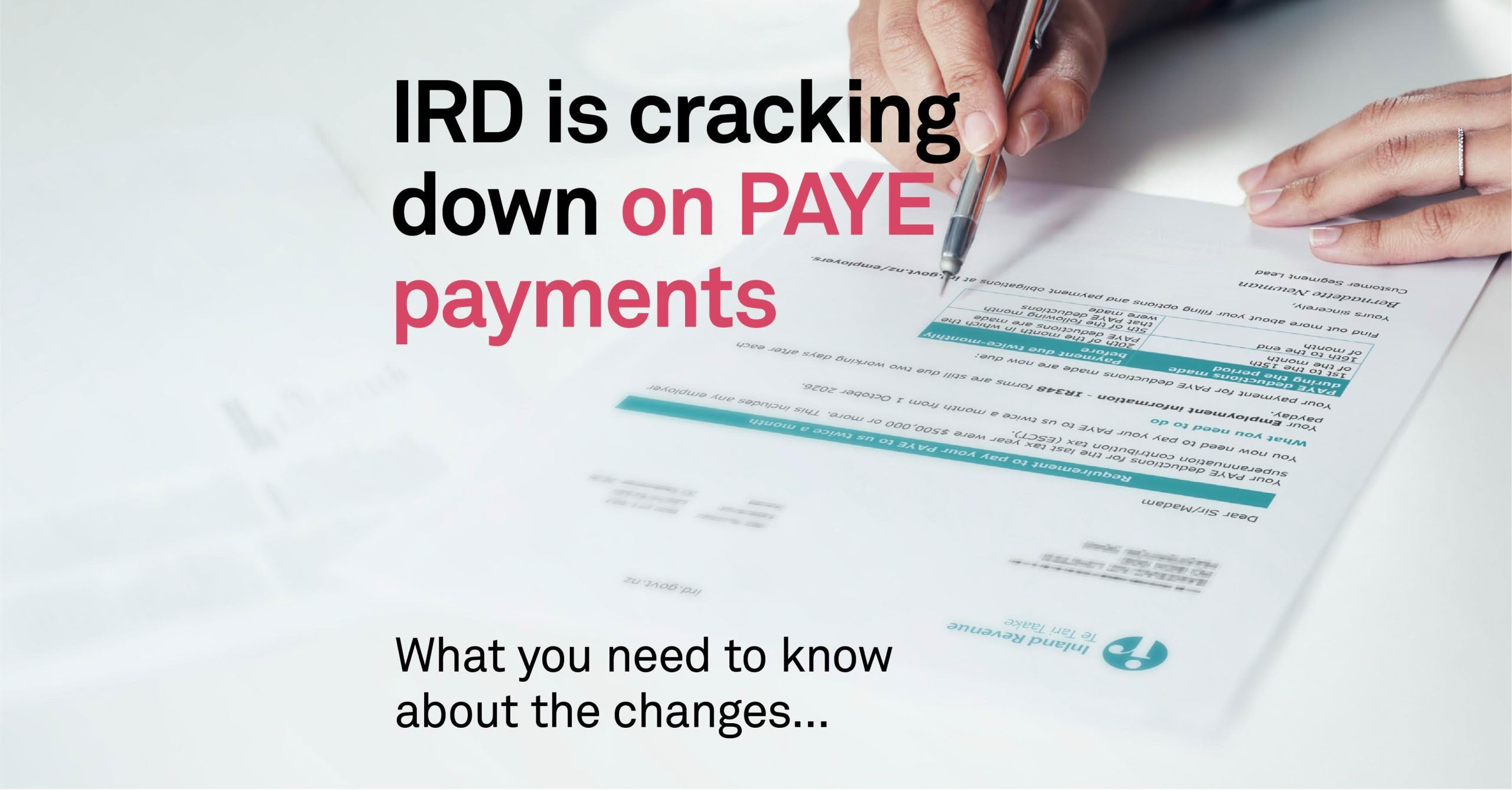
Inland Revenue has started sending letters to employers whose PAYE deductions were $500,000 or more in the last tax year.
From 1 October 2026, these businesses need to pay PAYE to Inland Revenue twice a month, rather than monthly. And while this isn’t a new requirement, compliance hasn’t exactly been enforced… until now.
Who does this affect?
If your gross annual PAYE and employer superannuation contribution tax (ESCT) was $500,000 or more in the previous tax year, you’re required to pay PAYE twice a month.
The payment for PAYE deductions made are now due:
| PAYE deductions made during the period | Payment due twice-monthly before |
|---|---|
| 1st to 15th of the month | 20th of the month in which the PAYE deductions are made |
| 16th to the end of the month | 5th of the following month that PAYE deductions were made |
Your Employment information – IR348 forms are still due two working days after each payday.
Why are businesses hearing about this now?
The twice-monthly requirement has been part of the PAYE rules for businesses over the $500,000 threshold for some time. What’s changing for many businesses is the level of attention being given to compliance.
Inland Revenue has publicly said it’s increasing its focus on tax compliance and debt collection, including targeted activity around PAYE and GST.
So it’s worth taking it seriously and checking that your payroll and payment processes are set up correctly before the new payment schedule kicks in.
What should you do?
IRD are sending letters to all businesses that trigger the threshold. So, if you’re already making twice-monthly payments, you probably don’t need to do anything. But it’s worth doing a sanity check with our four-point checklist below:
1. Check your PAYE threshold.
Look at your PAYE and ESCT for the previous tax year and confirm whether you’re over the $500,000 threshold.
2. Check your payroll process.
Make sure your current system and whoever is responsible for paying PAYE knows that the payment dates are changing.
3. Check your cashflow.
Paying PAYE earlier in the month means the money leaves your business sooner. Make sure your cashflow planning reflects that.
4. Check that your payroll system complies.
If your current payroll system doesn’t automatically help you manage the twice-monthly payment schedule, talk to us.
We can recommend payroll providers that can help make the process easier.
The takeaway
If you’re over the $500,000 PAYE and ESCT threshold, don’t wait until October to find out whether your payroll process is compliant.
A quick check now could save you a much bigger headache later.
Talk to your Sidekick advisor if you’re unsure what the change means for your business.