Investment boost extended: What New Zealand businesses need to know
If you’re thinking about investing in your business, the Government’s Investment Boost could help improve your cashflow when purchasing eligible assets.
As part of Budget 2026, the Government confirmed the Investment Boost will be extended until 31 March 2027, giving businesses more time to take advantage of the additional tax deduction available on qualifying investments.
But what does that actually mean for your business?
What is Investment Boost?
Investment Boost is a tax deduction that allows New Zealand businesses to claim an additional 20% deduction upfront when purchasing eligible new assets.
The remaining 80% of the asset cost is then depreciated as usual.
What does that mean?
Investment Boost does NOT increase the total deductions you can claim over the life of the asset.
Instead, it brings forward part of the tax benefit, meaning your business may pay less tax upfront and improve cashflow in the year you make the investment.
How does Investment Boost work?
If for example, your business purchases a new piece of equipment for $100,000.
Under Investment Boost:
- You claim an additional $20,000 deduction upfront
- The remaining $80,000 is depreciated over the asset’s useful life
The result is a larger deduction in the first year, which may reduce your taxable income and your immediate tax bill. Effectively meaning more cash stays in your business when you may need it most, whether that’s for growth, managing debt, or funding your next investment.
What assets qualify for Investment Boost?
To qualify, the asset generally must:
- Be new or new to New Zealand
- Be available for business use on or after 22 May 2025
- Be depreciable for tax purposes
Examples of assets that may qualify include:
- Machinery and equipment
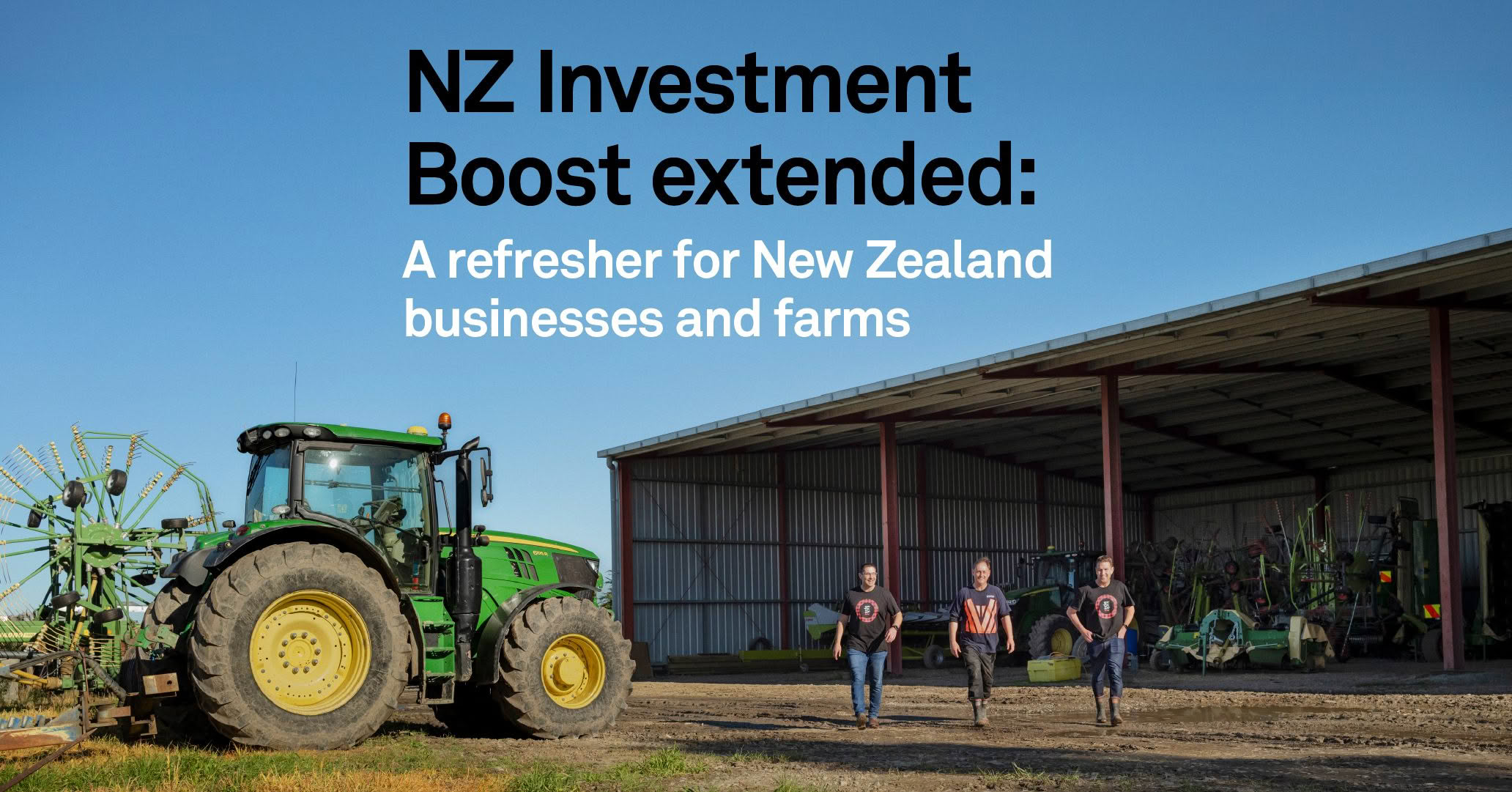
- Farm equipment such as tractors, feed wagons and trailers
- Business vehicles
- Office and IT equipment
- New commercial or industrial buildings and significant improvements (excluding land)
What assets don’t qualify?
Investment Boost doesn’t apply to every purchase.
Examples of assets that generally do not qualify include:
- Second-hand assets already used in New Zealand
- Land
- Residential rental buildings
- Most intangible assets
If you’re unsure whether an asset qualifies, it’s worth checking before making the purchase.
How could Investment Boost help different businesses?
The benefit will depend on the type of investment you’re making and your overall tax position.
Farm investment example |
Small business example |
|---|---|
| A dairy farmer purchases a new tractor for $180,000. | A gym purchases new equipment costing $10,000. |
| Investment Boost provides an additional $36,000 deduction in the year of purchase. | Investment Boost provides an additional $2,000 deduction upfront. |
| The remaining $144,000 is depreciated as normal. | The remaining $8,000 is depreciated as normal. |
|
|
What should businesses consider?
Investment Boost is optional. You don’t have to claim it on every eligible asset.
The right approach depends on your wider business position, including:
- Your current cashflow
- Expected profitability
- Provisional tax obligations
- Future investment plans
- Your overall tax strategy
It’s also important to remember that claiming Investment Boost may affect the tax treatment when the asset is sold in the future.
Is it Sidekick approved?
The short answer is, that it’s business dependant. Investment Boost is a useful tool, but it’s not a reason to buy something your business doesn’t need.
The best investments are the ones that improve your business, increase efficiency, reduce costs or support future growth. If you’re already planning to invest, understanding the tax impact can help you make a more informed decision.
Before making a major purchase, talk to your Sidekick advisor.
We’ll help you understand how the numbers fit into your bigger business picture.