Markup vs Margin: Do you know the difference?
Markup and margin are often used interchangeably, but they shouldn’t be. They are two different ways of looking at your pricing, and getting them mixed up can have a big impact on your profit.
If you’re simply adding a standard markup to everything you sell, you could be leaving a lot more money on the table than you realise.
So what’s the difference?
Markup is how much you add to the cost of a product to arrive at your selling price.
Margin is the percentage of your selling price that you keep after covering the cost of the product.
For example, if you buy something for $100 and you sell it for $150.
Your markup is 50%, but your margin is only 33.3%. That’s a pretty big difference.
Why does it matter?
Because your margin is what contributes towards covering everything else your business needs to pay for.
Wages. Rent. Vehicles. Software. Insurance. Marketing. Interest. Not to mention… Your own income.
If your margins aren’t high enough, you can sell a lot and still find there’s not enough money left at the end. And that’s the trap.
A price can look profitable because you’ve added a standard markup, but once you look at the actual margin, you might find you’re ripping yourself off and not making nearly as much profit as you thought.
The problem is you may not realise it until it’s too late.
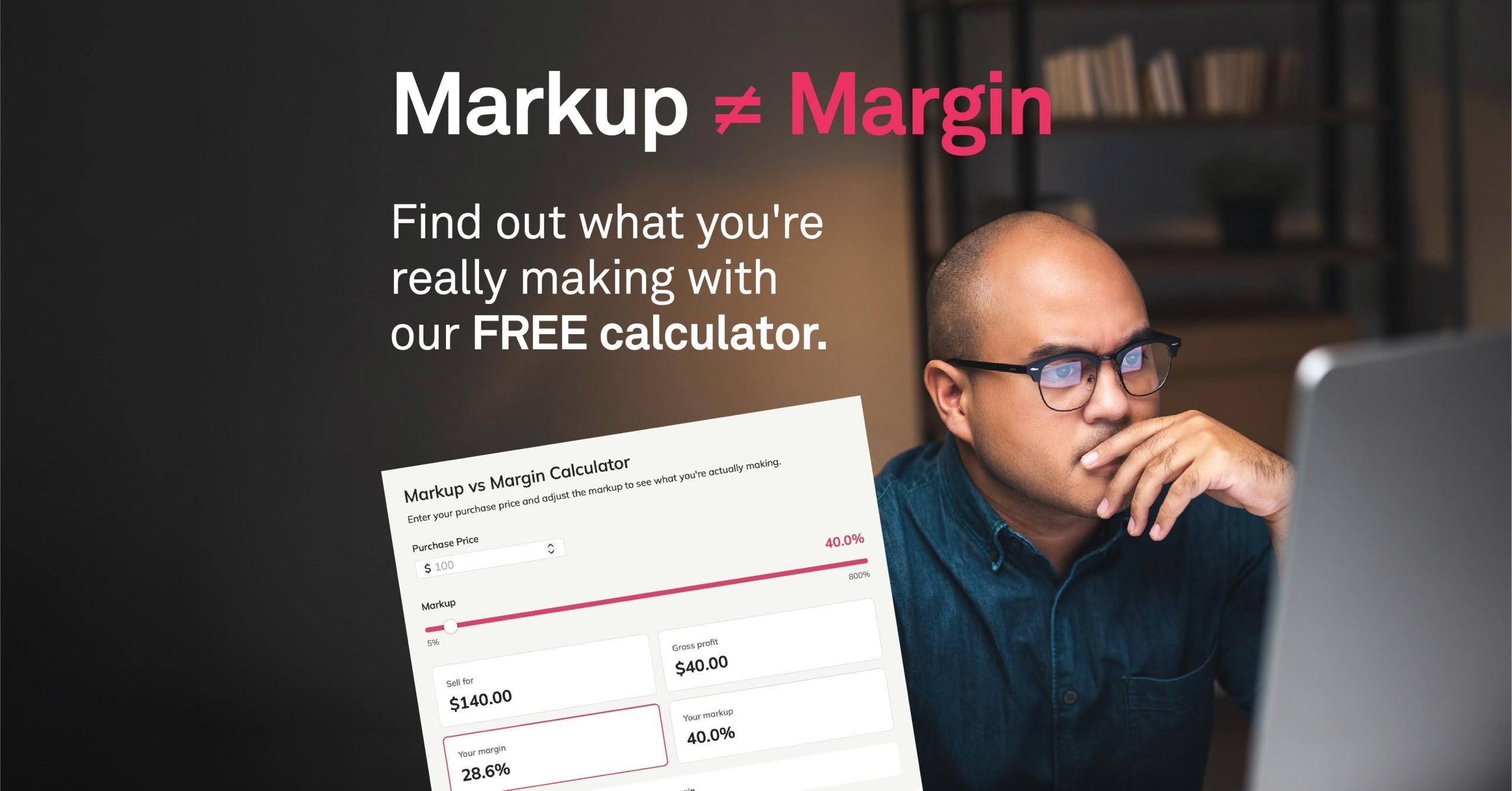
Try our free Markup vs Margin calculator
Adjust the markup from slider and see what happens to your selling price and actual margin.
Markup vs Margin Calculator
Enter your purchase price and adjust the markup to see what you're actually making.
It’s a simple way to test different margins and see what they actually mean for your selling price and profit. And if you’re currently using a standard markup across your products, it’s worth checking whether it’s actually giving you the margin your business needs.
Define your numbers before they define you
Getting your pricing right isn’t just about making more on each sale. It’s about building a business that generates the profit you need to support the lifestyle and future you want.
Your pricing strategy should take into account your costs, overheads, desired profit, market and the value you’re providing.
If you’re ready to define your numbers further, get in touch with a Sidekick advisor.
We’ll help you understand what your numbers are telling you and develop a pricing strategy that supports the business and lifestyle you’re building.